
A small apartment living room has to do several jobs at once: provide comfortable seating, support everyday storage, and still feel open enough to move through easily. Good layout decisions matter more than simply choosing smaller furniture.
These small apartment living room ideas focus on scale, flexibility, storage, and visual flow so you can make the most of every inch without sacrificing style.
1Measure the room before choosing furniture
Start with the wall lengths, door swings, windows, and main walking routes before you shop for anything. Knowing the usable footprint helps you avoid a sofa or table that looks perfectly reasonable online but overwhelms the room once it actually arrives. A tape measure and a rough sketch on paper will save more return shipping fees than any style advice.
2Choose a sofa with a slim frame
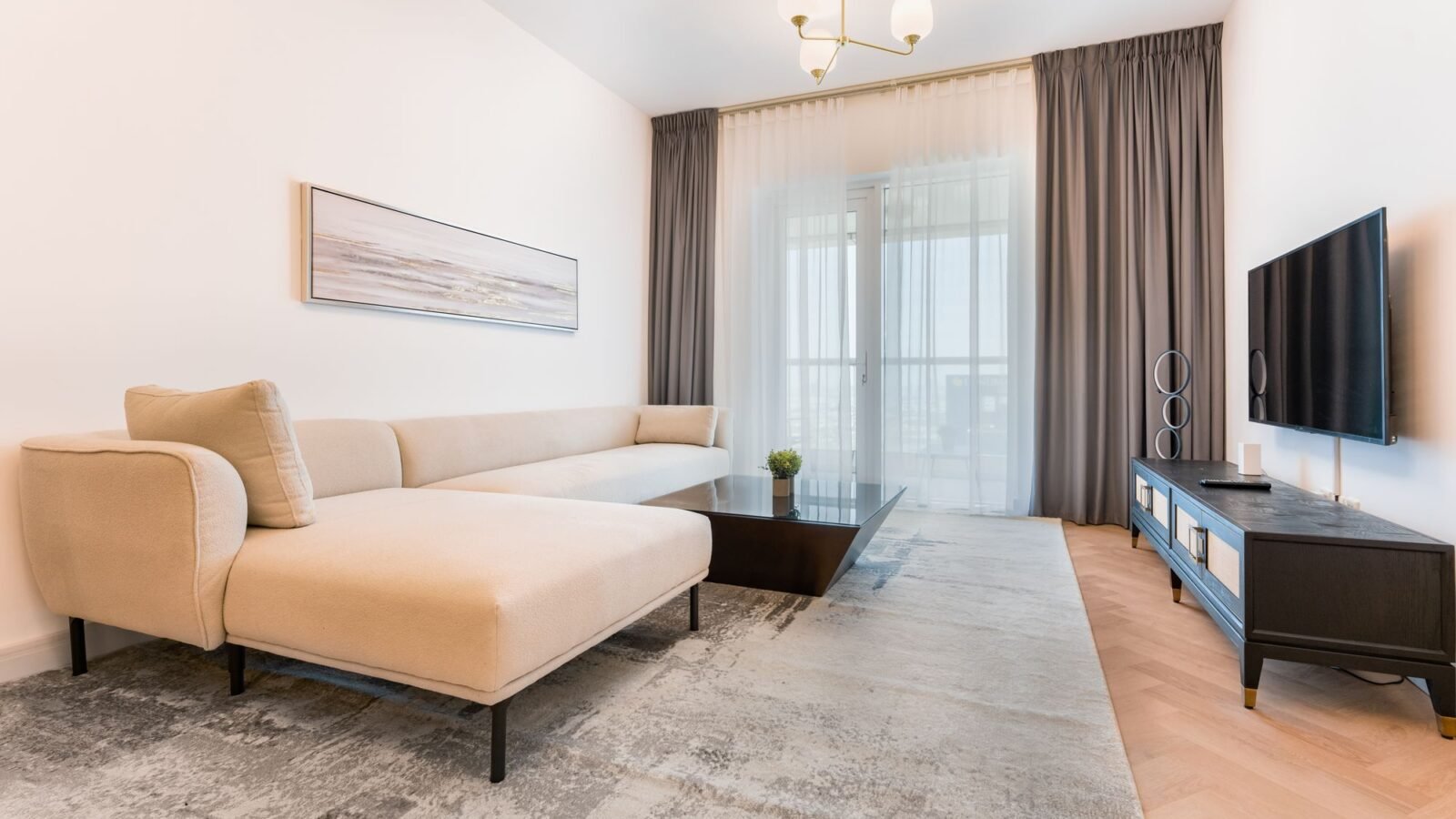
Look for narrow arms, raised legs, and a seat depth that actually suits the room rather than the biggest sofa the budget allows. A visually lighter sofa, roughly 32 to 34 inches deep, can still be genuinely comfortable while leaving more floor visible around it. Track-arm and slim roll-arm styles tend to save the most width without sacrificing seating.
3Float the sofa when the layout allows
Pushing every piece against a wall is not always the most efficient plan, especially in an open apartment. A slightly floated sofa, even six to eight inches off the wall, can define a living zone and create a useful walkway behind it toward a kitchen or entry. This works best paired with a rug that visually anchors the floating furniture.
4Use a round coffee table
Round tables soften tight layouts and remove the sharp corners that tend to catch shins in a small living room. A compact pedestal design, roughly 30 to 36 inches across, also keeps the floor beneath it visually open compared with a four-legged rectangular table.
5Try nesting tables instead of one large table
Nesting tables can spread out when guests need extra surfaces and tuck together into roughly the footprint of one small table when floor space matters more. They are particularly useful in multipurpose living rooms that double as a dining or work area.
6Mount the television on the wall
Wall mounting removes the need for a deep media unit and can free up a surprising amount of floor area in a small room. If you still need storage for a router or media boxes, use a shallow console, ideally under 14 inches deep, underneath it.
7Choose a narrow media console
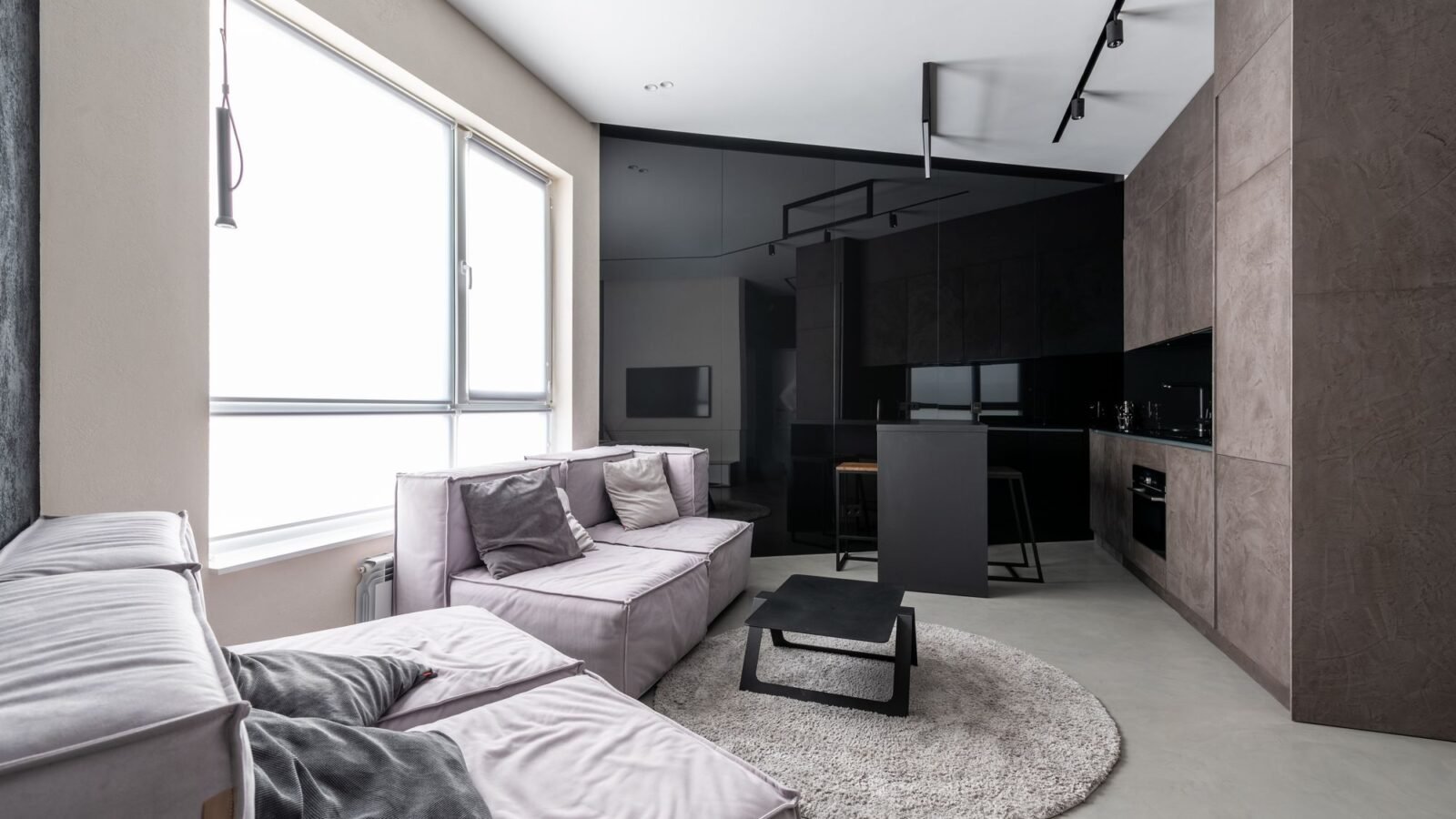
A long, shallow console can hold electronics and closed storage without projecting too far into the room. Keep the top lightly styled, a lamp and one object is usually enough, to maintain a clean sightline across the apartment.
8Use one large rug to define the living zone
A rug that catches at least the front legs of the main seating pieces makes the whole area feel more cohesive and deliberate. Several tiny rugs scattered around tend to make the room look broken into disconnected pieces rather than one considered space.
9Add storage inside an ottoman
A storage ottoman can work as a footrest, an extra seat, a coffee table, and hidden storage, all in the same footprint a plain coffee table would take up. Use a tray on top when you need a stable, flat surface for drinks. This single piece often replaces two or three separate items in a small apartment.
10Choose furniture with visible legs
Raised sofas, chairs, and cabinets let more floor remain visible, which gives the whole room a lighter, less cramped appearance. This is a simple visual trick that works especially well in compact apartments where every inch of visible floor matters.
11Use the walls for shelving
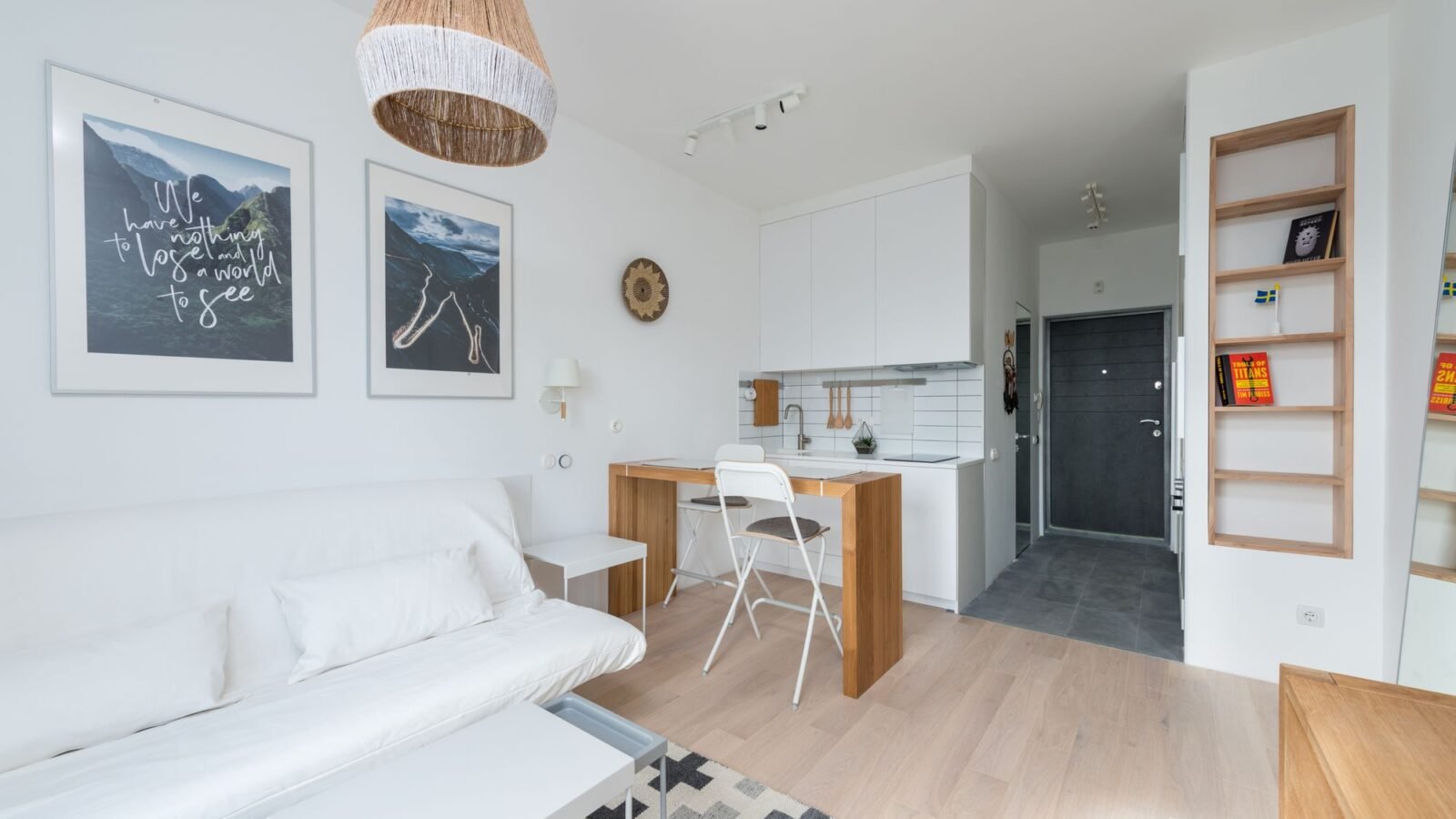
Wall shelves can store books and display a few decorative items without adding another floor-standing cabinet to the room. Keep the arrangement edited, roughly a third empty space, so the shelving reads as intentional rather than becoming a cluttered backdrop.
12Add a large mirror
A mirror placed near a window can reflect daylight deeper into the room and visually extend the space beyond its actual size. One substantial mirror, at least 30 inches across, usually has more impact than several small ones scattered on different walls.
13Keep the color palette connected
Use two or three main colors across the sofa, rug, curtains, and accessories rather than introducing a new one with every purchase. A cohesive palette makes the room feel larger because the eye moves through it without abrupt visual stops at every piece of furniture.
14Choose curtains that frame the window
Hang curtain panels high and wide enough that they can clear most of the glass when fully open, rather than partially covering the window even when pulled back. This preserves natural light and makes the window itself appear larger than its actual frame.
15Use a slim console behind the sofa
When there is a narrow gap behind a floating sofa, a shallow console, generally 10 to 12 inches deep, can provide storage, a lamp surface, or a small work zone without taking over the room. This is one of the most efficient ways to add function to otherwise wasted space.
16Pick an apartment-size accent chair
One compact chair is often more useful than forcing in a second full-size sofa that never quite fits the room. Look for a narrow frame and a genuinely comfortable seat that can be repositioned for reading or extra seating when guests come over.
17Create a flexible dining corner
A small round table, a drop-leaf table, or a wall-mounted dining surface can provide a place to eat without permanently consuming the center of the living room. Drop-leaf styles are especially useful since they can flatten against the wall between meals.
18Hide everyday clutter in closed storage
Baskets, drawers, and cabinets keep chargers, remotes, papers, and other loose items from covering every visible surface in the apartment. Less visual clutter makes the entire space feel calmer, even on days when you have not had time to properly tidy.
19Use lighting at more than one height
Combine ceiling light with a floor lamp or table lamp to create real depth in the room after dark. Multiple warm light sources make a small living room feel noticeably more comfortable at night than one central overhead fixture ever can.
20Keep walkways clear
Preserve a direct route between the entrance, the seating, and any adjacent rooms, ideally at least 30 inches wide. If a side table or chair forces you to weave around it every time you walk through, the piece is probably too large or simply unnecessary.
21Use vertical art arrangements
Tall artwork or a vertical gallery arrangement can draw the eye upward and make a low-ceilinged room feel more balanced overall. Keep the frames visually related in color or subject so the arrangement reads as one composition.
22Let one piece be the focal point
A distinctive rug, sofa, artwork, or light fixture can give the room real personality on its own. When one element is allowed to lead, the rest of the room can stay quieter and feel less crowded by comparison.
23Add plants without filling the floor
Use one floor plant in an unused corner or a few smaller plants grouped on shelves rather than scattering pots across every surface. A cluttered collection of small plants can quickly make a compact room feel busier than intended.
24Choose multipurpose furniture
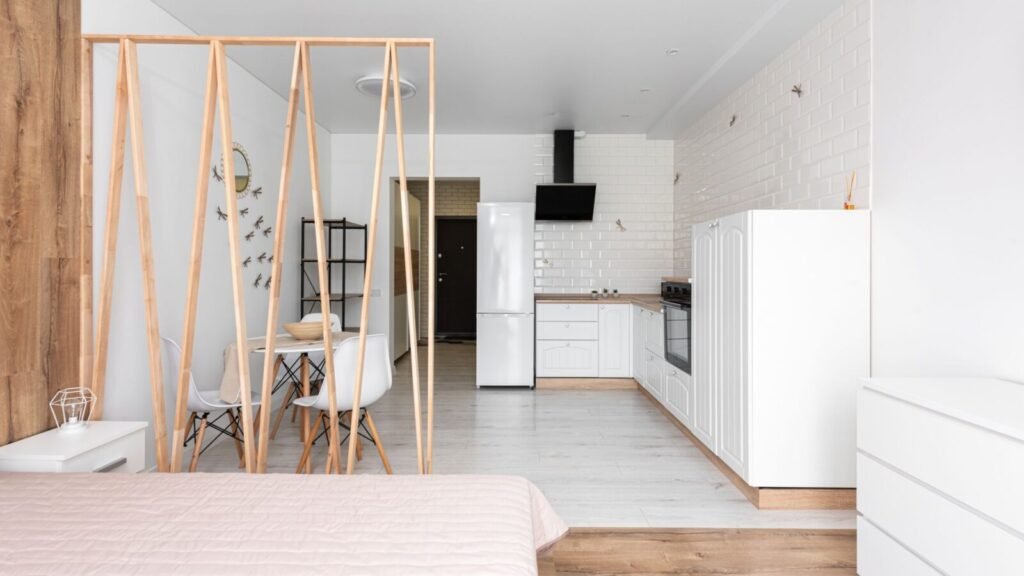
A bench with hidden storage, a desk that doubles as a console, or an ottoman that also serves as a table reduces the total number of pieces the room actually needs. Fewer, harder-working pieces almost always make a small apartment feel more spacious than more, smaller ones.
25Edit the layout before adding more decor
When a small living room feels unfinished, the answer is not always another object. Adjust the spacing between pieces, remove one that is not earning its footprint, and make sure the main furniture has room to visually breathe before buying anything new.
Related ideas: 21 Studio Apartment Ideas for a Stylish, Functional Small Space · 21 Cozy Living Room Ideas for a Warm and Inviting Home · 21 Neutral Home Decor Ideas for a Warm and Timeless Look
Final Thoughts on Small Apartment Living Room Ideas
The most successful small apartment living rooms feel flexible rather than packed. Prioritize comfortable seating, clear circulation, hidden storage, and furniture that earns its footprint, then layer in color and decor once these small apartment living room ideas are actually working for how you live day to day.
Discussion