
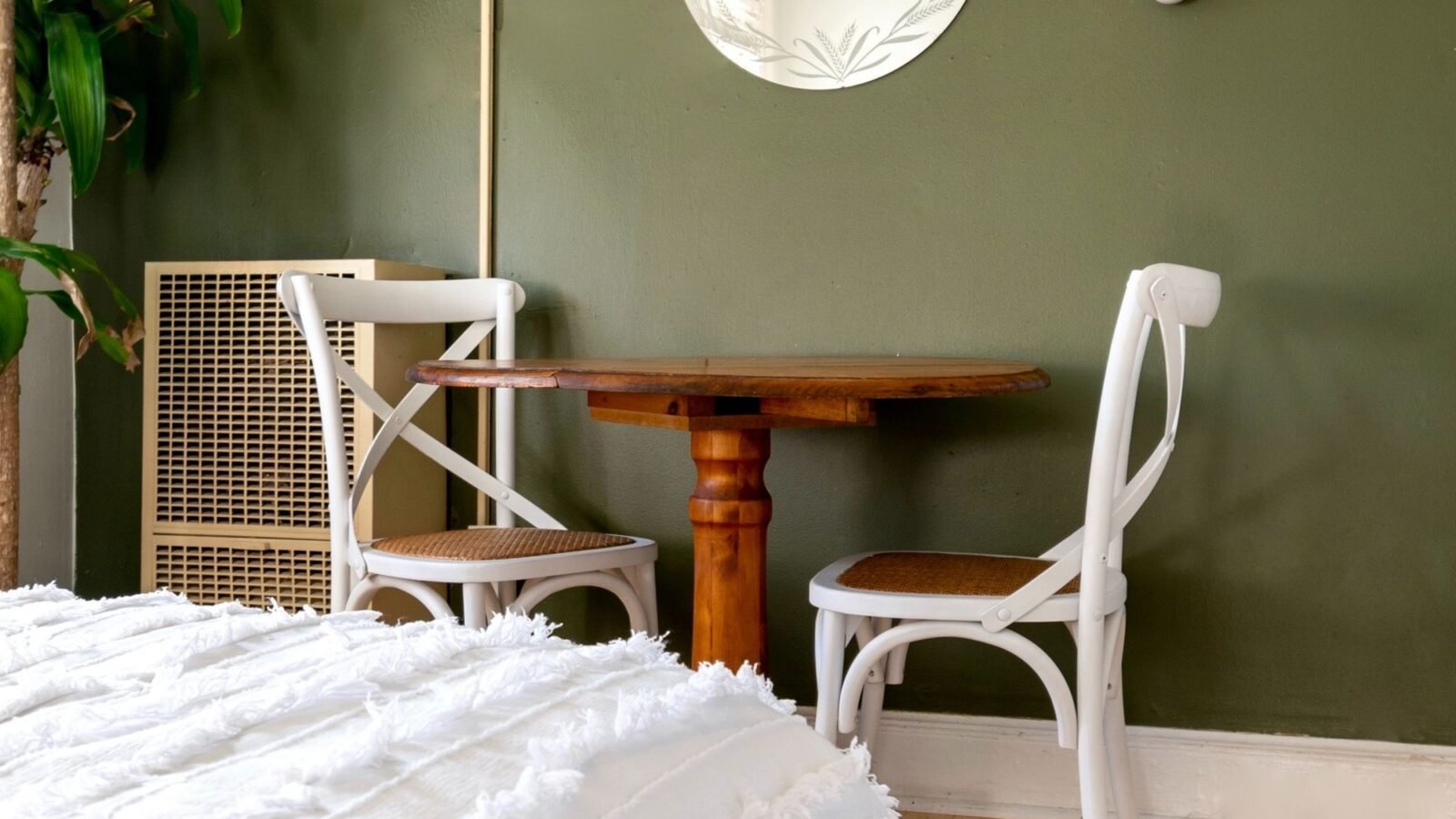
Sage green works beautifully in bedrooms because it sits between a neutral and a color. It brings a gentle connection to nature while remaining soft enough to support a calm, restful atmosphere.
These sage green bedroom ideas range from subtle accents to fuller color treatments, with practical ways to pair the shade with wood, cream, beige, black, and other materials.
1Paint one sage green accent wall
Use the wall behind the bed to introduce color without surrounding the entire room in it. A muted sage with gray undertones feels especially calm when paired with white or warm ivory on the remaining walls, and it gives the headboard something to sit against visually.
2Pair sage green with warm oak
Natural oak adds warmth that prevents green from feeling cool or clinical. Use it in the bed frame, nightstands, dresser, or picture frames, and try to repeat the same wood tone at least twice so the pairing feels deliberate rather than accidental.
3Use cream bedding
Cream and off-white bedding brighten sage walls while keeping the palette softer than pure white would. Add a lightly textured throw, such as waffle knit or brushed cotton, for a relaxed, layered finish that still reads as calm.
4Add sage through pillows and throws
If you do not want to paint, repeat sage in a few textiles instead. Two pillows and a folded throw can create a clear color story without committing the whole room, and it is easy to change later if your taste shifts.
5Combine sage with beige
Beige, sand, and oatmeal tones make sage feel warmer and more grounded than pairing it with cooler neutrals. This palette works especially well with woven rugs, linen curtains, and other natural fiber textiles already common in a calm bedroom.
6Try sage green curtains
Curtains are one of the strongest ways to bring color into an otherwise neutral room. Choose a washed or lightly textured fabric so the window treatment feels soft rather than heavy, especially in a room with limited natural light.
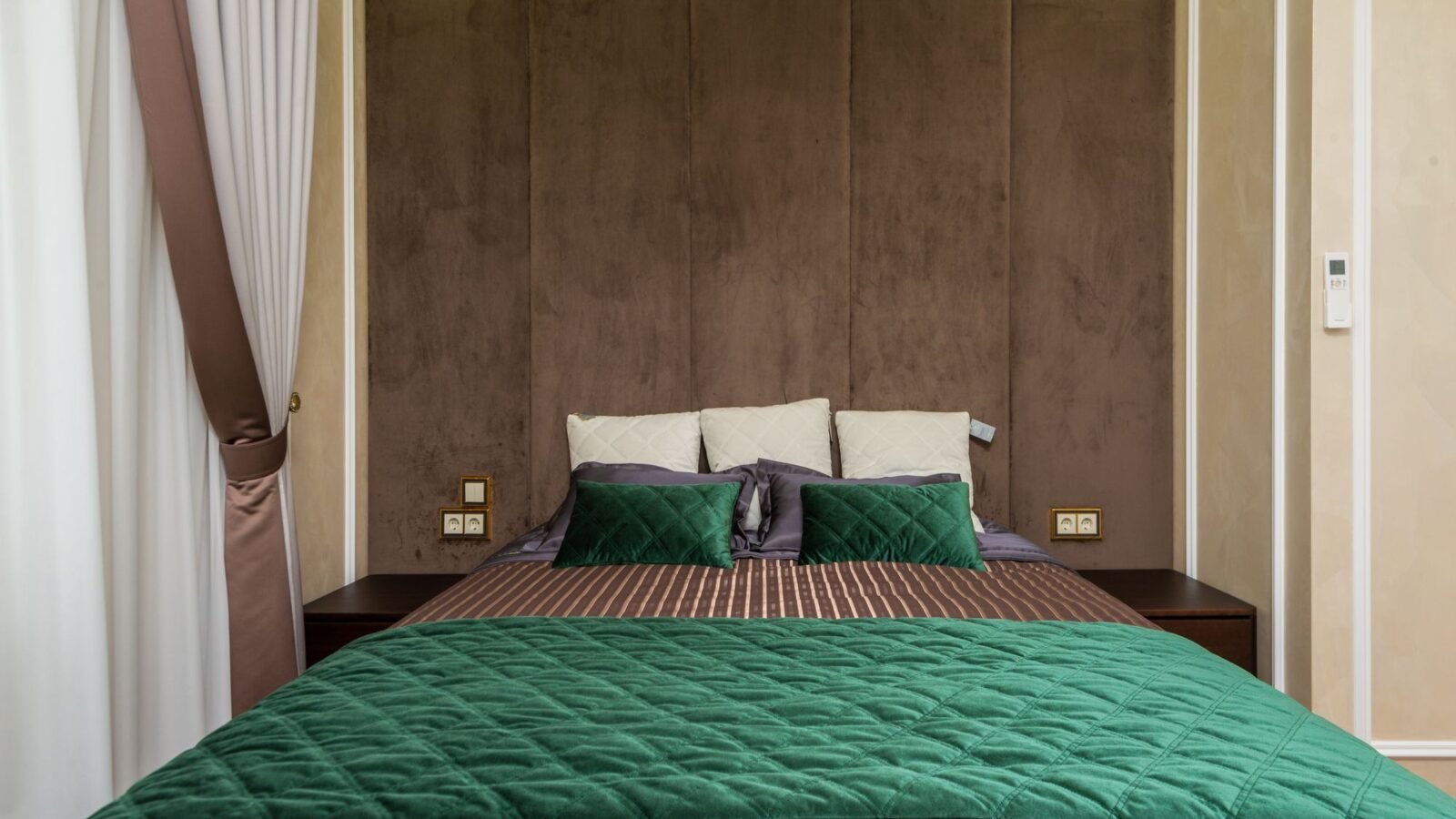
7Use a sage upholstered headboard
A fabric headboard gives the color a substantial presence in the room without covering any actual walls. Keep the silhouette simple, a gentle curve or straight panel, so the room remains restful rather than visually busy.
8Pair sage with black accents
Small black details such as sconces, curtain rods, or picture frames create definition against an otherwise soft palette. Use them sparingly, in two or three places at most, to keep the overall look calm and airy rather than heavy.
9Add brass or warm metal details
Brass and aged bronze bring warmth to muted green in a way that chrome or steel typically cannot. Bedside lighting or small hardware, like drawer pulls, can add polish without introducing another major color to balance.
10Use sage in a small bedroom
Sage can work in compact rooms when the shade stays light and desaturated rather than deep or saturated. Keep the ceiling and larger textiles pale so the room continues to reflect plenty of light even with color on the walls.
11Create a tonal green palette
Layer sage with olive, moss, and muted eucalyptus tones in small amounts rather than a single flat green. Varying the lightness across those shades gives the room real depth without making it feel dark overall.
12Use botanical artwork
Botanical prints and landscape art reinforce the natural character that sage green already brings to a room. Choose simple frames and leave enough wall space around the art so the bedroom still feels calm rather than gallery-like.
13Bring in woven textures
Rattan, cane, jute, and woven baskets complement green without competing with it for attention. These natural materials also make a fairly simple color palette feel more tactile and considered.
14Pair sage with soft pink
A dusty blush or muted clay pink can add gentle warmth alongside sage without clashing with it. Keep the pink limited to a cushion, a piece of artwork, or a throw so sage clearly remains the dominant color in the room.
15Use sage with white painted furniture
White or warm-white furniture keeps the room bright and gives sage a crisp, clean edge to sit against. This pairing is especially useful in cottage, coastal, or simple modern bedrooms where the palette needs to stay light overall.
16Add green through a quilt
A sage quilt or coverlet can become the main color statement while the walls stay neutral behind it. Choose a subtle stitched texture rather than a busy print if you want the room to feel calmer rather than decorative.
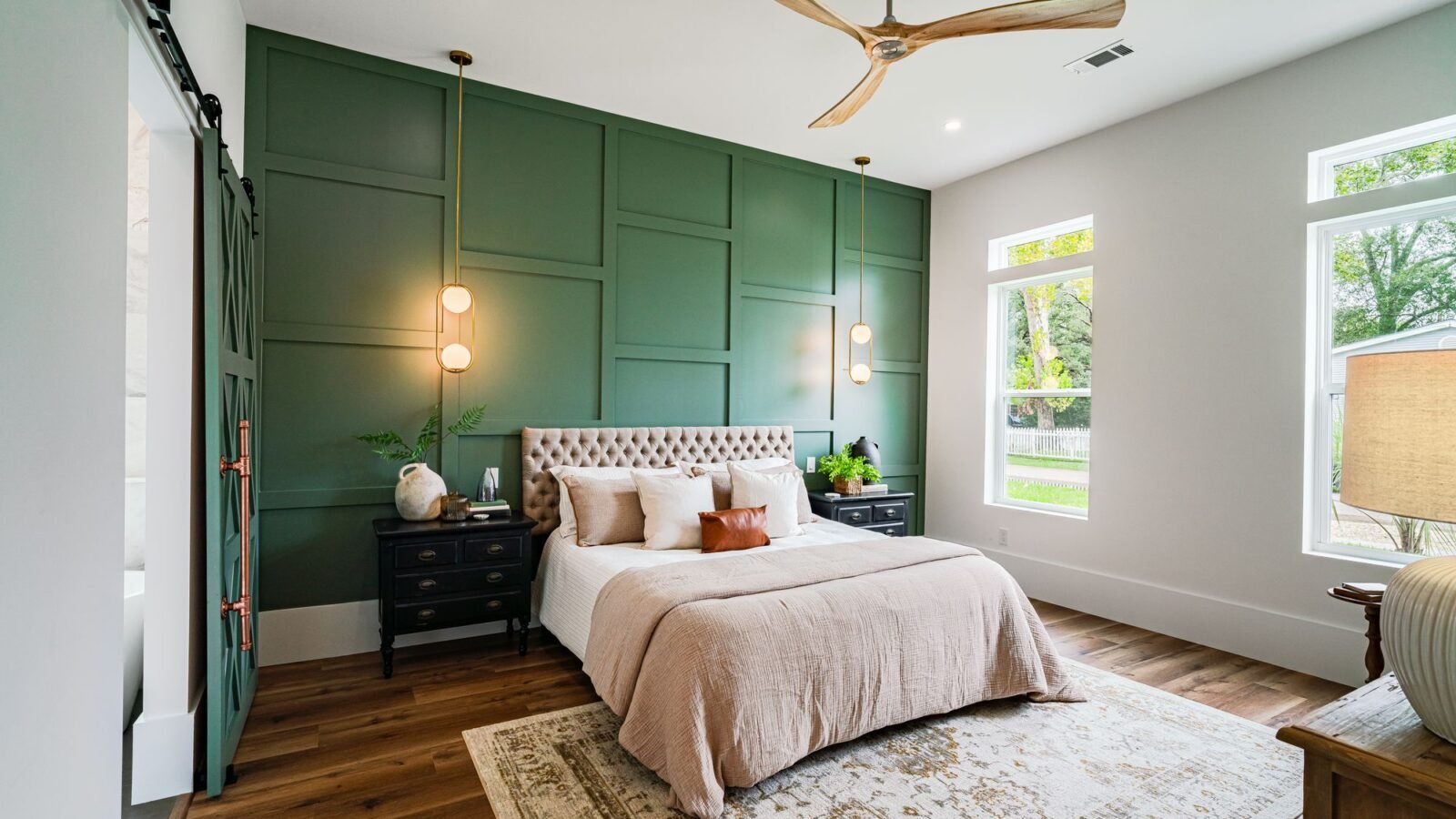
17Try sage wall paneling
Painted paneling behind the bed adds both color and architectural detail in one move. Vertical boards can also draw the eye upward, which is useful in a room with a fairly modest ceiling height.
18Keep the ceiling light
Even with darker sage walls, a pale ceiling helps the room feel open rather than boxed in. Continue that same light tone through trim or curtain fabric to balance out the stronger wall color below it.
19Use plants as a natural extension
A small plant or a vase of cut branches makes sage feel intentional, since the two colors relate to each other naturally. One or two pieces of greenery are genuinely enough; a windowsill full of pots can start to compete with the wall color.
20Mix sage with walnut wood
Darker walnut creates a richer, more sophisticated contrast than light oak does against green. Use it for one or two furniture pieces only and keep the surrounding palette simple so the contrast still reads as intentional.
21Repeat sage in three places
A balanced room often needs some color repetition to feel finished. Try sage on the headboard, one textile, and one small decorative item so the shade feels connected across the space rather than isolated to a single spot.
Related ideas: 25 Small Bedroom Ideas to Make a Tiny Space Feel Bigger · 21 Modern Bedroom Ideas for a Calm, Clean, and Comfortable Space · 21 Beige Living Room Ideas That Feel Warm, Layered, and Inviting
Final Thoughts on Sage Green Bedroom Ideas
Sage green is easiest to live with when it is paired with warm neutrals and natural materials rather than used on its own. Part of why it works so well in a bedroom comes down to basic color psychology: muted greens read as grounded and calming rather than energizing. Start with one large application or a few repeated accents, then build the rest of the room around a quiet, cohesive palette.
Discussion