
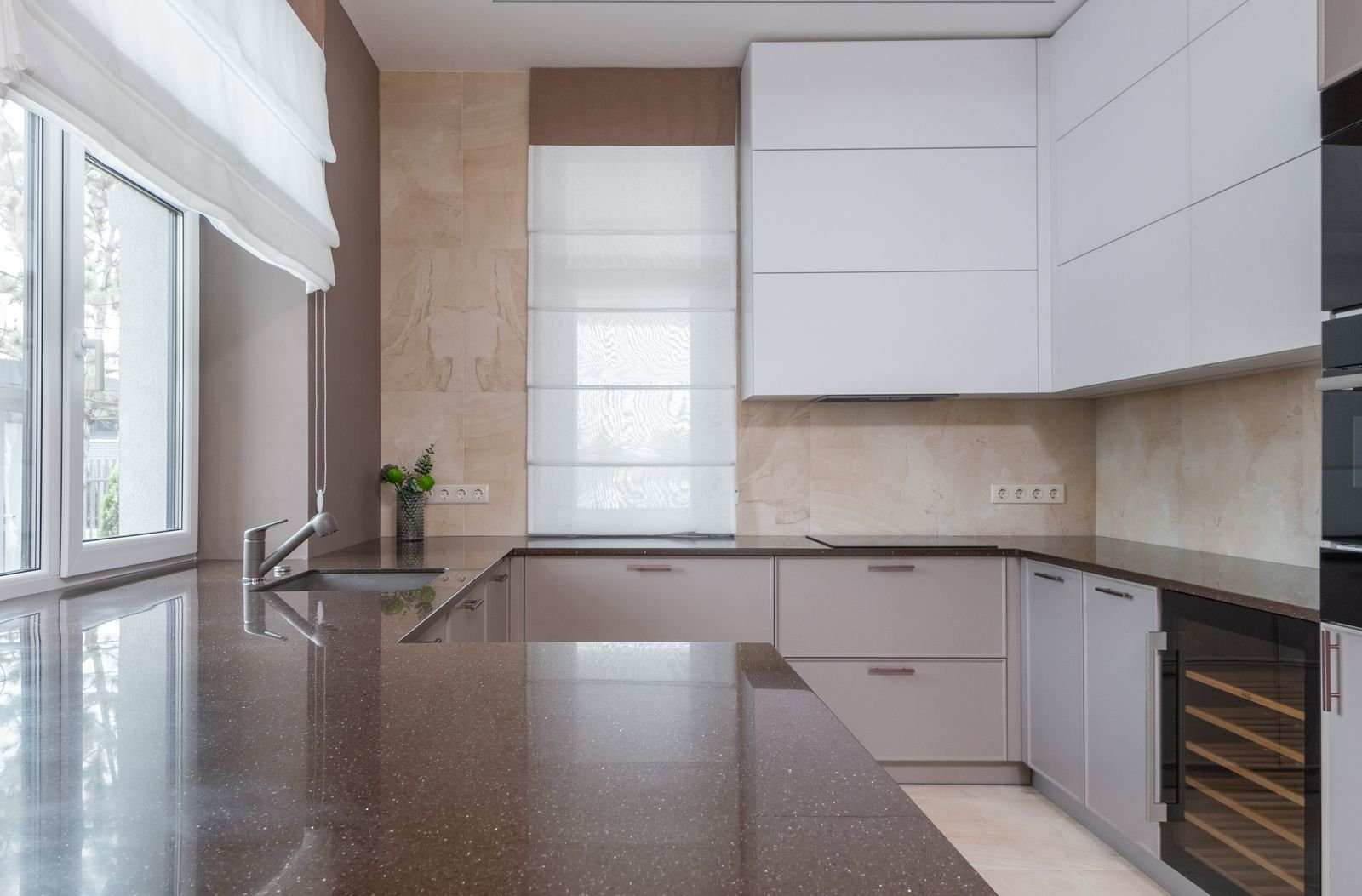
Small kitchen counter ideas should protect a place to prepare food, not simply make every surface look styled. Before buying a cart or shelf, identify the section of counter where you actually chop, mix, and serve.
These ideas focus on organizing existing space. Any added surface or product must suit its intended use, load, installation, and proximity to heat or water.
1Define one dependable prep zone
Choose the section you can use most comfortably. Remove objects that do not need to stay there and resist turning it into an attractive display shelf afterward.
2Count appliances by real use
Keep daily equipment accessible and consider another suitable home for occasional appliances. Do not move a heavy item somewhere that makes retrieving it unsafe or impractical.
3Give the kettle a complete working footprint
Include the handle, steam direction, plug, and manufacturer clearance guidance. The appliance’s base dimensions do not describe the whole area it needs during operation.
4Store duplicate utensils elsewhere
Keep your most useful tools in easy reach and sort duplicates before buying another utensil pot. A smaller working collection can free space without changing the kitchen.
5Use an existing drawer for everyday tools
Arrange the tools so they can be retrieved directly. Check internal dimensions before adding dividers, and keep sharp items stored appropriately.
6Stand boards vertically where they fit
An appropriate divider can make boards easier to access inside a cabinet. Avoid leaning a loose stack where it falls whenever you remove one.
7Review the dish-drying routine
A suitable rack should fit the sink area and drain as intended. Consider whether its capacity matches the washing routine rather than choosing the smallest visible footprint.
8Try an over-sink accessory only if designed for it
Check support points, load rating, and compatibility with your sink. A board balanced across an opening is not equivalent to a purpose-designed accessory.
9Keep food-storage lids contained
Pair lids and bases before buying organizers. Store a practical collection in a measured section of a cabinet rather than letting mismatched parts consume the counter.
10Move mail out of the kitchen
Give incoming paper a location near the entrance. A counter can become a household landing zone even when the original problem seemed to be kitchen storage.
11Use a tray only for a real group
A tray can organize coffee supplies, but it also occupies space. Choose one that fits the routine and does not become another surface for unrelated clutter.
12Store dry goods for access, not uniformity
Decant only when it helps and use suitable food containers. Preserve essential labels, allergen information, and dates rather than choosing identical jars purely for appearance.
13Check cabinet shelf spacing
Adjust shelves where the cabinet supports it. Reducing unused height above short items can improve storage without adding anything to the counter.
14Use a cabinet-door organizer carefully
Check hinge clearance, internal contents, and the loaded depth. A slim organizer can still stop the door closing when placed opposite a shelf.
15Consider a cart’s parked location
A rolling cart needs somewhere to stand during cooking and when not in use. Include handles, wheels, and opening drawers in the measurement.
16Keep walkways usable
Do not add a prep surface that blocks the route between appliances or through the room. A little extra countertop is not worth making the kitchen difficult to navigate.
17Use wall storage only where suitable
Check fixing requirements and permissions. Keep stored items clear of appliance safety zones and avoid placing heavy objects where retrieval is awkward.
18Let one decorative item be enough
A plant or bowl can provide personality without filling the only prep area. Choose a location where it does not interfere with food handling or daily work.
19Make cleanup tools easy to return
Give cloths and cleaning products appropriate separate storage. A clear end point makes it easier to restore the prep area after use.
20Test before buying a smaller appliance
Confirm capacity, performance, and everyday needs. Replacing a useful machine with one that cannot handle the household’s routine may create more work.
21Reset the prep zone each evening
Return items to their homes and leave the working area ready. If the same objects remain stranded, improve their storage rather than repeatedly moving the pile.
Make one surface dependable
Start with the prep zone, daily appliances, and a realistic washing routine. Explore our small kitchen ideas and storage guide for related improvements.
Will open shelves solve counter clutter?
Only if they provide suitable homes for the actual objects. Moving clutter upward does not automatically improve access or cleaning.
Should a tiny kitchen have no decoration?
It can have personality. Protect function first, then use color, textiles, and a few deliberate objects where they do not consume the work area.


Discussion