
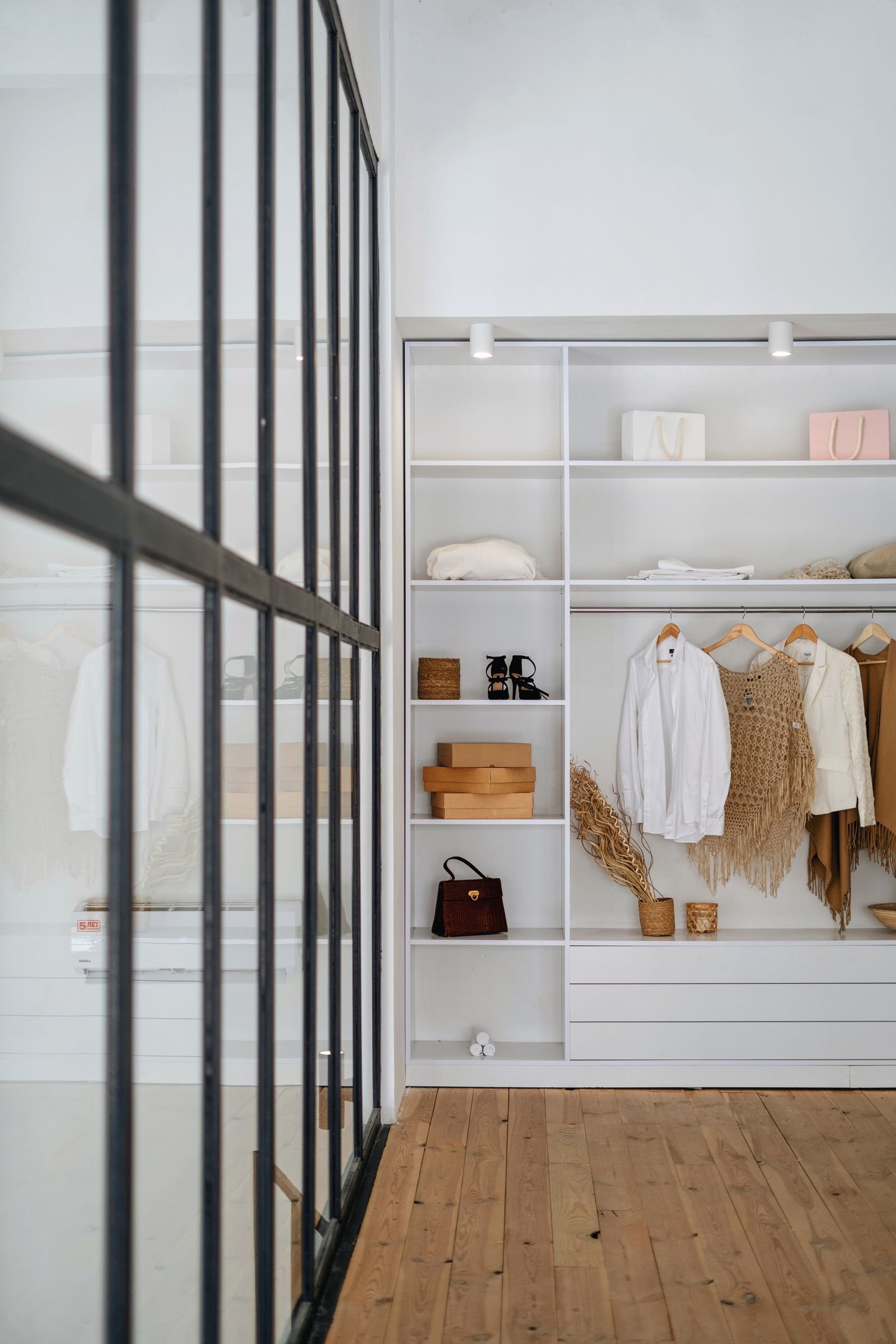
Bedroom storage without under bed space requires a different plan from the usual instruction to buy rolling boxes. A divan, low platform, or bed with obstructing supports may leave no usable opening. Filling the room with extra baskets rarely replaces that missing capacity.
Start by identifying what you were hoping to store under the bed. Spare bedding, shoes, suitcases, and daily clothes need different homes.
Separate daily access from occasional storage
Put your belongings into three groups: things used daily, things used seasonally, and things kept for rare occasions. Keep daily clothes in the easiest locations to reach. Spare guest bedding can usually live farther from the bed than your work clothes.
Do not move frequently used objects to a high shelf just because it is empty. A storage location works only when you can retrieve and return its contents comfortably.
If the bedroom is storing unrelated household supplies, consider whether another existing cabinet can take them before adding bedroom furniture.
Measure the wardrobe’s unused space
Look for gaps above short hanging clothes, wasted depth behind shoes, and shelves spaced much farther apart than their contents require. Adjustable fittings can improve access when compatible with the wardrobe’s design.
A second hanging rail may help with shorter garments, but first measure the garments including hangers. Leave enough clearance that clothing does not bunch against the lower rail or floor.
Use shelf dividers or boxes for categories that genuinely need containment. Label opaque boxes so they do not turn into forgotten storage. Keep frequently used items visible or easily identifiable.
Replace duplication with capacity
Two small bedside tables may hold less useful storage than one well-sized drawer unit, but check the route before exchanging them. A narrow tall dresser can offer capacity without a broad footprint, although stability and anchoring instructions matter.
Choose enclosed storage for small mixed objects if visual clutter is part of the problem. An open basket can be useful for a throw, but several baskets of unrelated items may simply distribute the clutter.
Avoid selecting furniture by its exterior size alone. Drawer interiors, runners, dividers, and thick side panels can reduce usable volume.
Give spare bedding a defined limit
Fold each complete bedding set together so it is easier to find and return. Store only what your household reasonably uses, and follow care guidance for clean, dry textile storage.
Vacuum bags may reduce the volume of suitable soft items, but check textile and bag instructions. They do not create a storage location by themselves; you still need somewhere accessible to put the compressed package.
A storage bench works only when its lid or drawers open fully and the room still has a usable route. Do not add one at the foot of the bed based on the closed dimensions alone.
Use wall storage where it is practical
A properly installed shelf can hold lighter occasional items, subject to the product and wall load requirements. Keep heavy or breakable storage away from the sleeping area and preserve access to windows, heaters, and switches.
Renters should check permission before installing shelves or anchoring new furniture. Freestanding alternatives may still require anchoring according to their manufacturer.
Our small-space storage ideas and studio apartment guide offer more options for combining functions.
Run a capacity test before shopping
Measure a representative stack of clothing or a packed bedding set. Compare that with the proposed drawer’s internal dimensions. A cabinet with six tiny drawers may not accommodate the bulky items you need to move.
Create temporary categories using boxes you already own, then observe the system for a week. Buy organizers after you know the required sizes, not before.
Common questions
Can I raise the bed to create storage?
Only use products and arrangements approved for the specific frame and load. Improvised blocks can affect stability. If there is no suitable supported option, plan around the existing base.
Is a taller wardrobe always better?
Only when its installation is appropriate and the upper storage is usable for you. Inaccessible height can become wasted capacity.
Solve the storage category first
Name what needs a home, measure its volume, and match it to usable furniture. The absence of under-bed space is manageable when storage is designed around real belongings.

Discussion