
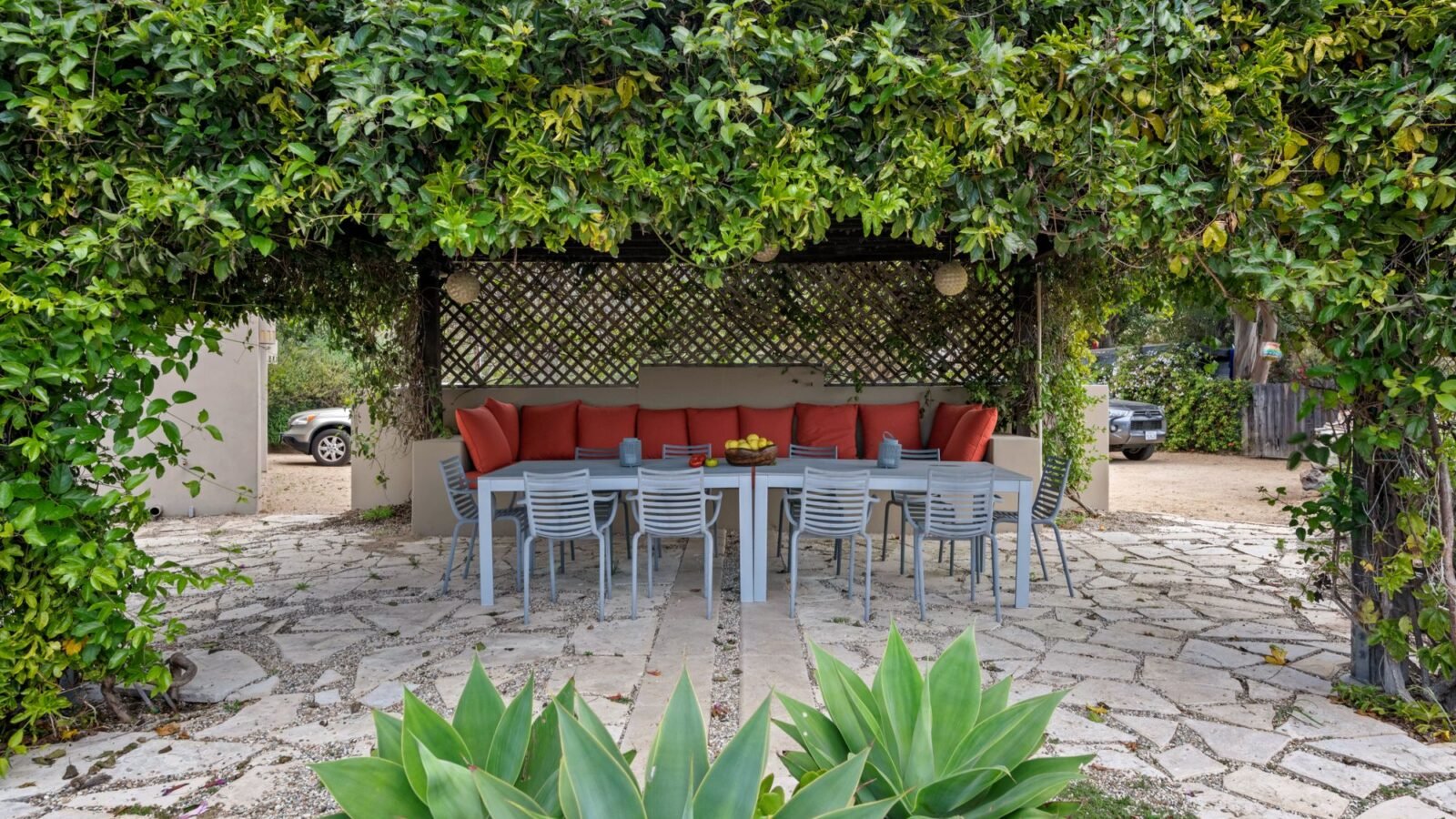
A small patio can still function as an outdoor room when the layout is focused and the furniture fits the available footprint. Comfort, shade, greenery, and lighting usually matter more than filling the space with multiple zones.
These small patio ideas are designed for compact backyards, townhomes, balconies, side yards, and other outdoor areas where every square foot needs to work well.
1Choose a compact bistro set
A small round table and two chairs can create an easy place for coffee or meals without consuming the whole patio. Folding styles are especially useful when the area needs to double as a walkway or storage space at other times.
2Use a built-in bench
A bench placed against a wall or fence keeps seating around the perimeter and leaves more open floor in the center. Add outdoor cushions for real comfort, since built-in benches are often shallower than freestanding furniture.
3Try an outdoor loveseat
A compact loveseat can feel more relaxed and residential than several individual chairs arranged around a table. Measure the depth carefully and leave enough space in front of it for people to walk past comfortably.
4Add a small outdoor rug
A rug defines the seating zone and adds softness underfoot on a hard patio surface. Choose a size that fits fully beneath the main furniture rather than a small rug floating as its own island in the middle.
5Use tall planters for privacy
Narrow planters filled with grasses or leafy plants can screen a patio without taking up the width of a full garden bed. This is often the fastest way to add privacy on a rented or temporary outdoor space.
6Hang string lights
Warm string lights create an inviting atmosphere after dark and draw the eye upward across the whole patio. Use outdoor-rated hardware and keep cords safely routed above walking areas rather than across the floor.
7Add one large umbrella
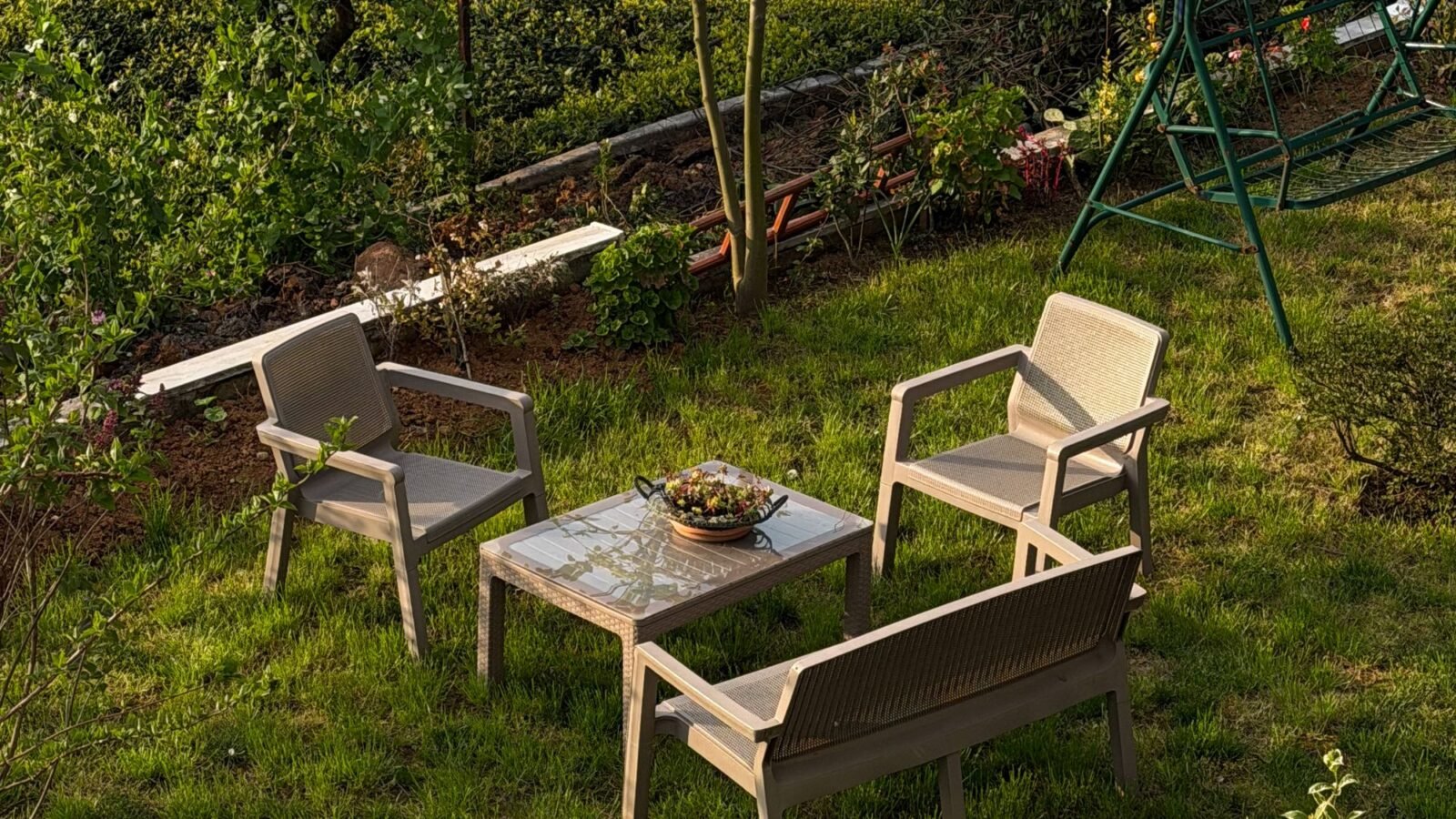
A well-sized umbrella can provide real shade without requiring a permanent structure or planning permission. A cantilever style is especially useful when a center pole would otherwise interfere with the furniture underneath.
8Choose nesting side tables
Nesting tables provide extra surface area exactly when it is needed and stack together when the patio needs to feel more open. They work particularly well beside a loveseat or lounge chairs.
9Use a wall-mounted folding table
A folding wall table creates a dining or work surface that can disappear completely when it is not in use. This is especially useful on narrow patios where a permanent table would block the only walkway.
10Create a green wall
Wall planters, climbing vines, or a trellis can bring in real greenery while keeping the actual floor completely clear. Choose plants suited to the patio’s specific sun exposure so the wall stays healthy year-round.
11Group pots instead of scattering them
Cluster several containers of different heights together in one or two corners rather than spreading them around evenly. Grouping like this creates more visual impact and leaves the rest of the patio easier to move through.
12Use a corner efficiently
A corner bench or an L-shaped seating arrangement can turn an awkward edge into the single most useful part of the patio. Corners are often ignored entirely on small patios, which wastes valuable square footage.
13Add soft outdoor cushions
Weather-resistant cushions make hard chairs and benches noticeably more inviting to actually sit in. Use a limited color palette across all of them so a small space stays visually calm rather than busy.
14Choose light-looking furniture
Slim metal frames, woven rattan chairs, and open-leg tables allow more of the patio surface to remain visible underneath them. This visual lightness can make even a genuinely tiny patio feel less crowded than heavier furniture would.
15Use one focal plant
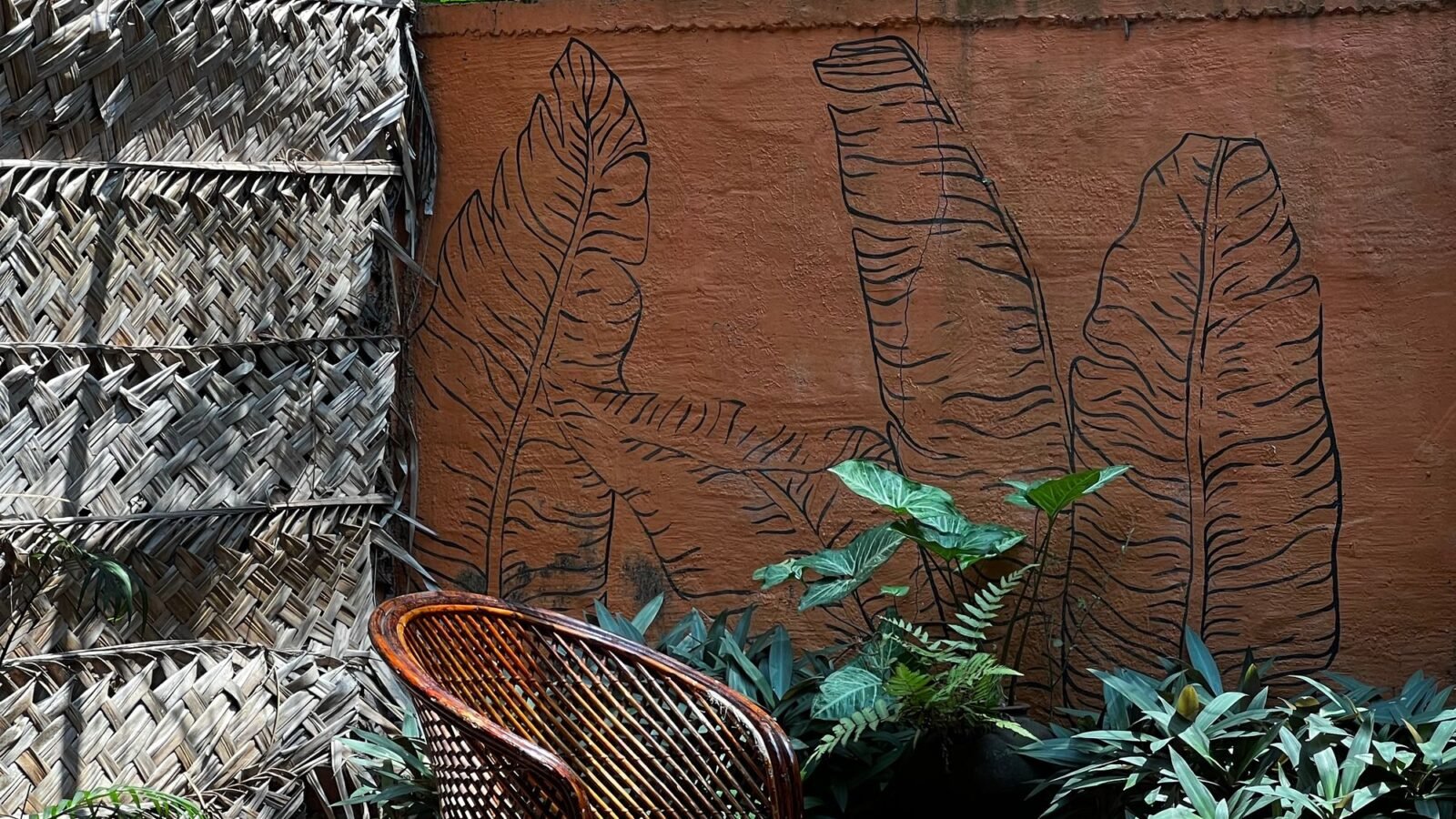
A small tree or a sculptural plant in a large pot can give the patio a clear focal point of its own. One substantial plant often looks calmer overall than many tiny pots competing for attention.
16Add a lantern or portable lamp
Rechargeable outdoor lamps create flexible evening lighting without any permanent wiring or electrician involved. Place them on a table or a sheltered ledge where they stay easy to reach and recharge.
17Keep the floor material consistent
One continuous deck, tile, or paver surface makes a small patio feel unified rather than pieced together. Too many material changes across a small footprint can visually divide the area into fragments.
18Use curtains on a covered patio
Outdoor curtains can soften the space and add privacy exactly when it is needed. Choose a light fabric that can be tied back easily to keep the patio feeling open during the day.
19Add storage inside the seating
A storage bench or a deck box can hold cushions and small tools without adding another bulky cabinet to an already tight space. This is one of the simplest upgrades for a patio that already has some built-in seating.
20Leave one clear route through the patio
Arrange furniture so there is an obvious, unbroken path from the door to the yard or seating area. Good circulation like this makes the patio feel larger and genuinely easier to use day to day.
21Decorate with fewer, larger pieces
One lantern, one grouped set of planters, and a few cushions often look better than many small accessories scattered around. Restraint is usually what helps a compact patio feel intentional rather than crowded.
Related ideas: 25 Small Backyard Ideas to Create a Beautiful Outdoor Escape · 21 Backyard Privacy Ideas for a More Secluded Outdoor Space
Final Thoughts on Small Patio Ideas
A small patio works best as one well-designed outdoor room rather than several half-finished zones. Choose the main activity first, size the furniture carefully, and use these small patio ideas around vertical greenery, shade, lighting, and storage to make the space comfortable without filling every inch.
Discussion