
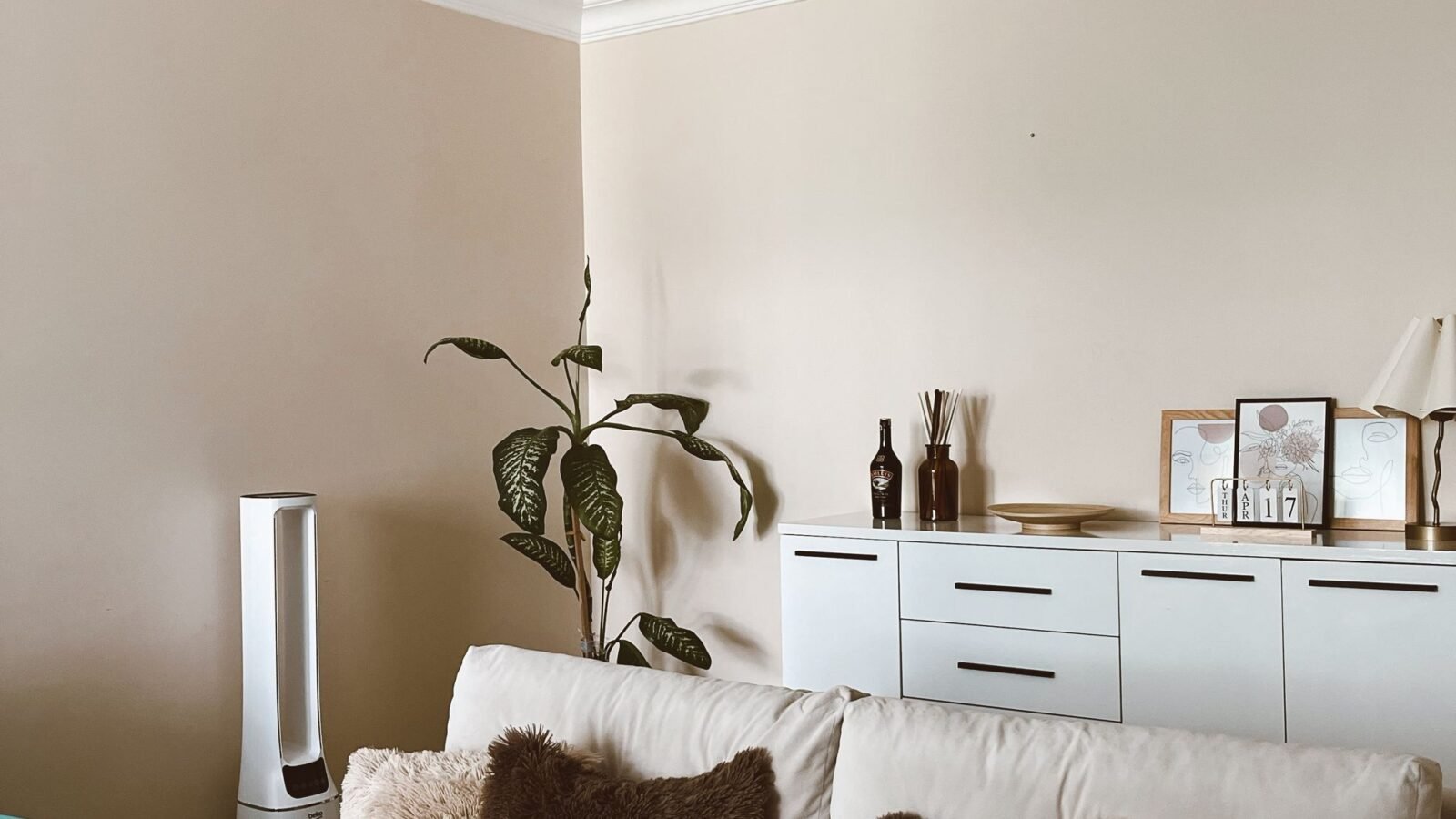
Warm minimalism and organic modern share restrained palettes, natural-looking materials, and relatively simple furniture. The useful distinction is emphasis. Warm minimalism usually puts editing and quiet function first; organic modern often gives more attention to sculptural shapes and visible material texture. These are flexible decorating labels, not standards that every designer defines the same way.
| Decision | Warm minimalism | Organic modern |
|---|---|---|
| Main emphasis | Editing and quiet function | Material texture and sculptural form |
| Typical starting piece | Simple useful furniture | A few expressive shapes |
| Risk to avoid | Removing useful comfort | Buying bulky statement pieces |
Compare the main priority
In a warm minimalist room, a simple sofa, useful table, and comfortable lighting may be the whole starting plan. In an organic modern version, the table’s shape or stone-like surface may become a focal point. Either room can be warm, edited, and practical; the label should help you choose, not force unnecessary purchases.
Look at the furniture silhouette
Warm minimalism often works with familiar straight forms softened by textiles and wood. Organic modern examples often include rounded sofas, irregular tables, and broad curved backs. Compare actual dimensions: a rounded silhouette can occupy more usable floor space than it appears to in a styled photograph.
Decide how much texture should lead
A warm minimalist room may have smooth walls, plain upholstery, and one textured rug. An organic modern room might add prominent wood grain, a rough-looking vessel, or a textured wall finish. Keep enough quiet surfaces around strong textures so the room does not become visually crowded.
Use color without treating beige as a rule
Both approaches can include muted blue, clay, green, or brown. Warm minimalism can express color through one large plain surface, while an organic modern arrangement may connect it with wood, stone, and ceramics. Begin with your fixed flooring and existing upholstery before selecting a palette from a photograph.
Choose the focal point deliberately
For warm minimalism, a view, artwork, or well-proportioned sofa may lead. For organic modern, a sculptural lamp or substantial table may lead. If every object has an unusual shape, nothing feels quiet. Give the chosen focal point simpler neighbors and enough usable space.
Test the materials in daily life
A pale textured sofa may collect lint; a porous stone table may need specific care; a low irregular table may be hard to reach. Read the product’s instructions instead of assuming natural-looking means easy to maintain. Texture is useful when it suits the way the room is occupied.
Treat storage as part of either approach
Closed storage can make both styles easier to live with. Choose its capacity around actual belongings and check doors and drawers in the layout. Hiding everything is not required, but purchasing baskets to disguise objects you never use rarely solves the underlying storage problem.
Use lighting to serve the seats
Neither style needs dimness as proof of atmosphere. Position reading light where hands and books are, and check glare from the sofa. A sculptural fixture can be an accent, but it should not be the only practical source simply because it suits the room’s label.
Compare a realistic version of the same room
Imagine keeping an existing gray sofa. A warm minimalist refresh might add plain cream curtains, a simple oak table, and fewer accessories. An organic modern version might keep those curtains but choose a rounded wood table and one substantial ceramic lamp. The difference is the emphasis, not a complete change of inventory.
Choose according to your habits
Choose warm minimalism if fewer visible objects, easy resets, and simple forms appeal most. Lean toward organic modern if you enjoy tactile materials and a few sculptural pieces. Combine them if that suits you: a quiet background can support one expressive table without becoming a different room.
Avoid buying the label
A curved mirror and a beige vase do not automatically make a coherent organic modern room. Removing useful objects does not automatically create warm minimalism. Compare scale, access, comfort, maintenance, and the relationships between pieces before assigning a style name.
Make the room work as a whole
Keep useful furniture and choose where you want visual interest. Warm minimalism offers a helpful emphasis on editing; organic modern offers a helpful emphasis on material and form. A room that borrows from both can be more convincing than one assembled to satisfy a label.
For the broader foundation, explore our neutral home decor ideas. Use the combinations here as options to adapt to your room, rather than a shopping list to complete.
Discussion