
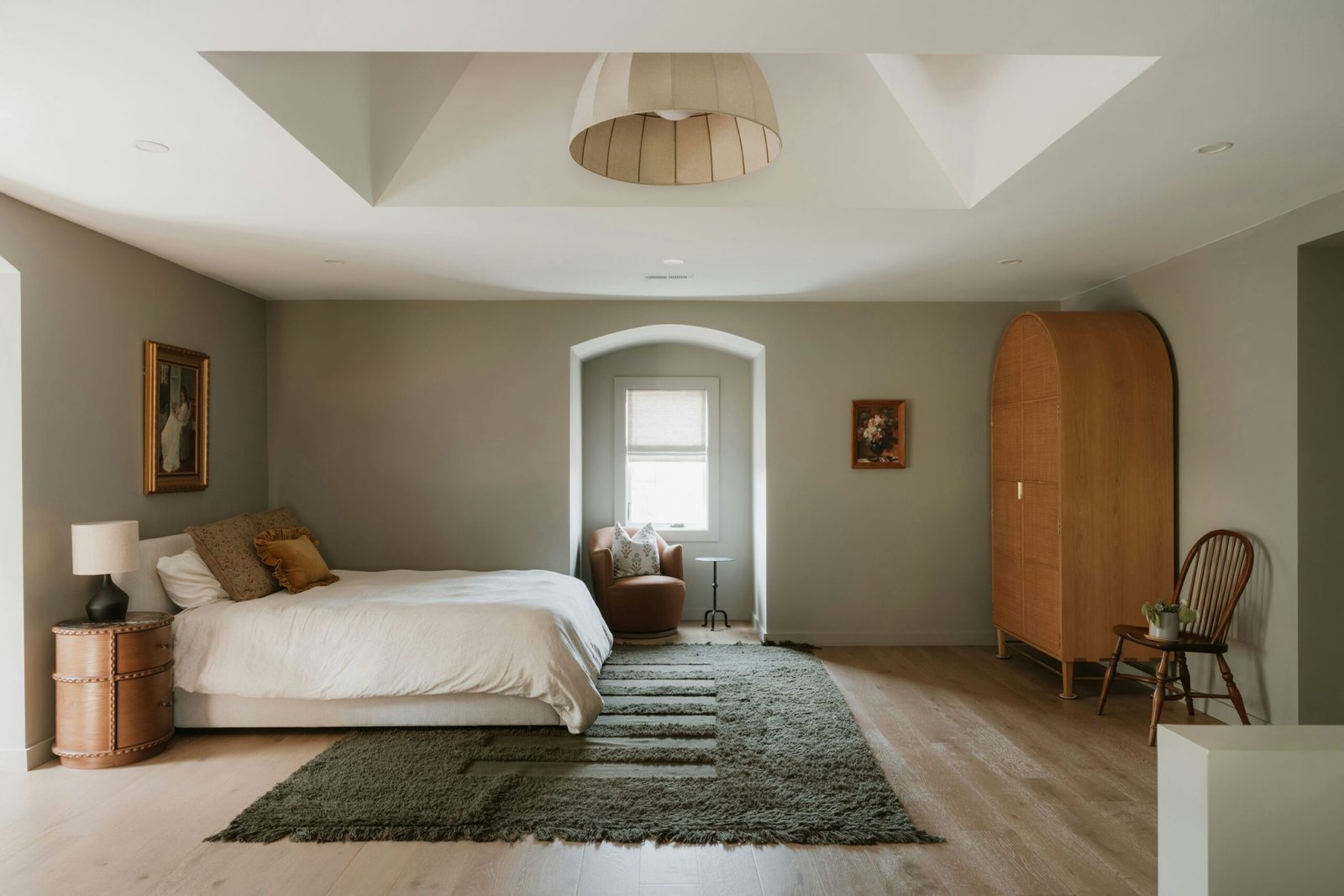
Cozy bedroom ideas for tile floors should soften the room without pretending the tile is not there. Its color, pattern, and grout grid already contribute to the design. Work with those features, then add comfort where your feet, eyes, and hands meet the room.
These are decorating suggestions, not changes to the floor’s thermal performance. Choose a few that suit your climate and daily routine.
1Identify the tile’s undertone first
Hold a white sheet beside the tile to compare its color. A pink-beige floor and a gray-green floor may need different surrounding neutrals even if both looked beige in the listing photograph.
2Put softness where you step out of bed
Position a suitable rug or runner at the actual landing point. Check for slipping and curled edges, and use an appropriate underlay that is compatible with the floor and rug.
3Match the rug to the usable route
Avoid a size that ends awkwardly in a doorway. Measure with doors open and include the path to the wardrobe, not just the visible floor beside the bed.
4Use a woven coverlet
A visible weave adds texture above a smooth floor. Choose the weight for your sleeping conditions rather than piling on heavy layers only for appearance.
5Bring wood into one major piece
A wooden bed, dresser, or bedside table can add material contrast. Compare the finish directly with the tile so you do not introduce another unwanted undertone.
6Try fabric curtains
Curtains can balance a room dominated by hard surfaces. Choose the appropriate heading and length for existing hardware and keep them away from heating equipment.
7Use a shaded bedside lamp
A well-positioned lamp can make the room more comfortable after dark. Keep glare out of your normal sightline and route the cable away from your feet.
8Add one medium warm tone
Camel, muted terracotta, or brown may bridge pale bedding and tile. Test the textile first, especially if the floor already has a strong warm cast.
9Keep the grout grid in mind
If the floor has a prominent square pattern, use quieter bedding or a softer textile motif. Several competing grids can make the room feel visually busy.
10Choose a padded sitting surface
A chair cushion or suitable upholstered seat can add comfort where you dress. Include a chair only if you can use it without blocking the wardrobe or route.
11Use slippers as part of the routine
Keep a pair where you actually get out of bed. This is a small practical response to a hard floor and may be more useful than adding another decorative textile.
12Select washable rugs realistically
Check whether the rug fits your washing machine and follow its care label. Washable does not automatically mean convenient for every household or machine capacity.
13Keep the bed visually grounded
A rug extending visibly around the bed can connect the furniture to the floor. Use the actual frame measurements and avoid narrow exposed strips that look accidental.
14Simplify a strongly patterned tile
Let the floor provide the main pattern. Plain bedding, quiet curtains, and limited accessories can reduce competition without covering the entire room.
15Add fabric to the headboard area
A securely installed upholstered headboard can introduce a softer large surface. Follow the bed and headboard instructions rather than resting a loose panel behind the mattress.
16Repeat one floor color above ground
A small cushion or picture frame can connect the tile to the rest of the room. Repeat a quieter tone from the floor if its dominant color already feels strong.
17Avoid a tiny decorative rug that slides
A small rug may look charming but become awkward in daily movement. Choose stability and position before pattern, and review compatibility with the floor finish.
18Reduce shiny accessory overload
Glossy tile already reflects the room. Matte ceramics, woven fabric, or wood can provide contrast without requiring every decorative surface to shine.
19Keep a comfortable dressing zone
Store everyday clothes near a usable standing area. A room feels more welcoming when getting dressed does not require balancing around furniture and rugs.
20Review the room at night
The floor may appear cooler or warmer under artificial light. Adjust your textile choices after seeing the actual nighttime palette instead of relying on daytime photographs alone.
21Make maintenance part of the design
Choose textiles you can lift or move for cleaning. Avoid arrangements that trap dirt in inaccessible gaps or require dismantling the room to reach the floor.
Start with a small combination
Try a stable bedside rug, a textured coverlet, and one warm wooden element. Add more only if the room needs it. Our warm neutral bedrooms and cozy small bedroom ideas provide related palettes.
Should I cover every tile?
No. A few well-placed textiles may provide enough comfort while preserving easy cleaning and clear routes.
Do these changes insulate the whole room?
No. Decorating can change comfort and appearance, but it is not a substitute for assessing building insulation or heating where those are the underlying issues.
Discussion