
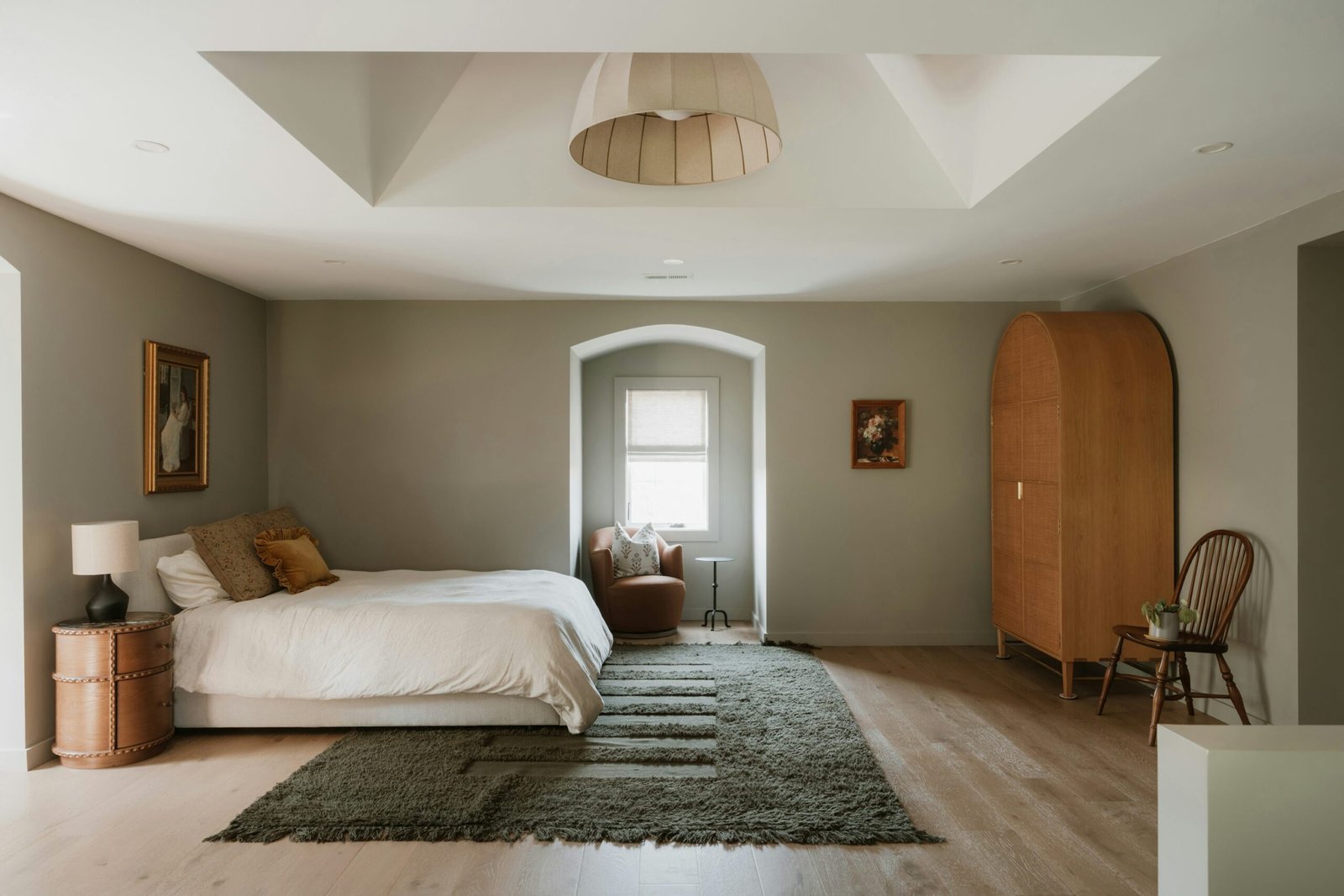
A warm neutral bedroom can feel calm without looking plain. The difference is in the layers: creamy whites instead of stark white, beige and taupe with depth, natural wood, tactile fabrics, and lighting that makes every surface feel softer.
The best warm neutral bedrooms do not depend on one exact shade. They build a quiet palette from related tones and then use texture, shape, and material to create contrast. That makes the room easy to live with, easy to update, and restful at the end of the day.
What makes a warm neutral bedroom feel inviting?
Start with three to five related neutrals rather than matching everything. A useful combination is warm white, oatmeal, taupe, natural oak, and one deeper brown. Then repeat those tones in different materials so the room feels coordinated rather than flat.
- Warm undertones: cream, sand, beige, camel, mushroom, and soft greige usually feel gentler than blue-based whites and grays.
- Natural texture: linen, wool, wood, woven fibers, boucle, and cotton add visual depth without demanding more color.
- Layered light: daylight, bedside lamps, and dimmable ambient lighting keep pale colors from feeling cold.
- Controlled contrast: a little walnut, dark bronze, chocolate brown, or charcoal helps define the softer palette.
1Begin with a creamy warm-white backdrop
Warm white walls are an easy foundation because they keep a bedroom bright while softening the contrast between walls, bedding, and wood. Look for whites with beige, ivory, or subtle yellow undertones rather than a crisp blue cast.
Before committing, test a large paint sample beside the flooring and bedding at morning, afternoon, and night. Neutral colors change noticeably as the light shifts.
2Build the bed in tonal layers
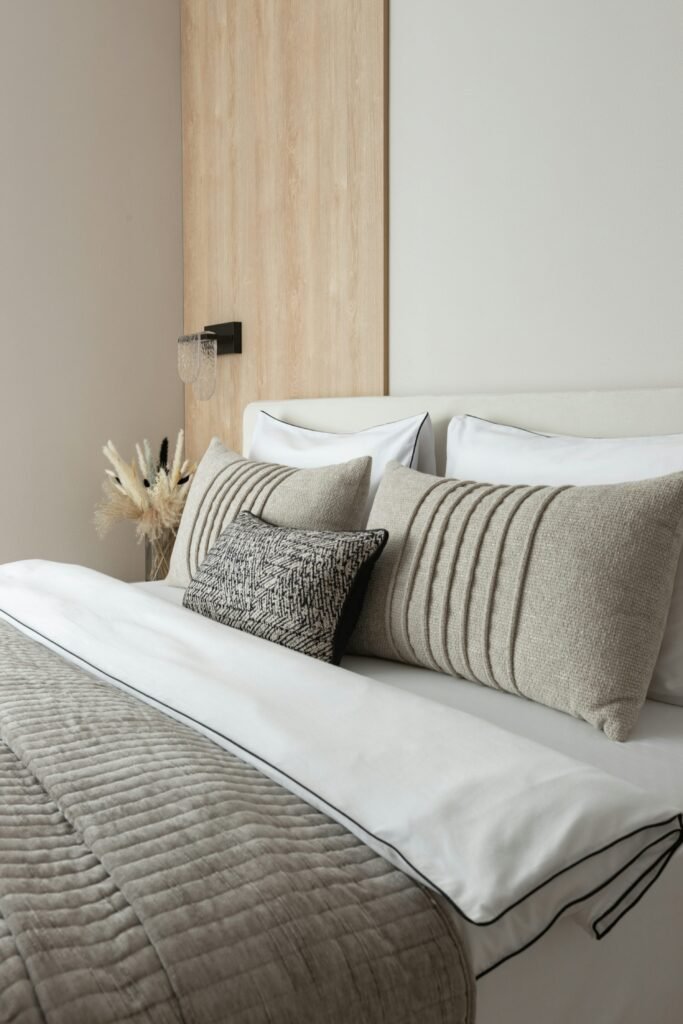
Instead of buying a matching bedding set, combine nearby shades such as ivory sheets, an oatmeal duvet, taupe pillows, and a camel or mushroom throw. The slight variations make a monochromatic bed look intentional rather than unfinished.
3Bring in natural oak for easy warmth
Light and medium oak are especially effective in a neutral bedroom because the visible grain adds pattern without introducing visual noise. A wood bed, nightstand, dresser, picture frame, or bench is often enough to warm an otherwise pale room.
4Let linen provide relaxed texture
Linen works beautifully in neutral rooms because its natural creases catch the light and keep pale bedding from looking too formal. Use it for a duvet cover, pillow shams, or full-length curtains, then pair it with smoother cotton so the textures feel balanced.
5Mix warm wood tones instead of matching every piece
A bedroom can feel more collected when the furniture is not from one identical set. Try light oak nightstands with a medium walnut dresser, or a pale wood bed with an antique brown bench. Keep the undertones warm and repeat each finish at least once for cohesion.
6Use an upholstered headboard to soften the room
A fabric headboard adds a large area of softness at eye level. Oatmeal, flax, mushroom, warm gray, and light taupe are versatile choices. A simple shape keeps the look timeless, while a subtle weave or boucle adds enough texture to hold its own against plain walls.
7Ground the bed with a substantial rug
A rug should visually connect the bed and surrounding furniture rather than float beneath the center. Choose wool, a wool blend, or a low-contrast woven design in sand, cream, taupe, or muted brown. The extra layer softens hard flooring and makes the entire room feel quieter.
8Use full-length curtains for softness and height
Mount curtains close to the ceiling and let them fall nearly to the floor. Warm white or natural linen-look panels diffuse strong daylight and make the wall feel taller. If you need blackout coverage, use a separate lining or shade so the visible fabric can stay light and relaxed.
9Add one deeper brown anchor
All-light neutrals can lose definition. A single deeper element such as a walnut dresser, chocolate throw, dark wood frame, bronze lamp, or espresso bedside table gives the eye a place to rest and makes the lighter tones appear more dimensional.
10Choose warm bedside lighting
Bedside lamps and sconces should make the room feel comfortable after sunset. Warm-white bulbs, fabric shades, frosted glass, and dimmers create a softer transition than one bright overhead fixture. Keep the light sources low and close to where you actually read or wind down.
11Add depth with a plaster-look or limewash-style wall
If plain paint feels too flat, a subtle mineral or plaster-style finish can add movement while staying within the same color family. Soft beige, putty, clay, or warm greige works well behind the bed. Keep the finish quiet so the texture is noticeable only as light moves across it.
12Introduce camel or clay in small doses
Warm neutrals do not have to stop at beige. Camel leather, muted terracotta, soft clay, or cinnamon can add gentle color while still reading as part of an earthy palette. Use one of these tones on a cushion, throw, artwork, or small chair rather than spreading it everywhere.
13Layer woven details for natural character
Rattan, cane, seagrass, and woven baskets bring pattern through construction rather than print. A woven pendant, cane-front nightstand, or storage basket can break up smooth painted surfaces and make a simple bedroom feel more tactile.
14Keep metal finishes soft and restrained
Brushed brass, aged bronze, and matte black can all work in a warm neutral bedroom. Choose one main metal finish and repeat it two or three times in lighting, hardware, or frames. Avoid filling the room with shiny metallic accents; the goal is definition, not sparkle.
15Add subtle pattern through textiles
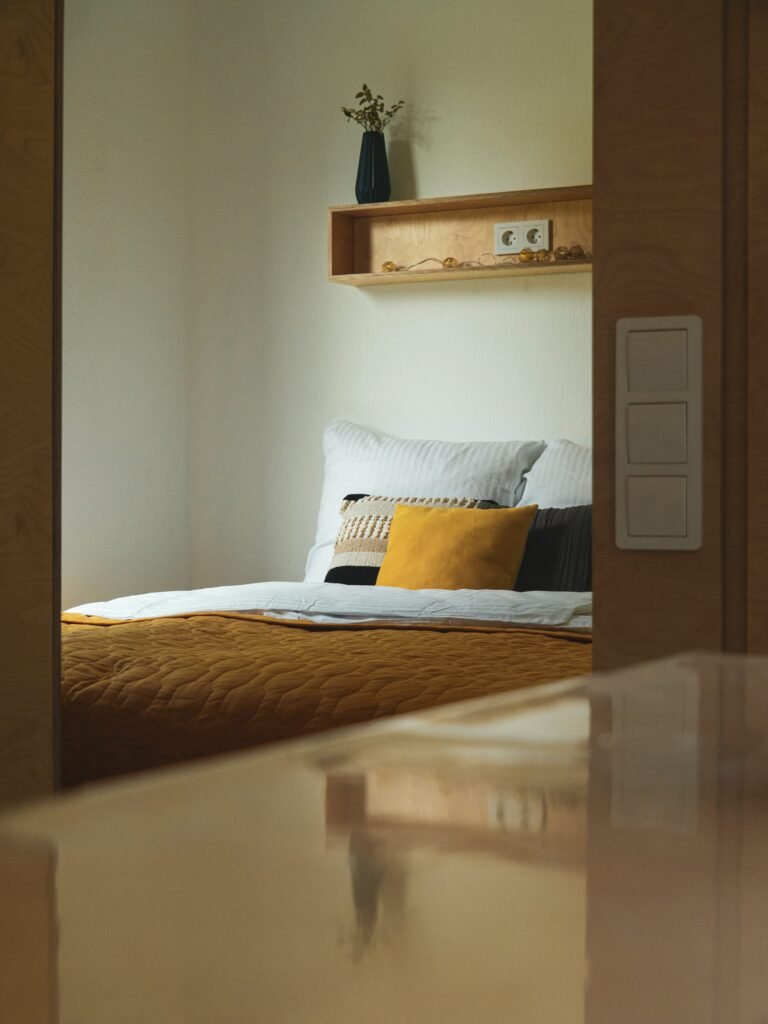
Neutral does not mean pattern-free. A fine stripe, small check, block print, or low-contrast geometric design can make bedding or a rug more interesting without disturbing the calm palette. Keep the pattern colors close to the base tones so they blend into the room from a distance.
16Use a bench or ottoman at the foot of the bed
If circulation allows, a low bench makes the bed feel finished and adds a practical place for folded blankets or getting dressed. Upholstery in oatmeal or taupe keeps it soft; natural wood adds structure. Leave enough clearance so the room still feels easy to move through.
17Choose large, quiet artwork
One substantial piece usually feels calmer than a cluster of many small frames. Look for abstract shapes, landscapes, botanical studies, or textural art in cream, brown, muted green, clay, or charcoal. Let the artwork echo the room rather than becoming a separate color scheme.
18Bring in greenery sparingly
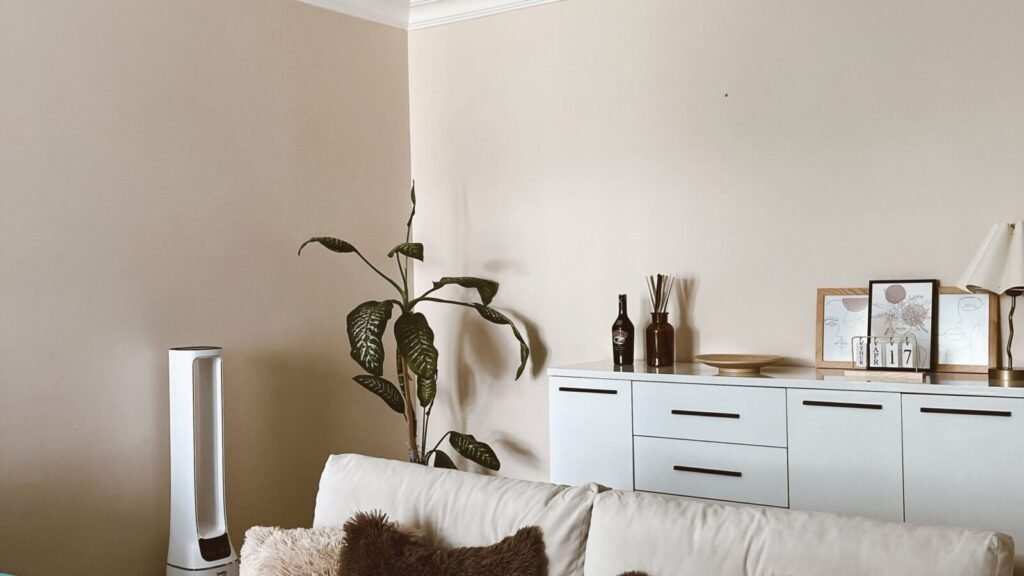
A small amount of real or realistic-looking greenery adds life to a neutral room and creates a useful contrast against cream and wood. One healthy plant on a dresser or a simple branch in a vase is often enough. Keep the arrangement uncluttered and choose plants appropriate for the room’s light.
19Make a small bedroom feel calm with tonal storage
In a compact room, large storage pieces can disappear visually when their color is close to the wall. Warm-white wardrobes, putty-painted cabinets, or light wood storage keep the room functional without creating a heavy block of contrast.
For more compact-space strategies, see our small bedroom ideas and cozy small bedroom ideas.
20Use symmetry where it helps, not everywhere
Matching bedside lamps or nightstands can make the sleeping area feel settled, especially when the bed is centered. The rest of the room does not need to be perfectly symmetrical. A single chair, floor lamp, or artwork arrangement can keep the room from feeling staged.
21Soften straight lines with a few curves
Neutral palettes put more attention on silhouette. A round mirror, globe lamp, curved chair, arched headboard, or rounded nightstand can balance the rectangles created by beds, wardrobes, and windows. One or two curved pieces are usually enough.
22Edit surfaces so the materials can breathe
Warm neutral rooms feel strongest when every surface is not filled. Leave part of the nightstand and dresser clear, then choose a few objects with useful shape or texture: a ceramic lamp, a small tray, one book stack, or a simple vase. The negative space helps the room feel restful.
23Repeat tones across the room for a finished look
The easiest way to make a neutral bedroom feel cohesive is repetition. If the rug contains taupe, echo taupe in a pillow. If the bed frame is oak, repeat a similar wood tone in a frame or stool. Small repetitions connect the room without requiring perfectly matched furniture.
A simple warm-neutral bedroom formula
If you are starting from scratch, use this sequence: choose a warm white or light beige wall color, add a bed in wood or neutral upholstery, layer two to four bedding tones, place a textured rug beneath the bed, add warm bedside lighting, and finish with one darker anchor plus a small natural accent.
The result should feel layered rather than beige-on-beige. Texture does much of the work that bold color would normally do.
Frequently Asked Questions
What colors count as warm neutrals?
Warm neutrals include ivory, cream, oatmeal, sand, beige, camel, taupe, mushroom, warm greige, soft brown, and muted clay. Their undertones generally lean beige, yellow, red, or brown rather than blue.
How do you keep a neutral bedroom from looking boring?
Vary texture, tone, material, and shape. Combine linen with cotton, smooth wood with woven fibers, light shades with one darker accent, and straight furniture with a few curves. Those contrasts create depth without needing strong color.
What wood tones work best with warm neutral bedrooms?
Oak, walnut, ash with a warm finish, and medium brown vintage woods all work well. You do not need to match every wood exactly; keeping the undertones compatible is more important than using a single finish.
Can warm neutrals work in a small bedroom?
Yes. Use the lighter end of the palette for large surfaces, keep storage close to the wall color, and reserve darker tones for smaller accents. That maintains visual softness while still giving the room enough contrast.
Should neutral bedding match the wall color?
Not exactly. Bedding usually looks richer when it is slightly lighter or darker than the walls. A few neighboring shades create separation and make the bed feel layered.
You might also love: 21 Modern Bedroom Ideas for a Calm, Clean, and Comfortable Space · 21 Sage Green Bedroom Ideas for a Calm and Cozy Space · 21 Neutral Home Decor Ideas for a Warm and Timeless Look
Final Thoughts on Warm Neutral Bedroom Ideas
A warm neutral bedroom works because it feels easy on the eyes while still giving you details to notice. Start with a restrained palette, then let natural materials, soft textiles, thoughtful lighting, and small changes in tone create the interest. The room can stay calm without becoming empty, and timeless without feeling generic.
Discussion