
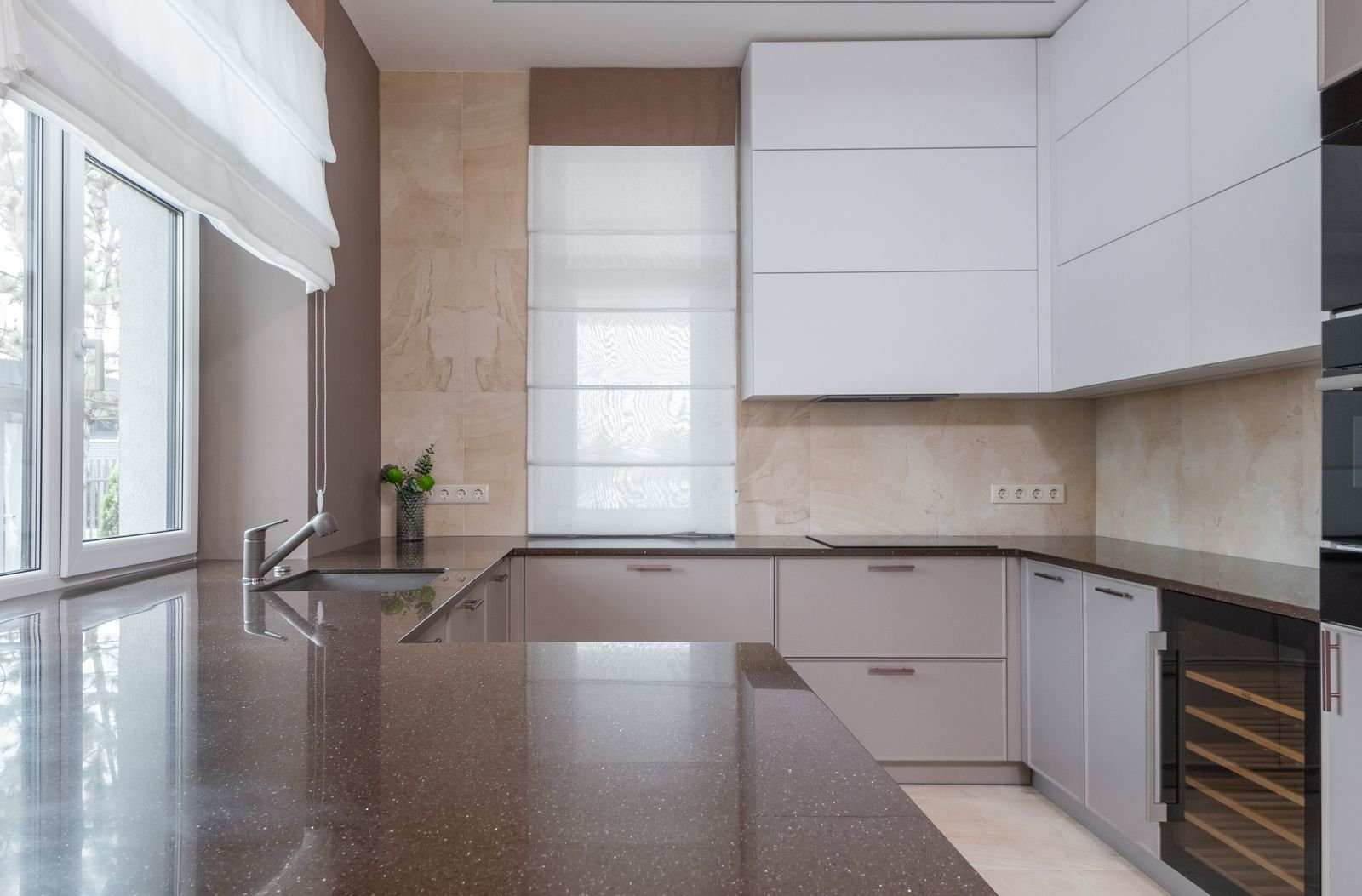
Black countertops already provide a strong visual line. In a small kitchen, styling works best when it protects preparation space and makes daily items easy to reach. The counter might be stone, laminate, or another material; follow its actual care instructions rather than treating every black surface alike.
1Leave a preparation area clear
Identify where you normally chop and assemble food. Keep styling outside that zone, even if a photograph suggests a continuous display. The most attractive arrangement should still let you prepare a meal without clearing it first.
2Add one lighter useful container
A pale utensil pot or bowl creates separation from the dark surface. Choose something stable and easy to clean. Do not add a container where drawers already hold the same objects conveniently.
3Repeat black above counter height
A small frame or a detail in an existing appliance can connect the worktop to the room. One or two repetitions may be enough. Large dark accessories can make the countertop line feel unnecessarily heavy.
4Compare towels against cabinet fronts
A towel that looks cream beside black may look yellow against white doors. View all three together. Choose washable fabric suited to its job rather than buying purely for the color combination.
5Keep appliance groupings practical
Place the coffee equipment together only if that spot has appropriate power and safe clearance. Avoid extension-cord solutions disguised by decorative trays. Follow appliance placement instructions before settling the display.
6Use one restrained accent color
Olive, rust, or dusty blue can provide variety beside black. Start with an existing object you like and repeat it lightly. Adding several strong accent colors can break the small room into competing patches.
7Try warm wood without crowding
A single useful board can soften the contrast between black and pale cabinets. Store it so it dries appropriately. Do not lean a row of large boards across the preparation surface solely for texture.
8Choose a tray smaller than the available zone
Leave room around it for cleaning and hand movement. The tray should gather objects rather than consume the whole counter. Lift it regularly so crumbs and moisture do not stay underneath.
9Let the backsplash remain visible
Keep tall displays away from its best stretch if it is already attractive. This can make the room feel simpler without a purchase. A line of containers may hide the one surface that gives the kitchen character.
10Use a clear boundary for paperwork
Set up a separate message spot rather than letting letters spread across the counter. Keep it away from splashes and food preparation. A small kitchen benefits when each category of clutter has a specific home.
11Compare glossy and matte accessories
A matte ceramic can contrast with a polished worktop, while a smooth container may stand out on a matte one. Judge actual cleaning needs too. A surface chosen for contrast may show grease or fingerprints differently.
12Keep the sink edge easy to clean
Use the fewest containers needed for washing up. A properly draining holder can be more useful than a decorative grouping. Do not let a damp cloth remain pressed against a surface with unknown care requirements.
13Use the wall only where appropriate
A small mounted shelf may move objects off the counter, but it needs suitable fixings and a sensible location. Avoid positioning it where items can fall into cooking or wet areas. Check rental permission first.
14Choose a small print with a light ground
A pale background in artwork can connect black counters to lighter walls. Keep it away from grease and splashes. One readable image usually contributes more than a collection of tiny framed phrases.
15Bring color into seating instead
If counter space is scarce, a chair cushion or nearby dining textile can provide the accent. Check it against the countertop from the room entrance. The work surface does not have to carry every decorating idea.
16Use lighting to support the worktop
Check whether your hands cast shadows over the preparation spot. Installed task lighting may help, but changes involving wiring need appropriate installation. Do not treat decorative light as a substitute for useful visibility.
17Test a runner with doors open
Check appliance and cabinet movement before keeping a rug. Secure edges according to the product guidance and choose a material suited to kitchen use. A dark worktop does not require a dark rug beneath it.
18Clean according to the actual material
Look up the manufacturer guidance for the counter you have. A black color does not tell you whether acidic, abrasive, or strong cleaners are appropriate. Keep cleaning tools separate from decorative containers to avoid mix-ups.
19Review after an ordinary cooking day
Notice what you move, spill around, or struggle to reach. Remove or relocate those objects. A successful styled kitchen is easier to reset after cooking, rather than attractive only when nobody uses it.
Common questions
How many accessories belong on a black countertop?
There is no required number. Keep preparation space clear and use only items that serve the kitchen or create a useful focal point outside working areas.
Can I use the same cleaner on every black worktop?
No. Color does not identify the material. Follow the manufacturer’s care guidance for your specific countertop.
Keep the counter useful
Black counters need clear working space and a few deliberate contrasts. Start with a lighter useful object, a restrained accent, and a clear preparation zone. Add more only if it helps the kitchen work as well as look coherent.
For more starting points, explore our small kitchen guide. Adapt the suggestions to your existing room and choose only the changes that solve a real need.


Discussion