
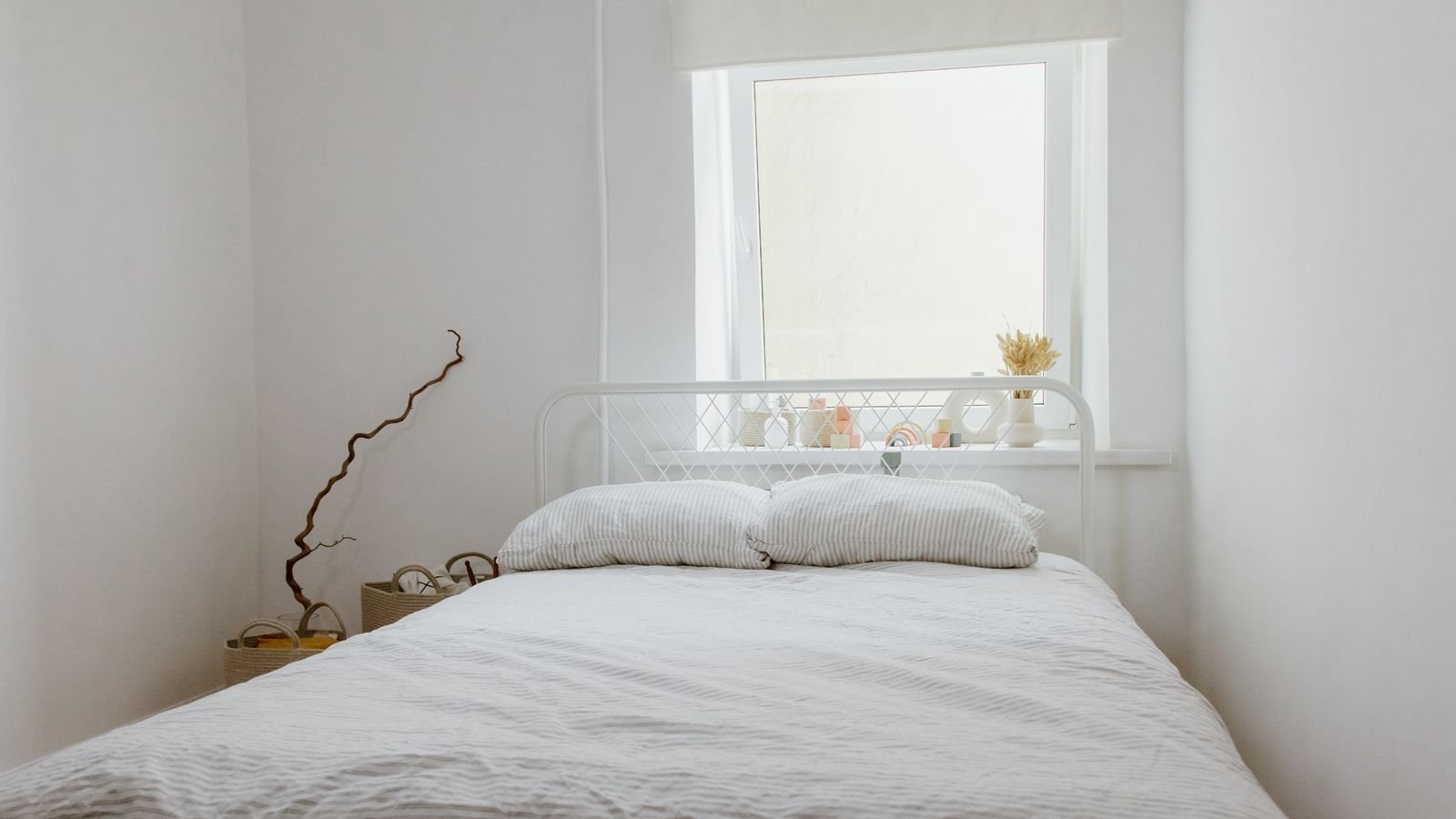
Small bedroom decorating ideas using existing furniture begin with an inventory, not a shopping basket. Look at the bed, storage, lighting, and textiles separately. You may like each piece but dislike the way they currently compete.
Choose three changes below, photograph the starting point, and test the room for a week. Keep the changes that improve both appearance and daily use.
1Make the bed the starting point
Clear the bed completely, then rebuild its layers with your existing bedding. Choose one main fabric and one supporting texture instead of returning every cushion automatically.
2Move the spare chair out temporarily
An unused chair often holds clothes rather than a person. Try the room without it before deciding you need additional storage or smaller furniture.
3Compare two bed positions on paper
Draw the actual frame, doors, and wardrobe openings. Moving the bed is useful only if the new position preserves access and makes the room easier to use.
4Borrow a bedside table from another room
A compact side table may fit better than an oversized matching nightstand. Test its height, stability, and usable top before making the exchange permanent.
5Use the dresser as one deliberate display
Clear its top and return a useful lamp, tray, and one personal object. Leave enough space to put something down without rearranging the whole composition.
6Turn a throw to its quieter side
A reversible blanket may offer a less busy surface. Fold it so the visible section connects with the bedding rather than showing every color at once.
7Move existing art into one grouping
Plan the arrangement on the floor first. Use suitable secure fixings and avoid placing inadequately supported heavy or breakable objects above the bed.
8Repeat one finish you already have
A wooden frame can connect to a dresser; a dark lamp can relate to a bed rail. A few repeated details are enough to make mixed furniture feel considered.
9Remove decorative storage that stores nothing
An empty basket still occupies floor space. Keep containers that have a clear purpose and give the rest another home.
10Show more of a useful window
Reposition tall furniture if the measured layout permits. Preserve window operation, required escape access, and clearance around heating equipment.
11Use fewer bedside objects
Decide what you reach for at night. Store occasional items elsewhere so a modest surface can function without looking crowded.
12Restyle the books you keep nearby
Choose a small current-reading group. A controlled stack looks intentional and is easier to use than several scattered piles around the bed.
13Change the visible bedding proportions
Fold the duvet lower to show more sheet, or spread the coverlet farther. The same fabrics can create a different balance without adding another layer.
14Reassign a small tray
A tray from the living room can organize jewelry or glasses. Check that it fits the surface while leaving space for everyday use.
15Move a lamp to the place you read
Useful light improves the room after dark. Keep the fixture stable and route its cable away from doors, feet, and moving furniture.
16Make one shelf less crowded
Remove small objects until the remaining pieces have clear outlines. Empty space can help a compact room feel more composed without sacrificing necessary storage.
17Coordinate what is already visible
Choose the colors present in the bed, rug, and curtains, then reduce unrelated accessories. Start by subtracting rather than purchasing matching replacements.
18Put daily clothes behind a door
Use existing drawers or wardrobe sections more deliberately. Sort duplicates and rarely worn items before deciding the room needs another cabinet.
19Shift a mirror to improve its reflection
Test the view before fixing it securely. Reflecting a calm corner can be more useful visually than reflecting the busiest storage area.
20Keep the floor beside the bed available
Do not fill every gap with a basket or stool. That space may be needed for stepping out, changing bedding, and reaching the window.
21Review the entrance view and the lived-in view
Photograph from the doorway, then sit and lie on the bed. A room should look coherent and support the actions you perform every day.
Put the changes together
Try a clearer dresser, a better-positioned lamp, and simplified bedding first. Our small bedroom guide and cozy small bedrooms offer related arrangements.
What if my furniture does not match?
Connect a few colors, shapes, or finishes. Matching every piece is unnecessary when the furniture fits and serves a purpose.
When should I buy something new?
After testing the rearrangement. Buy for an identified missing function or dimension rather than an imagined complete makeover.
Discussion