
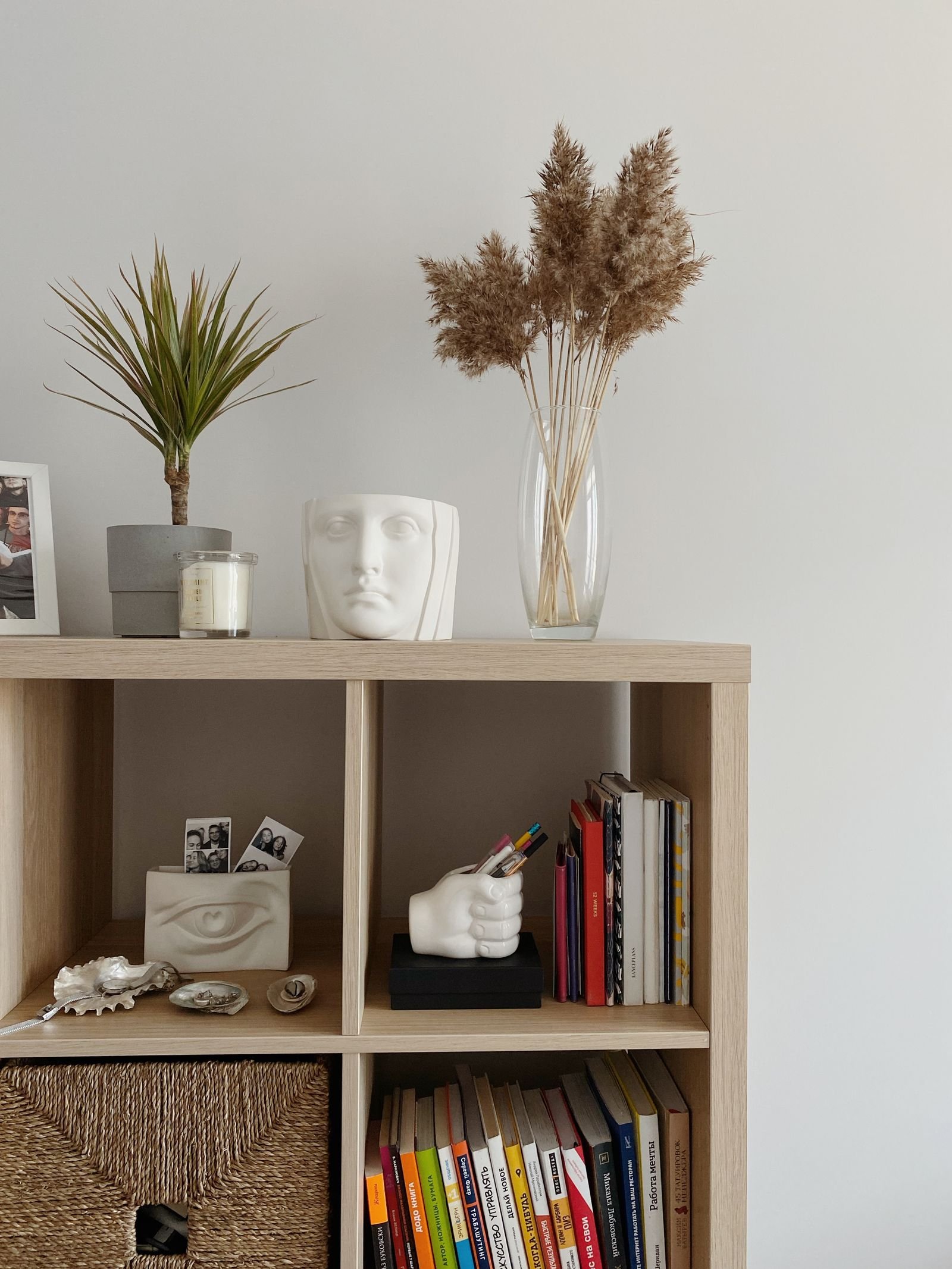
A well-styled bookshelf is one of the most satisfying details in a home. More than just storage, it is a chance to display the things you love, add color and texture, and give a room personality. The difference between a cluttered shelf and a curated one comes down to a few simple styling principles that anyone can master.
These ideas cover how to style a bookshelf that feels collected and cozy rather than crammed, from arranging your books to adding decor, greenery, and balance. Use the ones that suit your shelves and the pieces you want to show off.
How do you style a bookshelf?
Good shelf styling is about balance and variety. Mix the way you arrange books, combine them with decorative objects, vary heights and textures, and leave some breathing room so the whole display feels considered rather than packed.
- Vary the arrangement: mixing vertical and horizontal book stacks adds rhythm and interest.
- Mix in decor: objects, plants, and art break up the books and add personality.
- Balance and negative space: spreading visual weight and leaving gaps keeps it from looking cluttered.
- Texture and height: combining materials and scales gives the shelves depth.
1Mix vertical and horizontal stacks
Alternating upright rows of books with horizontal stacks creates rhythm and visual interest. The horizontal stacks also double as pedestals for small objects on top.
2Group books by color
Arranging books by color creates a calm, cohesive, and modern look. Grouping shades together, or forming a subtle gradient, turns a mismatched collection into a tidy display.
3Leave some negative space
Resist filling every inch. Empty space around your groupings gives the eye room to rest and makes the styled pieces feel intentional rather than crowded.
4Add decorative objects
Break up rows of books with vases, sculptures, bowls, or boxes. These objects add shape, color, and personality and stop the shelves from feeling like pure storage.
5Use books as risers
Stack a few books horizontally and place a small object on top to add height and draw the eye. This simple trick creates layers and gives objects a little pedestal.
6Add greenery
A trailing plant, a small potted plant, or a few stems soften the lines of a shelf and add life. Greenery brings a fresh, natural element that makes the display feel warm.
7Incorporate art
Lean small framed prints or artwork against the back of the shelves for depth and character. Layering art behind objects adds a collected, gallery-like feel.
8Vary heights and scale
Combine tall and short items across the shelves to keep the eye moving. Varying scale is what makes a display feel dynamic rather than flat and uniform.
9Try spine-in for a neutral look
For a soft, neutral aesthetic, turn some books spine-in to show the pages, or wrap them in paper. It is a modern trick, though keeping favorite spines visible adds color and personality.
10Add baskets or boxes
Baskets and decorative boxes provide hidden storage for clutter while adding texture. Tuck them on lower shelves to keep everyday items out of sight but close at hand.
11Create vignettes
Style each shelf as a small vignette, grouping a few related objects together. Thinking in little arrangements rather than filling the whole shelf keeps the look curated.
12Add bookends
Decorative bookends keep upright books tidy and add a stylish accent. They are a small detail that makes a shelf look finished and intentional.
13Balance across the shelves
Distribute color, height, and visual weight across all the shelves so no area feels heavy or empty. Stepping back to check the whole unit helps you spot what needs adjusting.
14Layer in texture
Combine smooth ceramics, woven baskets, natural wood, and metal for a rich, tactile look. A mix of textures adds depth and warmth to the display.
15Include personal objects
Travel souvenirs, photos, and meaningful keepsakes make the shelves personal and tell your story. These touches are what make a bookshelf feel like yours.
16Use the rule of thirds
Arrange objects in small odd-numbered groups and vary their placement across the shelves. Odd groupings and asymmetry tend to look more natural and pleasing than rigid symmetry.
17Add a pop of color
A bright object, a colorful book stack, or a vibrant piece of art adds energy to a neutral shelf. One or two pops of color keep the display from feeling flat.
18Layer objects in front of books
Placing a small object or framed photo in front of a row of books adds depth and dimension. This layering makes the display feel collected rather than lined up.
19Style in odd numbers
Grouping objects in threes and fives looks more natural and balanced than pairs. Odd-numbered arrangements feel relaxed and curated rather than stiff.
20Add lighting
Small LED strips, puck lights, or a nearby lamp highlight the display and add a cozy glow. Lighting turns a bookshelf into a genuine feature, especially in the evening.
21Edit and avoid clutter
When the shelves feel busy, remove a few items and give the rest room to breathe. Editing is the final and most important step in a curated, cozy display.
Frequently Asked Questions
How do I style a bookshelf?
Mix vertical and horizontal book stacks, add decorative objects, plants, and art between them, and vary the heights and textures. Group items into small vignettes, balance the visual weight across the shelves, and leave some negative space so the display feels curated rather than crowded.
Should books be arranged by color or size?
Both work, so it comes down to the look you want. Arranging by color creates a calm, cohesive, modern effect, while grouping by size or subject can feel more traditional. Many people combine approaches, mixing vertical and horizontal stacks for variety.
How do I make my bookshelf look less cluttered?
Edit down the number of items, group them into small arrangements, and leave negative space between groupings. Using baskets or boxes to hide small clutter and keeping a limited color palette also make the shelves feel calmer and more intentional.
What do you put on shelves besides books?
Decorative objects like vases, bowls, and sculptures, plus plants, framed art, baskets, boxes, bookends, and personal keepsakes all work well. Mixing these with your books adds color, texture, and personality to the display.
How full should a bookshelf be?
Aim for a balance, filling roughly two-thirds to three-quarters of the space and leaving the rest open. Some negative space around your books and objects makes the styling look deliberate and keeps the shelves from feeling packed.
Final Thoughts
Styling a bookshelf is a chance to show off your books, treasures, and personality all at once. Mix your book arrangements, add decor, greenery, and texture, vary the heights, and leave a little breathing room. Balance the whole display and edit out anything that feels crowded, and your shelves will look curated, cozy, and unmistakably yours.
Discussion