
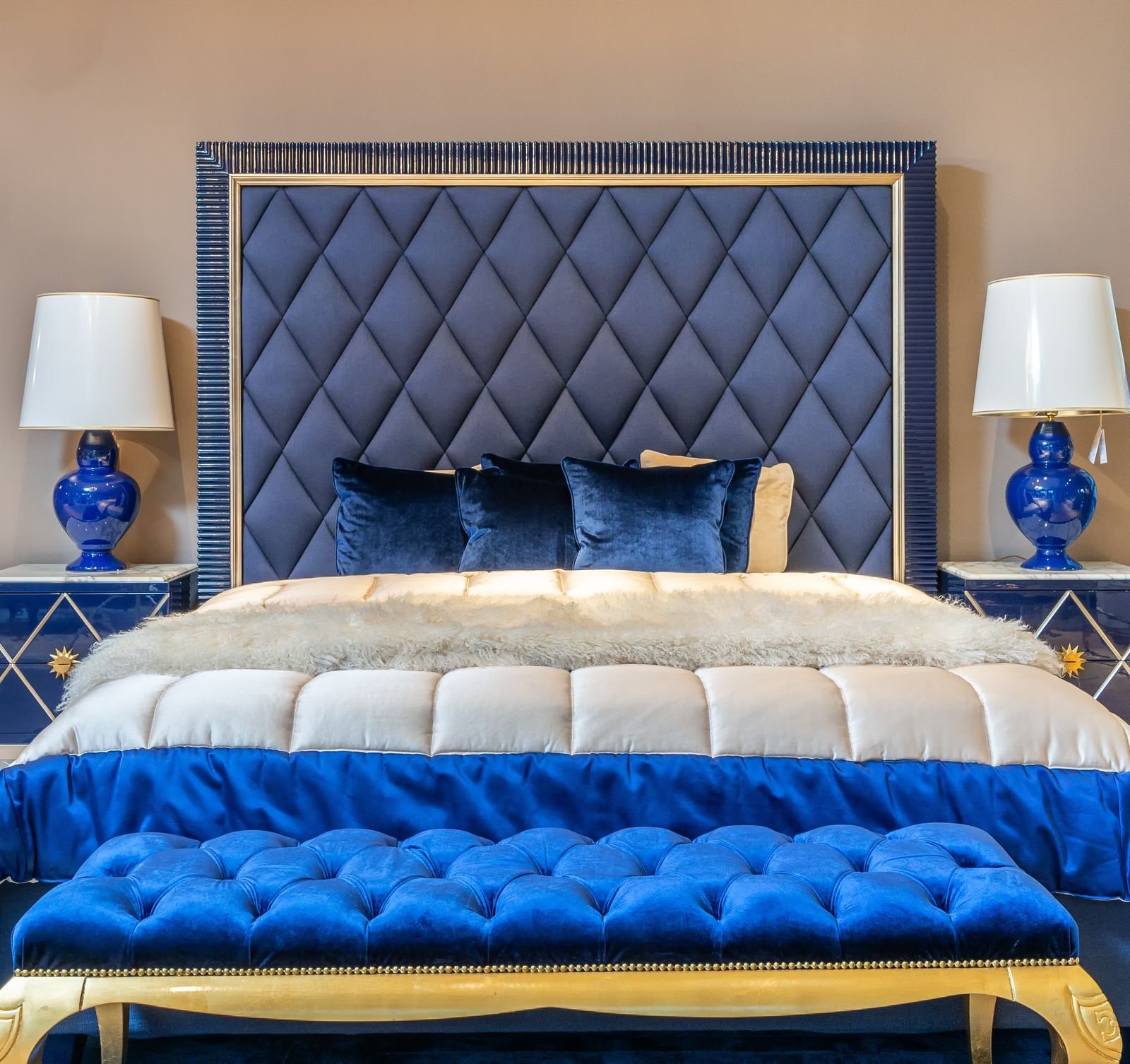
Blue and brown bedroom ideas work across a wide range of moods. Navy with walnut can feel deep and enveloping; dusty blue with camel can feel lighter. The success of the pairing depends on the particular shades and how much space each occupies.
Start with the brown you already own: a wood finish, leather detail, carpet, or upholstered bed. Choose the blue around that fixed element.
1Pair navy bedding with walnut
Let the wood and blue provide depth, then use a lighter sheet or curtain for separation. Keep the bed’s outline visible if the wall is dark too.
2Try dusty blue with camel
A muted blue and warm tan can create a softer contrast. Compare the fabrics together because both names cover many different undertones.
3Use cream as a pause
A pale neutral between blue and brown can stop the room becoming one dark mass. Test it against existing paint and flooring.
4Repeat brown away from the bed
A small frame or useful tray can connect a wooden bed to another wall. A few deliberate repeats are enough.
5Let a striped textile contain both colors
A restrained blue-and-brown stripe can connect the scheme. Keep the larger surrounding surfaces quieter if the stripe is prominent.
6Compare blue beside the floor
A blue that works with the headboard may look different next to carpet or tile. Include all fixed finishes before approving a large bedding purchase.
7Use chocolate as a limited accent
A deeper brown cushion can give pale blue bedding definition. Start with a small amount rather than adding several dark furniture pieces.
8Keep curtains calmer than patterned bedding
Plain fabric or a subtle weave can support the palette without creating a second main pattern. Measure the treatment for actual window use.
9Choose the room’s light-dark balance
Decide whether you want pale blue with dark brown details or deeper blue with lighter brown accents. Clear roles can make the combination easier to build.
10Use warm wood for texture
Wood grain can provide variation without another textile motif. Check the finish in person rather than assuming all brown furniture relates naturally.
11Try a blue wall sample behind the wood
Position it vertically where the colors meet. Review daylight and the lamps used at night before committing to paint.
12Add a quieter metal detail
A small brass, nickel, or black element can work if it relates to existing fittings. You do not need to change every metal to complete the palette.
13Use a rug as a bridge
A rug with blue, brown, and a neutral can connect the room. Check stable edges, dimensions, and door movement before choosing its pattern.
14Keep bedside lighting useful
A color scheme should work after dark. Test reading light and access to switches rather than relying on a decorative bedside glow.
15Balance a dark headboard with lighter pillows
This creates a visible transition where the bedding meets the furniture. Use the pillows you need rather than building an impractical display.
16Let art introduce variation
A landscape or abstract image can include related tones without repeating the exact bedding pattern. Choose it for meaning as well as color.
17Edit out a third competing strong color
If the scheme feels disconnected, remove an unrelated accent temporarily. The problem may be too many directions rather than an unsuitable blue-brown pairing.
Three combinations to test
For a lighter room, try dusty blue, camel, cream, and pale wood. For a deeper one, try navy, walnut, ivory, and a small muted metal detail. For an existing brown upholstered bed, test blue bedding with a quiet warm neutral rug.
These are sample combinations, not guarantees for every material finish. Our navy bedroom guide and warm neutral bedroom ideas can help you adapt them.
Does blue always make a bedroom feel cold?
No. Its undertone, surrounding wood, textiles, and light influence the effect. Test the actual combination rather than the color family alone.
Can several brown wood tones work together?
Yes. Connect them through a shared palette and keep their proportions deliberate. An exact furniture-set match is optional.
Start with the brown you will keep
Choose a blue beside it, add a compatible neutral, and build texture gradually. That sequence is more useful than selecting every object independently.
Discussion