
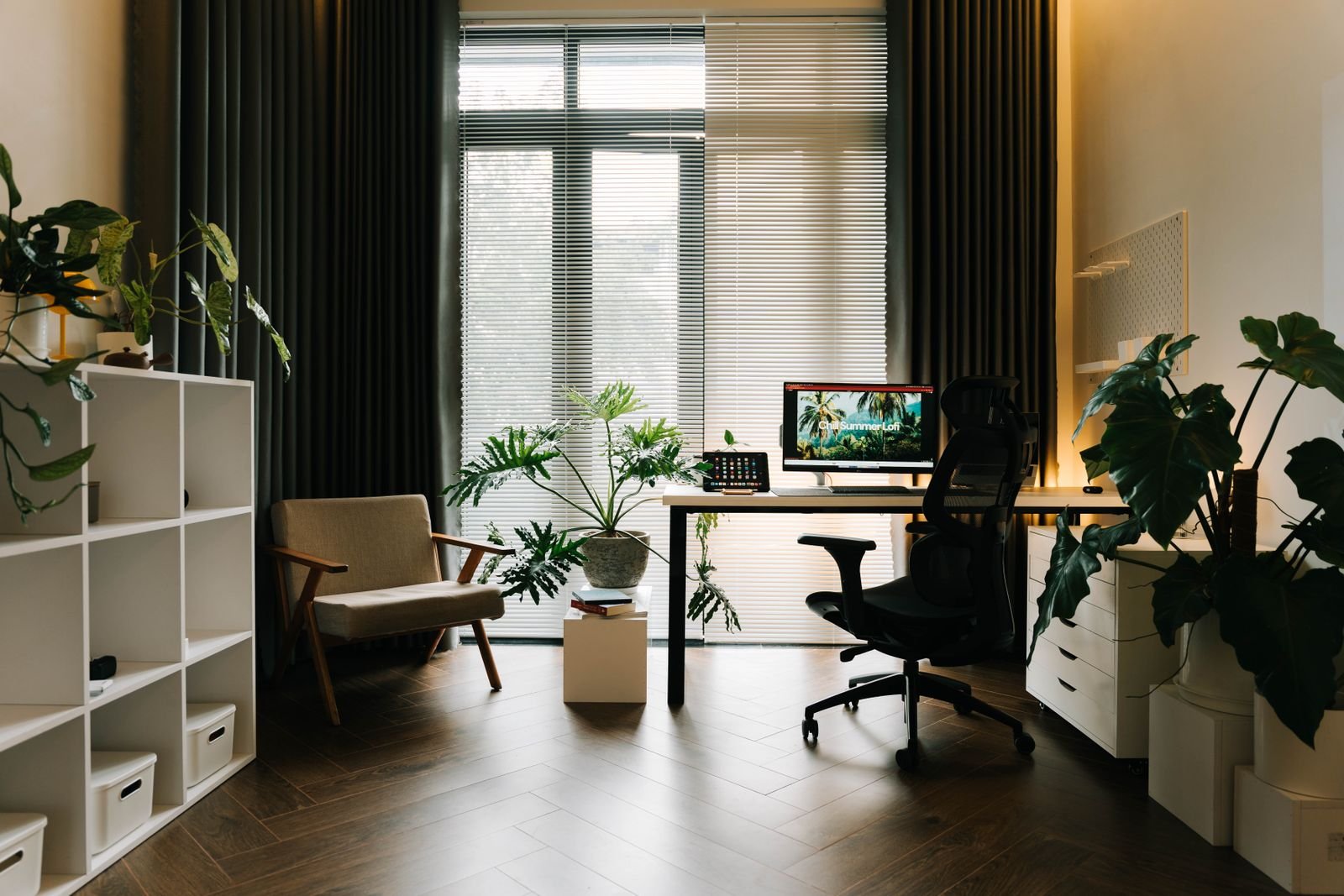
A desk in a small living room works when the chair has somewhere to go during use. The desktop may fit against the wall while the seated person blocks the only route through the room. Measure the complete working arrangement before choosing a desk because it looks compact.
Decide how many hours you will work there and what equipment must remain set up. A place for occasional paperwork has different needs from a daily computer workstation.
Map the living room’s essential routes
Mark the path between the entrance, sofa, kitchen, balcony, and any bedroom door. Open storage furniture and include its moving fronts. Preserve exits and access to windows and fixed equipment.
Then draw the sofa and desk at their actual outside dimensions. Add the chair in both its stored and in-use positions. If the route works only when the chair is pushed in, the layout does not support simultaneous working and passing through.
Try the arrangement with temporary furniture you already own before buying.
Option one: a desk on an unused wall
A wall position can keep the work area separate from the main seating arrangement. Check socket access, glare, and whether shelves or cupboards open above or beside it.
A shallow desk may save floor space but leave insufficient distance for your equipment and normal working posture. Choose dimensions around the work you do, then consult appropriate workstation setup guidance.
Avoid placing the monitor where a bright window creates an uncomfortable reflection. Review the actual screen during the hours you work.
Option two: a desk behind the sofa
This can use a room’s middle zone, but a sofa-back console is not automatically a desk. Check its height, knee space, depth, and stability. Decorative crossbars may make sitting impossible.
Include the chair and passage behind it. Cables need a managed route that does not cross the walking line. If the arrangement requires extension leads across the floor, reconsider the location rather than hiding the issue under a rug.
A finished desk back can look better from the seating area, but practical use comes first.
Option three: a corner that shares storage
A desk near an existing bookcase can use a shelf for paper, chargers, and work materials. Keep the desk surface available for the task instead of filling it with storage.
Check that shelves remain accessible while someone is seated. A cupboard door that hits the chair creates a conflict you will repeat every day.
If this is also the television wall, consider the household’s overlapping routines. The most compact position may be distracting during meetings or evening viewing.
Give work a closing routine
Create a specific place for the laptop, notebook, and charger when work ends. A drawer, lidded box, or shelf section can be enough. Measure the equipment before buying a container.
A small reset is easier to maintain than dismantling an entire workstation every night. If daily use requires a permanent monitor, plan around that honestly instead of styling photographs as though it disappears.
Make the desk belong visually
Repeat a wood tone or color already used in the room. A simple desk shape can relate to the coffee table without matching it exactly. Use one lamp that supports work and fits the surrounding palette.
Avoid adding a decorative divider unless privacy or visual separation genuinely requires it. It may consume the circulation space the desk needs.
Explore our home office ideas and small apartment living rooms for related layouts.
Common questions
Is a folding desk better?
Only if its open dimensions work and folding it is practical with your equipment. A desk that is never folded should be evaluated as permanent furniture.
Can the dining table double as a desk?
It can for some routines. Check working comfort, equipment storage, and whether meals require clearing it several times a day.
Test an entire working day
Sit, move the chair, take a call, and let someone walk through. The right position supports those actions without making the living room difficult to use.

Discussion