
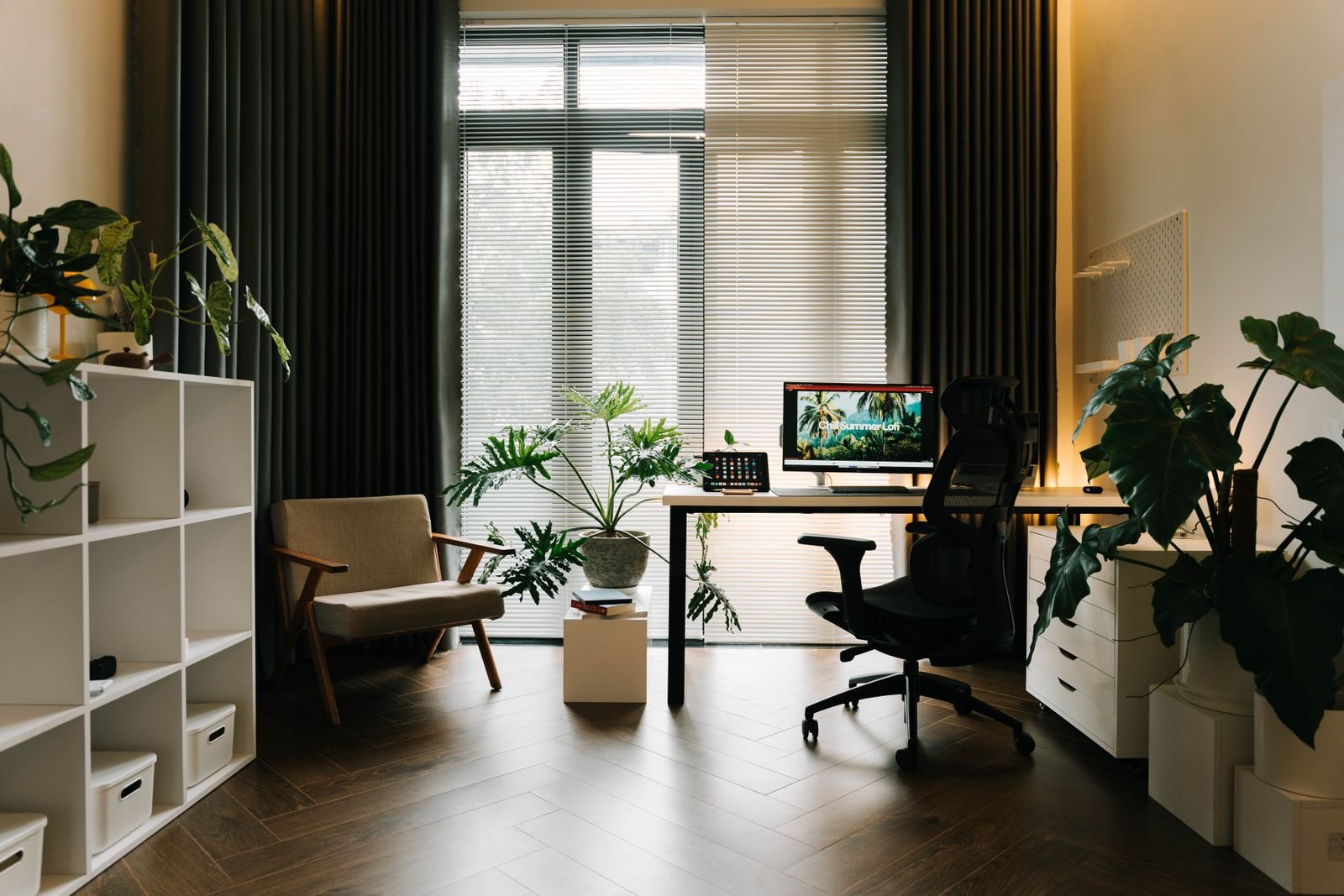
A well-designed home office does more than look good; it helps you focus, stay comfortable, and actually enjoy your workday. Whether you have a dedicated room or a corner of the living room, the right setup balances function and calm so the space works as hard as you do.
These ideas cover the essentials of a productive home office: comfortable and ergonomic basics, good lighting, smart storage, and the personal touches that make the space inviting. Choose the ones that fit your room and the way you like to work.
What makes a home office feel calm and productive?
A good home office supports both focus and comfort. That means the right ergonomics, plenty of light, organized storage, and a clean, uncluttered setup that keeps distractions to a minimum while still feeling like a space you want to be in.
- Comfortable ergonomics: a supportive chair and a well-placed desk protect your body through long working days.
- Good lighting: natural light plus a task lamp reduces strain and keeps energy up.
- Smart storage: shelves, drawers, and cable management keep the desk clear and the mind focused.
- Personal calm: plants, art, and a considered palette make the space feel welcoming rather than sterile.
1Choose the right spot
Where you place your office matters as much as how you furnish it. Look for a quiet corner with natural light and minimal foot traffic, away from the busiest and noisiest parts of the home.
2Invest in a good desk
The desk is the heart of the office, so choose one sized to your space and your work. Enough surface area for your screen, notes, and a coffee makes daily tasks easier and keeps clutter at bay.
3Prioritize an ergonomic chair
A supportive, adjustable chair is worth the investment for your comfort and health. Good back support and the right height reduce strain and help you stay focused through long stretches at the desk.
4Position the desk near natural light
Daylight boosts mood and reduces eye strain, so place your desk near a window where you can. Position it to the side of the screen rather than directly behind or in front to avoid glare.
5Add layered task lighting
Natural light is not always enough, so add a good desk lamp for focused tasks. Layering ambient and task lighting keeps the room comfortable and usable at any time of day.
6Keep a calm color palette
Soft, muted colors help a workspace feel focused and unstressful. Warm neutrals, sage green, and gentle blues are calming choices, with a bolder accent or two for energy where you want it.
7Build in plenty of storage
Good storage is what keeps a home office from taking over a room. Shelves, drawers, and closed cabinets give everything a home and let you clear the desk at the end of the day.
8Manage the cables and cords
Tangled cables make even a stylish office feel messy. Use clips, trays, and cable sleeves to route cords out of sight, which instantly makes the whole setup look calmer and more polished.
9Add greenery
Plants soften a workspace, improve the feel of the air, and add a calming touch of nature. A desk plant or a shelf of greenery makes the office feel more inviting and less clinical.
10Personalize with art and decor
A few pieces of art, framed prints, or meaningful objects make the space feel like yours. Personal touches keep the office motivating without cluttering your working surface.
11Plan a functional layout
Arrange the room around how you actually work, keeping frequently used items within reach. Defining zones for focused work, storage, and reference material keeps everything efficient.
12Add a rug for warmth
A rug grounds the workspace, adds warmth underfoot, and helps absorb sound. It also visually defines the office area, which is especially useful in a shared or open-plan room.
13Use vertical space
When floor space is tight, build upward with wall shelves, a pegboard, or floating cabinets. Vertical storage keeps essentials handy without crowding the desk or the floor.
14Soften the acoustics
Hard, empty rooms echo, which can be tiring on calls. Soft furnishings such as a rug, curtains, and upholstered pieces absorb sound and make the space more comfortable.
15Add a second, comfortable seat
A small armchair or reading chair gives you a spot to step away from the desk for calls, reading, or a break. It makes the office feel more like a room and less like a workstation.
16Keep the desk clear
A clear desk supports a clear mind. Keep only what you use daily on the surface and store the rest, so you start each day with a tidy, focused workspace.
17Add a pinboard or whiteboard
A pinboard, whiteboard, or wall calendar keeps notes, reminders, and inspiration visible without cluttering the desk. It is a simple way to stay organized and on track.
18Consider a standing desk
A sit-stand desk lets you change posture through the day, which is better for your body and your energy. Even a desktop converter offers the benefit without replacing your desk.
19Define the space with a divider
In a shared room, a bookshelf, screen, or curtain can separate the office from the rest of the space. A defined boundary helps you focus during work and switch off afterward.
20Layer in warmth and texture
Textiles, wood, and woven materials keep an office from feeling cold and corporate. A throw, a cushion, and natural textures make the space feel warm and inviting.
21Minimize distractions
Set the office up to help you focus by keeping clutter, noise, and visual distractions to a minimum. A calm, organized space makes it far easier to settle into deep, productive work.
Frequently Asked Questions
How do I set up a home office in a small space?
Use a compact or wall-mounted desk, build storage upward with shelves, and choose a slim, supportive chair. A quiet corner near a window, good task lighting, and clear cable management let even a small nook function as a proper workspace.
What is the most important thing for a home office?
Comfort and ergonomics come first: a supportive chair and a well-positioned desk protect your body and help you focus. Good lighting is a close second, since it reduces eye strain and keeps your energy up through the day.
What color is best for a home office?
Calm, muted tones such as warm neutrals, sage green, and soft blue help a workspace feel focused and low-stress. Adding one bolder accent through art or an object brings energy without making the room feel busy.
How do I make my home office more productive?
Keep the desk clear, manage cables, and give everything a storage home so the space stays organized. Position the desk near natural light, minimize distractions, and define a clear work zone so it is easy to focus and then switch off.
Where should I position my desk?
Near a window is ideal for natural light and mood, with the desk turned so the light falls to the side of your screen rather than causing glare. Choose a spot away from busy, noisy areas of the home to help you concentrate.
Final Thoughts
A great home office balances comfort, function, and calm. Start with a supportive chair and a well-lit desk, add smart storage and cable management, and finish with plants, art, and warm touches that make the space your own. Set up thoughtfully, even a small corner can become a workspace that keeps you comfortable, focused, and productive.
Discussion