
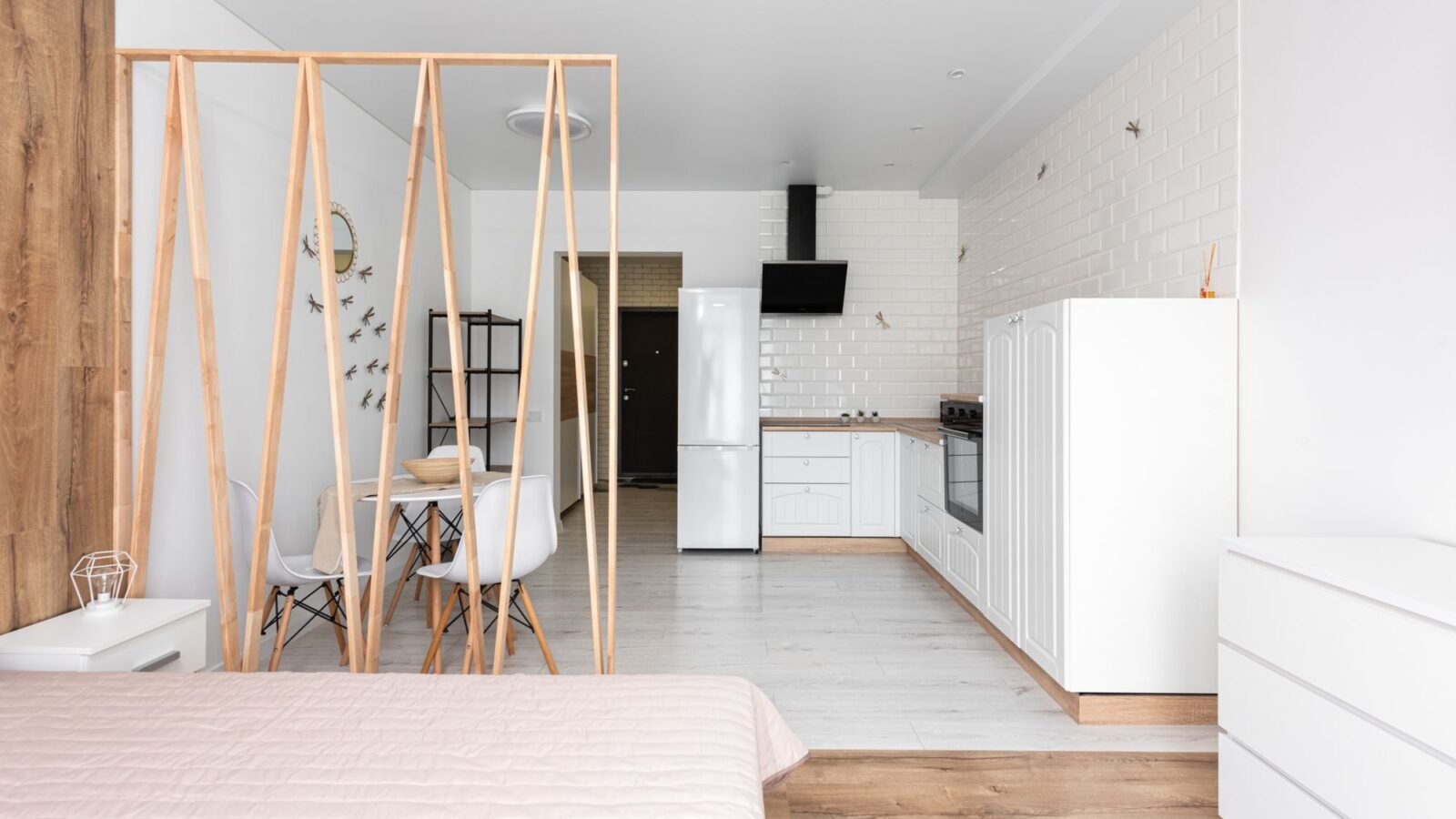
A studio apartment works best when the room feels connected but not undefined. The challenge is creating clear places to sleep, relax, eat, work, and store belongings without filling the apartment with walls or bulky dividers.
These studio apartment ideas use furniture placement, flexible storage, lighting, and visual zoning to make one open room feel organized and comfortable.
1Define the sleeping zone with a rug
A rug can give the bed a clear visual boundary without adding a physical divider to the room. Choose a size that anchors the bed, extending at least a foot beyond each side, while leaving the main circulation path completely open. This is often the fastest and cheapest way to make one room feel like it has two distinct areas.
2Use an open shelving divider
A bookcase that is open on both sides can separate sleeping and living zones in an open-plan studio while still allowing light and sightlines to pass through. Keep some shelves partially empty rather than fully stacked, so the divider reads as furniture rather than a heavy wall.
3Try a curtain around the bed
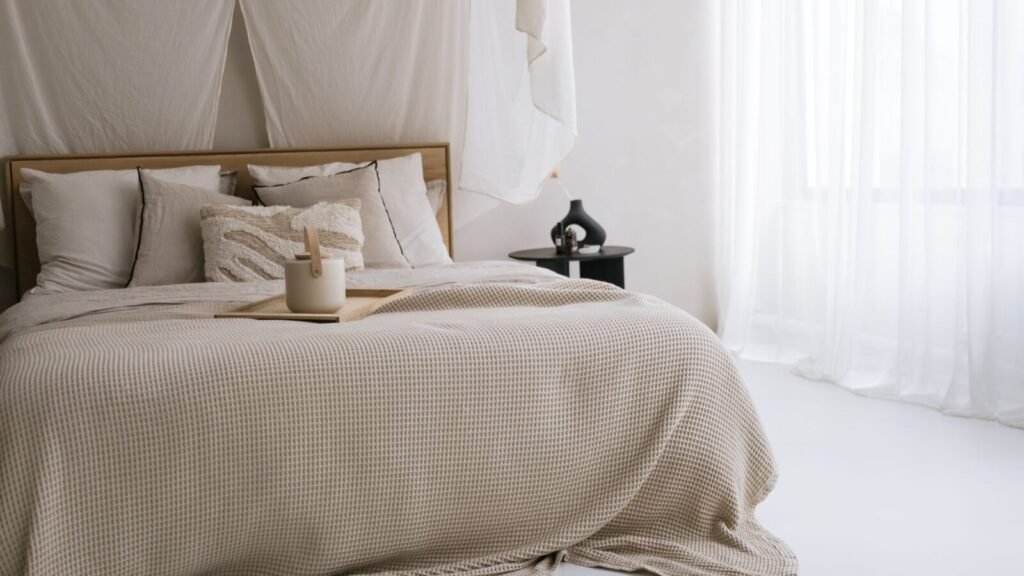
Ceiling-mounted curtains provide flexible privacy and can disappear completely against the wall when open. Choose a fabric that matches the overall palette so the divider feels like part of the room’s design rather than an afterthought.
4Position the sofa to create a boundary
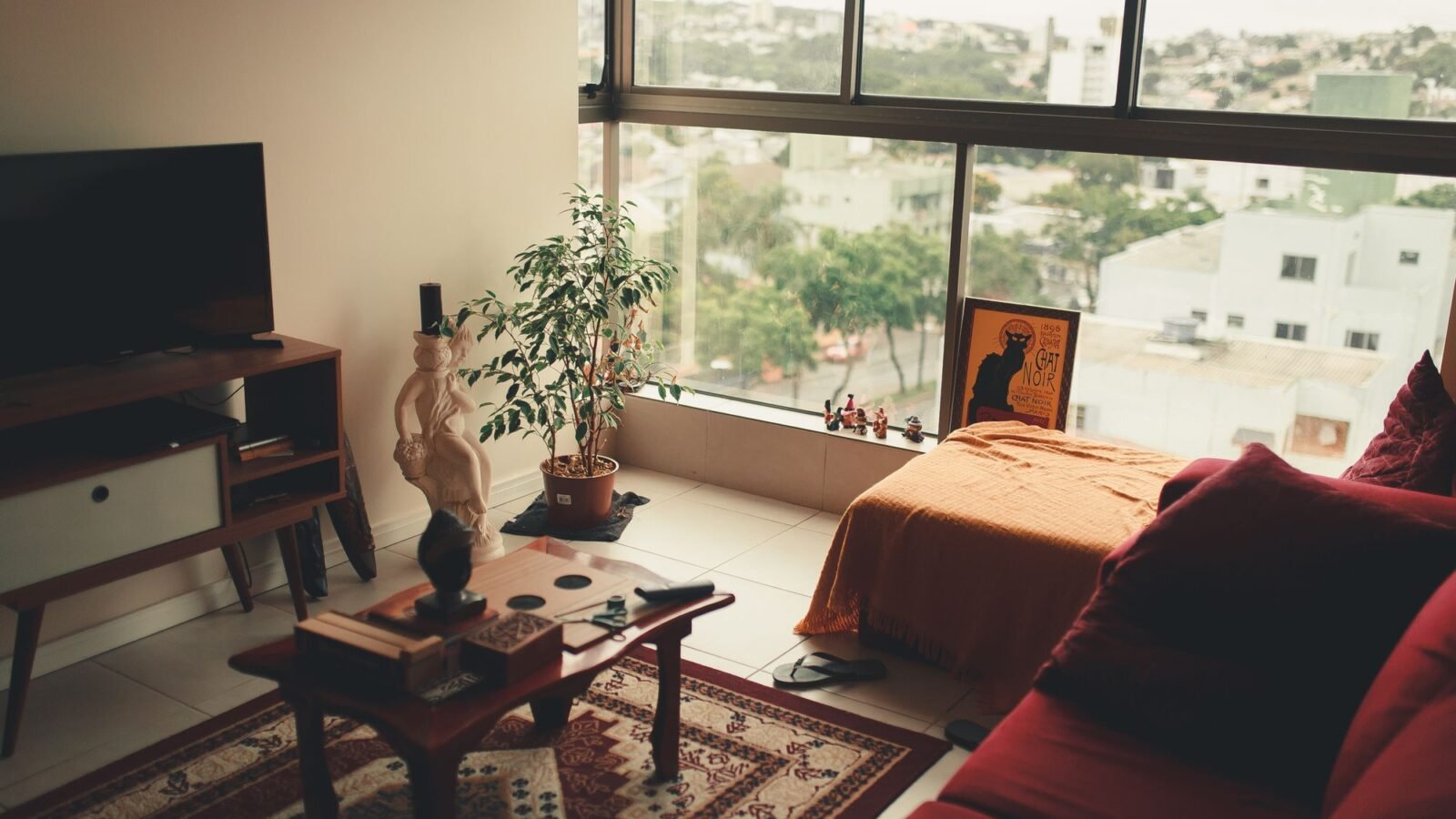
The back of a sofa can act as a subtle divider between the living area and the bed, especially in a long or rectangular studio. This avoids adding any new furniture and works particularly well when paired with a rug on each side.
5Choose a bed with storage
Built-in drawers or a lift-up base make the bed work harder and reduce the need for extra cabinets elsewhere in the room. Use the space for bedding, seasonal clothes, or bulky items you only need a few times a year.
6Use a compact round dining table
A small round table, roughly 30 inches across, fits into tighter layouts and is easier to move than a rectangular table with fixed corners. It can also double as a work surface during the day when it is not set for a meal.
7Choose stools that tuck away
Backless stools can slide completely under a counter, desk, or table when they are not in use. This keeps the apartment genuinely flexible on days when the extra seating simply is not needed.
8Use one consistent color palette
Repeating the same neutrals and accent colors across the sleeping and living zones helps the whole studio feel cohesive rather than like two separate rooms squeezed together. Each area can still have its own texture and function within that shared palette.
9Keep tall storage against one wall
Concentrating wardrobes and bookcases along one side keeps the rest of the room open and easier to move through. If possible, choose cabinets close to the wall color so the storage visually recedes rather than standing out.
10Take storage up to the ceiling
High cabinets make use of vertical space for luggage and infrequently used items that do not need to be within easy reach. The more storage you gain overhead, the fewer floor-standing pieces the room actually needs.
11Mount the TV
Wall mounting reduces visual bulk and allows for a shallower console, or no console at all, depending on the layout. A swivel mount can make the screen viewable from both the bed and the sofa without owning two televisions.
12Use a narrow console as a desk
A slim console can serve as an entry surface, a work area, or a vanity depending on the time of day. Pair it with a stool that disappears underneath when it is not in use.
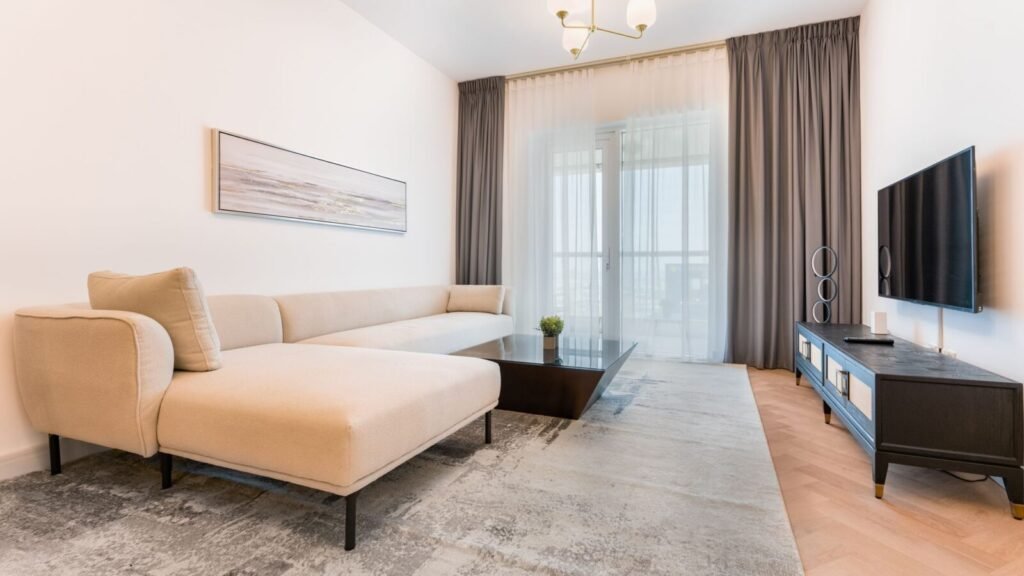
13Choose a small-scale sofa
Look for compact arms and an appropriate seat depth rather than simply buying a loveseat because it seems like the obvious small-space choice. A well-proportioned full sofa, chosen carefully, can feel comfortable without dominating the room.
14Add a large mirror near natural light
A substantial mirror can reflect the window and extend sightlines through the apartment, making the whole studio feel less boxed in. It also works as practical dressing space near the sleeping zone, which studios rarely have room for otherwise.
15Use lighting to define zones
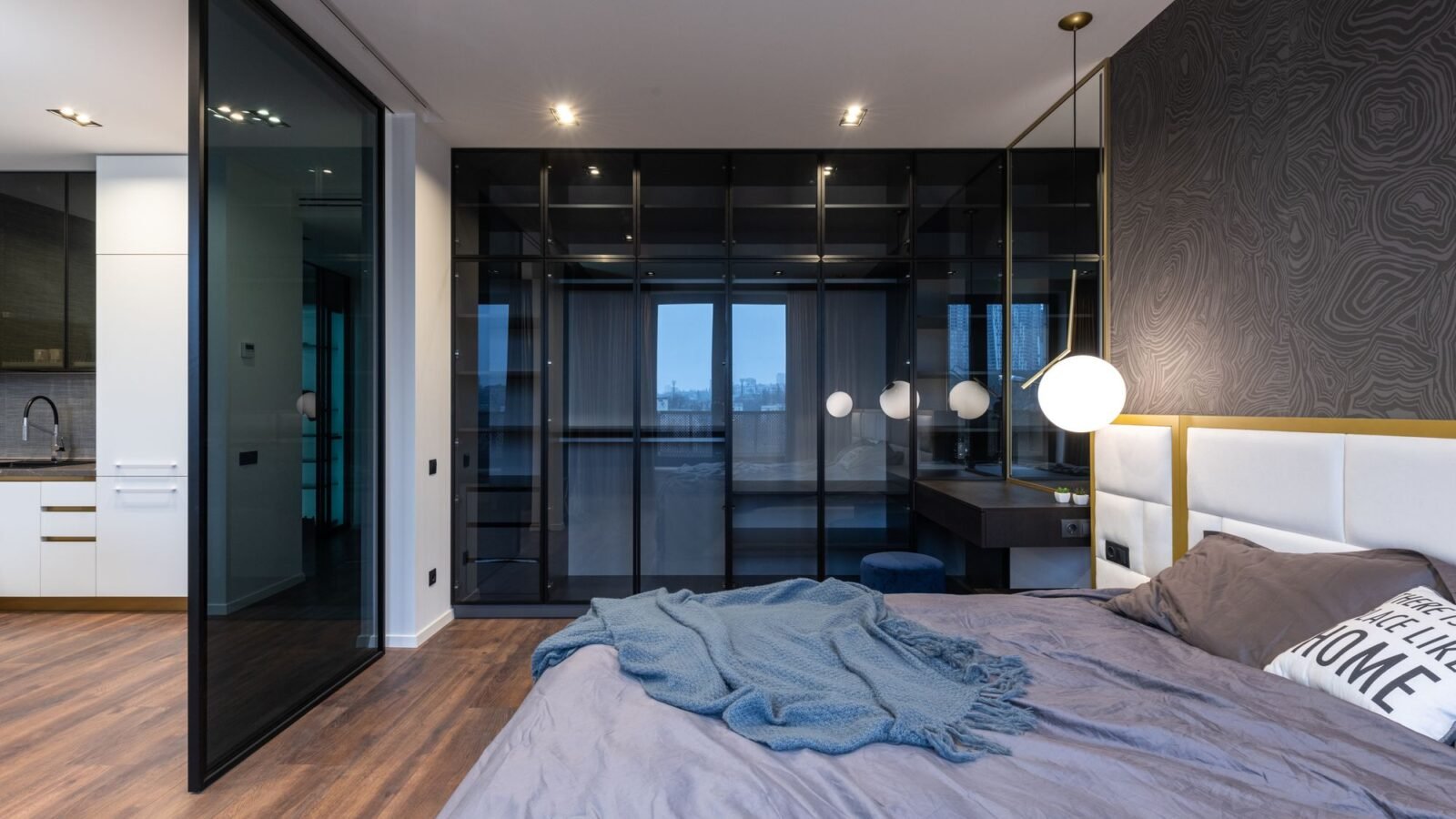
A pendant over the dining table, a floor lamp near the sofa, and a reading light by the bed can make each area feel purposeful even though it is all one open room. Distinct lighting is one of the clearest ways to signal where one zone ends and another begins.
16Keep the entry area simple
A wall hook, a narrow shelf, and a small shoe solution are often enough for a studio entry. Avoid placing a bulky cabinet directly inside the entrance, where it can make the whole apartment feel tighter the moment you walk in.
17Choose a coffee table with storage
A lift-top or storage coffee table can hold work supplies, blankets, or media accessories that would otherwise need their own cabinet. It is especially valuable when the living area has no room for anything larger.
18Use sliding or folding pieces
Drop-leaf tables, folding desks, and nesting tables change size depending on what the moment actually calls for. Flexible furniture like this is more useful in a studio than trying to permanently accommodate every activity at once.
19Create one strong visual focal point
Use a piece of art, a statement light, or a genuinely beautiful rug to lead the eye somewhere specific. Too many competing focal points in one open room can make a studio feel fragmented rather than considered.
20Keep surfaces intentionally clear
In one-room living, clutter is visible from almost every angle at once, unlike in a house with separate rooms to close off. Use trays, drawers, baskets, and cabinets so the apartment can reset quickly at the end of the day.
21Leave open floor around key areas
A little negative space makes each zone easier to read as its own area. Resist the urge to fill every wall and corner simply because the studio has limited square footage to begin with.
Related ideas: 25 Small Apartment Living Room Ideas That Make the Most of Every Inch · 25 Small Bedroom Ideas to Make a Tiny Space Feel Bigger · 21 Neutral Home Decor Ideas for a Warm and Timeless Look
Final Thoughts on Studio Apartment Ideas
A studio apartment becomes easier to live in when each zone has a clear purpose and the furniture remains genuinely flexible. Focus first on the bed, storage, and circulation, then use rugs, lighting, and furniture placement to create the kind of separation these studio apartment ideas rely on, without closing the room in.
Discussion