
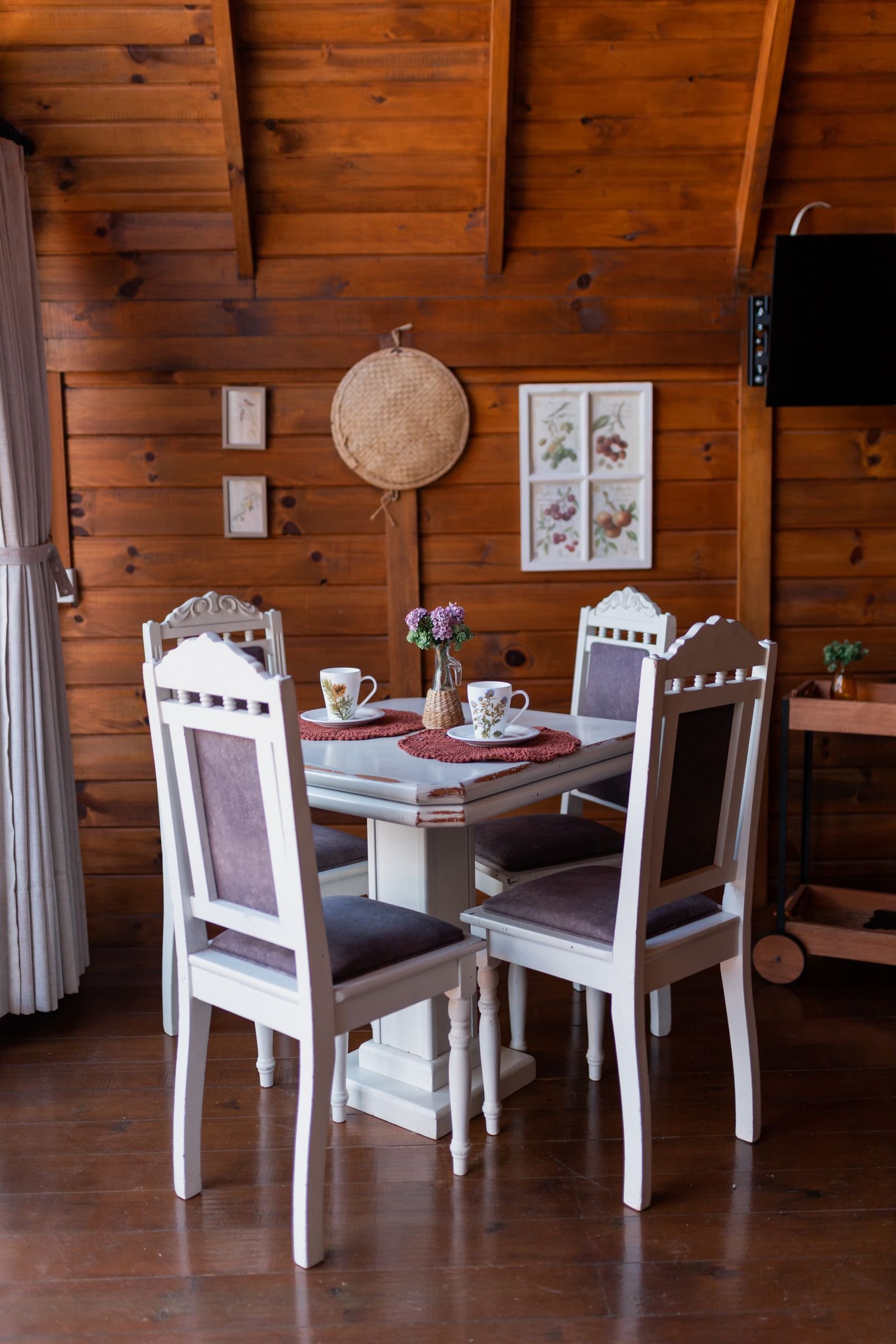
An empty kitchen corner can become a dining nook if chairs, doors, and appliances still have room to move. Start with the way people enter the corner and sit down. These ideas cover several arrangements; you do not need to combine them all. Tape the proposed furniture outlines on the floor before ordering.
1Measure the usable corner
Record doors, outlets, radiators, and skirting projections as well as wall lengths. The space between two walls is not automatically the space available for a table. Check the corner while nearby appliances are open.
2Test a small round table
A round top can soften a tight-looking corner and removes projecting corners at the top. It does not eliminate the need for chair space. Compare the actual base and seated footprint before deciding it fits.
3Consider a square table against one wall
This can give two people a straightforward everyday arrangement. Pull it out only when the room can accommodate the extra seats. Make the occasional arrangement as realistic as the daily one.
4Try a pedestal base thoughtfully
A central base may give more flexibility for chair positions than four corner legs. Check its size at floor level and the chairs’ leg movement. Some pedestal feet are larger than they appear in product photographs.
5Use a straight bench where access works
A bench can sit along one wall, but people still need a comfortable way in and out. Consider who will use the middle seat. Do not count every inch of bench as a practical place setting.
6Avoid a deep bench in a shallow corner
Measure the full bench depth and how far the table must project for comfortable use. An attractive built-in reference can be much larger than it looks. Use a mock-up before planning permanent seating.
7Choose chairs by their pulled-out position
Measure a chair while someone gets up and sits down. Its stored position beneath the table is only part of its footprint. Check that the back does not strike a cabinet handle or block the route.
8Keep upholstery easy to maintain
Read the finished chair’s care guidance and consider removable covers where available. A pale fabric can work if it suits your habits. Do not assume a performance label means every spill can be ignored.
9Put the palette in one textile
A seat pad or short curtain can connect the nook to the kitchen. Repeat an existing cabinet or counter accent rather than inventing a separate room palette. Keep patterns limited if the cabinets already have prominent grain.
10Use one artwork to mark the area
A single piece can distinguish the nook without a collection of shelves. Position a paper template while people are seated to check scale and likely contact. Keep the frame secure and out of the chair’s movement.
11Choose lighting for the table position
If using a pendant, plan it around the real table location and comfortable clearance. Electrical work needs appropriate installation. A table moved regularly may suit a different lighting arrangement better.
12Keep the tabletop mostly available
A small vase may be enough when the surface also holds breakfast and homework. Store occasional decorations elsewhere. A nook becomes less useful when every meal begins by removing a large centerpiece.
13Use a wall color only if it helps
A related color can define the corner, but an accent patch is optional. Test it beside the kitchen’s fixed finishes. A plain wall may be the calmer choice near patterned tile or busy cabinet grain.
14Consider a drop-leaf table
Compare both its folded and extended forms, including leg positions. Confirm it is stable in the arrangement you will use most. An extending top is useful only when the room can accommodate people around it.
15Store occasional seats elsewhere
Folding chairs can serve guests when there is a suitable storage spot and the expanded layout works. Check comfort and stability before buying several. Do not plan guest seating solely from the number a listing claims.
16Keep the window usable
Avoid backs or cushions that obstruct handles, vents, or required access. Check privacy before placing a seat close to the glass. A cozy corner still needs to work through ordinary ventilation and cleaning.
17Use nearby storage rather than more furniture
A cabinet shelf for placemats may be enough. Adding a sideboard to a narrow corner can consume the circulation the table needs. Keep daily dining items close without turning the nook into a storage room.
18Test a rug before committing
Check moving chairs, trip edges, cleaning, and nearby doors. In a food-heavy corner, bare flooring may be more practical. A rug is an option for softness, not a requirement for making the nook feel complete.
19Create separation with a back cushion
A simple bench cushion can make hard seating more comfortable and visually define the nook. Confirm the seat depth remains usable. Secure it using the product’s intended method so it does not slip during use.
20Check sightlines from the kitchen entrance
Look for a clear route and an arrangement that feels connected to the cabinets. A table centered perfectly in the corner may not be centered on the usable floor. Function can justify an offset position.
21Live with a temporary setup first
Try a borrowed table and chairs for several meals. Note awkward turns, uncomfortable reach, and objects that lack a home. Resolve those issues before investing in built-ins or made-to-measure upholstery.
Common questions
Is a round table always best for a small nook?
No. Compare the complete seated footprint, base, access, and nearby doors. A small square table against a wall may suit some corners better.
Do I need a built-in bench?
No. Test a movable table and chairs first. Built-ins are useful only when their dimensions, access, and comfort solve the specific corner.
Build around everyday meals
A good dining nook begins with movement, then comfort, and finally styling. Choose the smallest arrangement that serves your normal meals comfortably. Keep the palette related to the kitchen so the corner feels intentional without requiring a separate collection of furniture.
For more starting points, explore our dining room ideas. Adapt the suggestions to your existing room and choose only the changes that solve a real need.
Discussion