
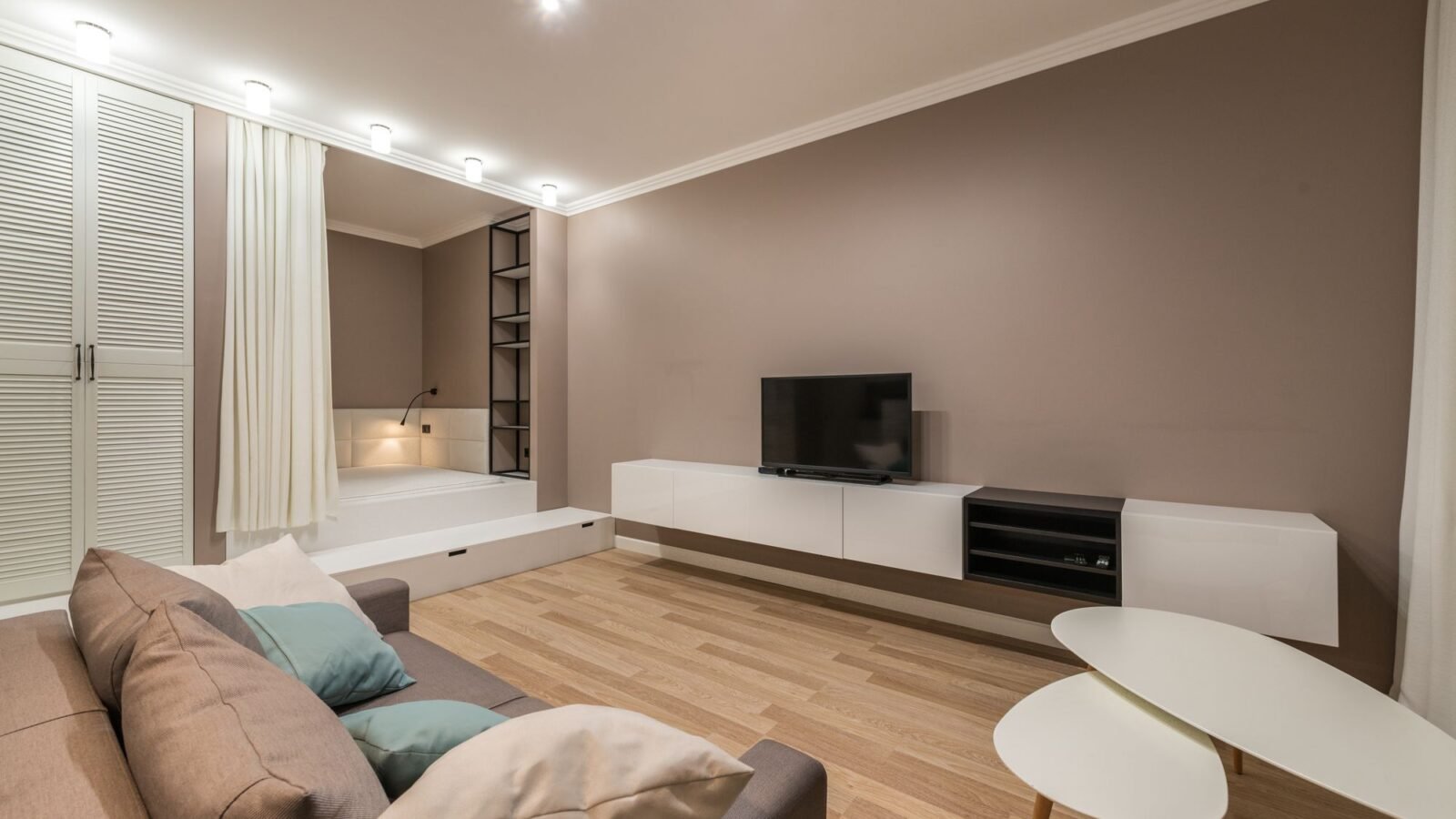
A beige living room with gray floors can work when the palette includes a connection between its warm and cool surfaces. The problem is rarely that beige and gray can never coexist. More often, their undertones or contrast have not been considered together.
Use these ideas selectively. Compare physical samples with the floor and sofa before changing a large surface.
1Identify the gray’s undertone
Place a plain white card beside the floor and look for a blue, green, purple, or brown impression. This is a comparison aid, not a precise color test, but it can explain why some beige samples feel wrong.
2Include the sofa fabric in every sample test
Do not choose a rug beside the floor alone. Place its sample near the beige upholstery too, because the rug must connect the seating area as a whole.
3Try a mixed neutral rug
A rug containing both a soft gray and a warm neutral may bridge the surfaces. Choose a pattern scale that works with existing textiles rather than adding another busy motif.
4Introduce wood at a medium tone
A wooden side table can create a transition between pale beige and gray. Compare the finish physically; an intensely orange wood may introduce a different conflict.
5Use ivory thoughtfully
Ivory can soften the scheme, but compare it with existing whites. Several almost-matching whites can draw attention to the undertone differences you were trying to reduce.
6Repeat gray above the floor
A small detail in artwork or a cushion can make the floor feel connected to the room. The repetition should be deliberate and limited, not a requirement to buy gray accessories everywhere.
7Add brown for depth
Chocolate or muted brown can provide a darker anchor without requiring black furniture. Start with a small textile or frame and assess the contrast.
8Keep the largest pattern under control
If the rug is patterned, quiet curtains and bedding-like throws can help. Several competing prints may distract from the palette rather than solve it.
9Try a muted blue accent
A subdued blue can relate to a cooler gray while sitting against warm upholstery. Compare several versions so the result feels intentional rather than icy.
10Test olive or sage in small doses
A green accent may connect natural wood and neutrals. Its actual yellow or gray influence matters more than the name on the product page.
11Improve the evening lighting
Review the room under the lamps you use. Choose suitable bulbs for the fixtures and avoid judging the palette only under a single harsh overhead light.
12Let curtains provide texture
A plain woven curtain can add softness without introducing another strong color. Measure the stack and keep fabric clear of required access and heat sources.
13Use a tray to simplify the coffee table
Group small practical objects and leave an open surface. Reducing visual clutter can make a mixed-neutral palette look more coherent without a purchase.
14Avoid replacing everything at once
Test a rug sample and one cushion before ordering a complete set. Smaller trials make it easier to identify which change actually improves the relationship.
15Make dark accents repeat selectively
If you have a black television or frame, repeat black in one other modest element. You do not need a black object on every surface.
16Consider a warmer lampshade fabric
A suitable fabric shade can change the appearance of a lamp and soften the light. Follow the fixture’s requirements for shade construction and bulb use.
17Check daylight at different times
A neutral that looks balanced in the morning may appear different after sunset. Sample the room as you use it, including its dimmer areas.
18Keep metallic finishes restrained
Use a consistent relationship among the visible metals rather than replacing every fitting. Warm and cool metals can coexist when the overall composition is considered.
19Put the rug under the seating relationship
Choose a size that relates to the sofa and chairs, then test routes and door clearances. A small isolated rug may not visually connect the pieces you want to bring together.
20Repeat a warm neutral in artwork
Look for art you enjoy that includes a related beige or brown. Avoid buying a picture solely as a color-matching device.
21Judge the room from the main seat
The doorway photograph matters less than the view you live with. Sit down and check whether the floor, rug, sofa, and curtains feel connected from there.
Start with a bridge, not a replacement
Try one textile that relates to both the floor and sofa. Our beige living rooms and greige living room ideas offer more combinations.
Do gray floors require gray furniture?
No. Coordinate undertones and repeat colors selectively instead of matching every large piece.
Should I repaint before changing textiles?
Only after testing. A different rug or curtain may create the connection you need with less disruption.
Discussion