
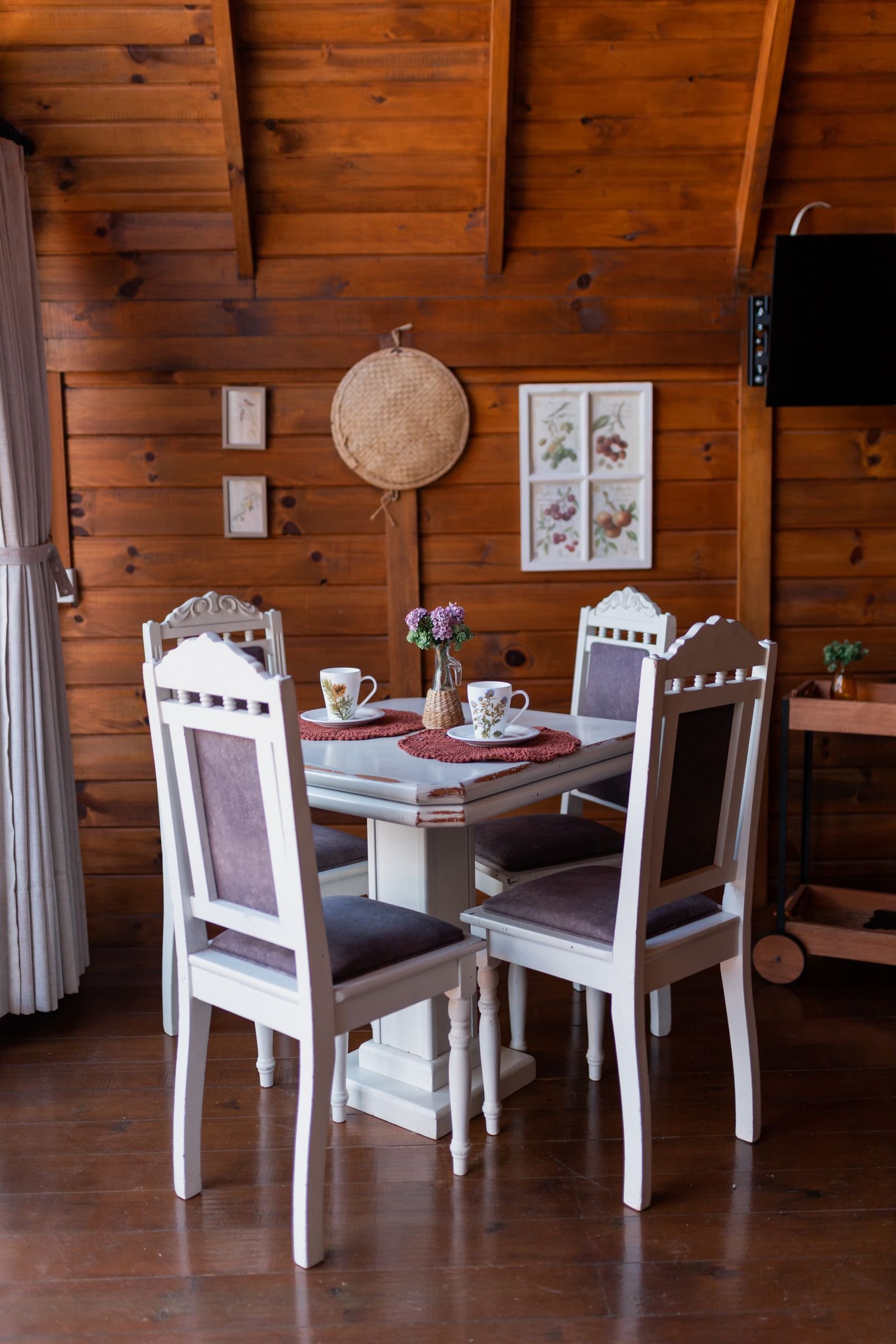
A round vs rectangular dining table decision should include the chairs, not just the tabletop. A compact table can still occupy a large area once people sit down. Compare the occupied arrangement with the shape of the room.
Start with the number of people eating there every day. Occasional guests matter, but designing permanent furniture around a rare gathering can make ordinary meals less comfortable.
| Factor | Round table | Rectangular table |
|---|---|---|
| Starting layout | Roughly square dining zone | Longer or narrower zone |
| Main check | Diameter plus occupied chairs | Ends, corners, and occupied chairs |
| Support | Pedestal or legs can affect seating | Leg positions can affect seating |
Quick verdict
A round table is worth trying in a roughly square dining area where seats can be approached from several sides. A rectangular table is worth trying in a longer, narrower area or where one long edge must relate to a wall or bench.
These are starting points, not guarantees. Table diameter, chair width, leg design, and the main walking route can change the result.
Draw the whole dining zone
Measure the room and mark doors, cabinets, radiators, and the route through it. Draw the table at its actual dimensions. Then add chairs in both pushed-in and occupied positions.
Include space to pull a chair out and stand up. Your household’s movement and accessibility needs matter more than a furniture photograph. If someone must stand every time another person passes, the plan deserves another look.
Tape the outline on the floor using a surface-compatible product, then test it with chairs you already own.
How round tables use space
A round edge avoids projecting corners, which can help in a crossing route. However, the circle still needs its full diameter, and seated people extend beyond it.
A central pedestal may offer more flexible knee positions than four perimeter legs, but its base can interfere with feet or chair placement. Check the actual design rather than assuming every pedestal solves the seating problem.
Round tables can also become awkward if pushed against a wall: the curve leaves unusable gaps and may reduce practical seating. Test the arrangement in the position you intend to use.
How rectangular tables use space
A rectangle often follows a long room efficiently and can align with a wall or bench. Yet the end seats need room too, and corners can sit directly in a main route.
Four legs or a central support can reduce usable seating positions depending on the chairs. Measure between supports if you want to tuck chairs side by side.
If one side sits near a wall, be honest about whether that side will be used daily. A table advertised for six may function as seating for four in your layout.
Compare daily and occasional configurations
An extending table can provide flexibility when its closed size suits everyday use and its extended size fits occasional gatherings. Measure both versions, including chair movement.
Check where leaves are stored and how the mechanism operates. A table that needs two people to extend may not suit a household that frequently changes the arrangement alone.
Folding chairs also need a storage location. Their compactness during meals does not remove the space they occupy between visits.
Consider the tasks beyond dining
If the table also handles homework, crafts, or remote work, consider the surface depth and equipment needed. A round table offers a different working edge from a rectangle.
Choose a finish whose care requirements suit daily meals and other activities. Follow manufacturer instructions for heat, moisture, and cleaning rather than assuming a material is indestructible.
Our dining room ideas and small kitchen guide offer ways to integrate a dining spot into a compact home.
Common questions
Does a round table always save space?
No. Compare the occupied footprint of specific products. A small rectangle against a suitable wall can sometimes use less of the room.
Are benches automatically better in tight spaces?
No. You still need to sit down, move along the bench, and access storage if it has any. A wall-side bench can make the inner seat harder to reach.
Let the room choose the shape
Test your daily seating, full chair movement, and the route past the table. The best shape is the one that supports ordinary meals without creating a daily obstacle course.
Discussion