
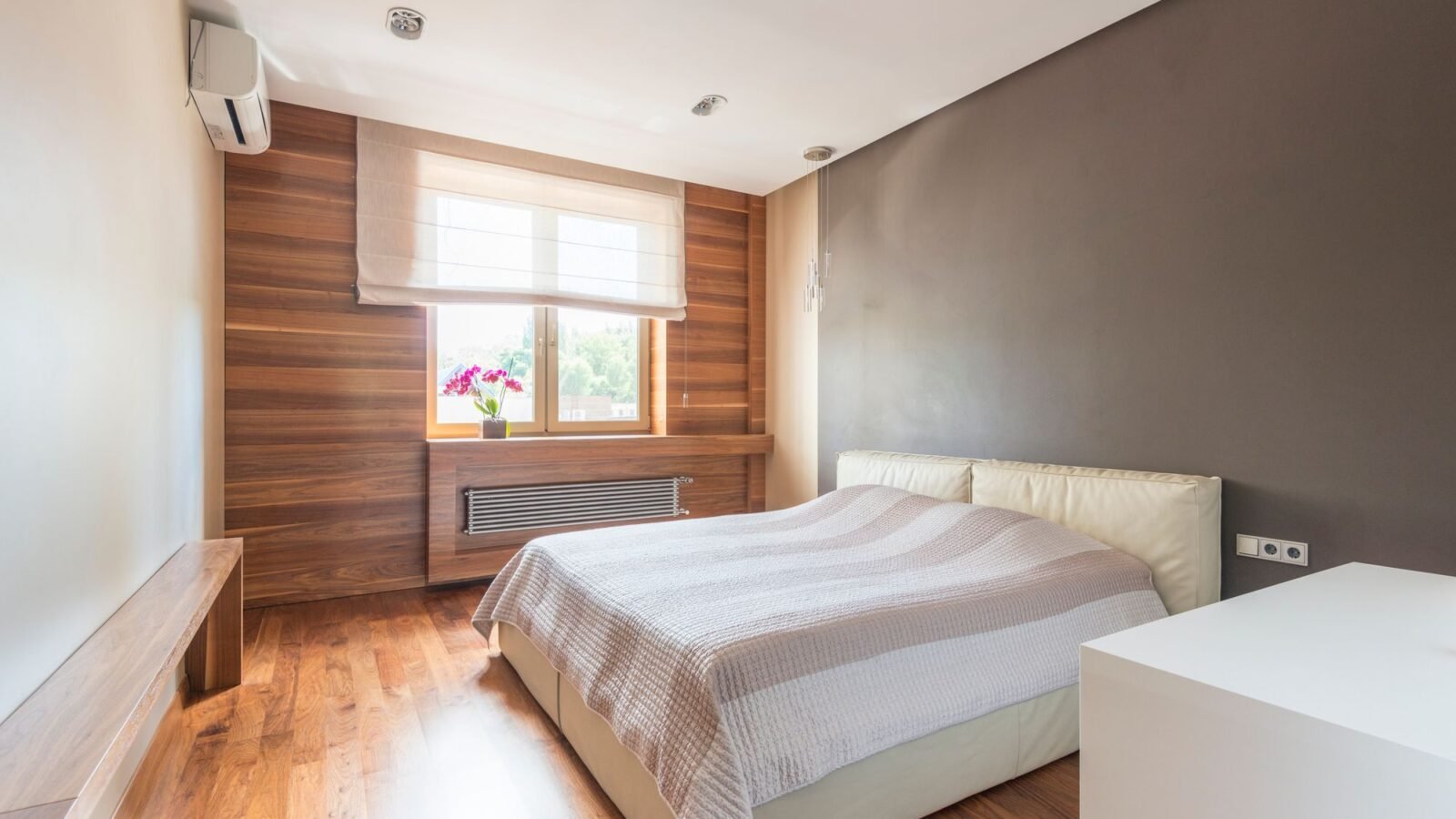
Matching vs mixed bedroom furniture is a choice about how you create relationships between pieces. A furniture suite supplies some of those relationships immediately. Mixed furniture lets you choose each piece for its location and function.
Either approach can look coherent. Neither compensates for a bed that blocks a wardrobe or a dresser that cannot open comfortably.
| Decision | Matching furniture | Mixed furniture |
|---|---|---|
| Useful strength | A ready-made visual connection | Flexibility for different dimensions and needs |
| Main risk | Buying unnecessary or oversized pieces | Too many unrelated finishes or focal points |
| Best first test | Does every piece fit and earn its place? | Which color, shape, or material connects the pieces? |
Start with fit rather than the set
Measure the room, full bed frame, doors, windows, and storage openings. Then decide what furniture is necessary.
A matching suite may include two wide nightstands when one side of the bed has very little room. A mixed arrangement can solve that problem, but only if the substitute has a suitable height, stability, and usable surface.
Do not buy a whole range to obtain one piece you need. Compare the complete footprint and storage with your actual belongings.
Make matching furniture feel personal
Use bedding, curtains, and art to introduce variety. If the suite is visually heavy, a lighter large textile can balance it without changing the furniture.
Avoid repeating the wood tone in every accessory. The bed and dresser may already establish it strongly enough. A contrasting lamp or quiet ceramic can provide a different material.
Leave room around substantial pieces where the layout permits. Adding small matching objects into every gap can make the room feel more crowded.
Give mixed furniture a connecting idea
Choose one clear relationship: similar visual weight, a repeated color, related wood tones, or compatible shapes. You do not need all four.
For example, a walnut bed, a small painted nightstand, and a simple dresser can relate through cream bedding, a repeated brown detail, and restrained hardware.
Another room might pair a black frame with pale wood tables and a darker mirror. The repeated dark outline connects the bed and mirror while the lighter furniture preserves contrast.
These are styling examples, not product combinations with guaranteed matching finishes.
Control the number of focal points
A carved bed, strongly patterned dresser, ornate mirror, and busy curtains can all compete. Decide which piece should lead.
Keep the surrounding shapes or textiles quieter so that the main piece has room to stand out. Mixed furniture works better when differences feel chosen rather than equally loud.
Matching furniture can also compete if every piece is large. A consistent finish does not remove the need to edit scale.
Compare wood finishes in person
Photographs can disguise differences in undertone, sheen, and grain. Bring samples together where possible and view them in the bedroom.
Similar but slightly different finishes are not automatically wrong. Decide whether they create a gentle relationship or an awkward near-match in your room.
If a useful piece already fits, try changing its surrounding textiles before planning a permanent finish alteration.
Let each bedside serve its user
Different storage needs can justify different tables. Coordinate their relationship to the mattress and light rather than making their drawer counts identical.
Keep each surface usable, and test drawer movement with bedding in place. A coherent room still needs to function while occupied.
Our modern bedroom ideas and warm neutral bedroom guide show flexible starting palettes.
Common questions
Is mixed furniture always more stylish?
No. Good scale, useful placement, and a coherent composition matter more than whether pieces came from the same range.
Can I add one unmatched piece to an existing suite?
Yes. Give it a suitable role and repeat one related detail elsewhere if needed. A deliberate difference can be enough.
Should I paint everything the same color?
Only if that is an appropriate project for the materials and your preference. It is not a requirement for cohesion.
Choose the relationship that serves the room
Keep matching pieces that fit, mix where function benefits, and use textiles and a limited palette to connect the result.
Discussion