
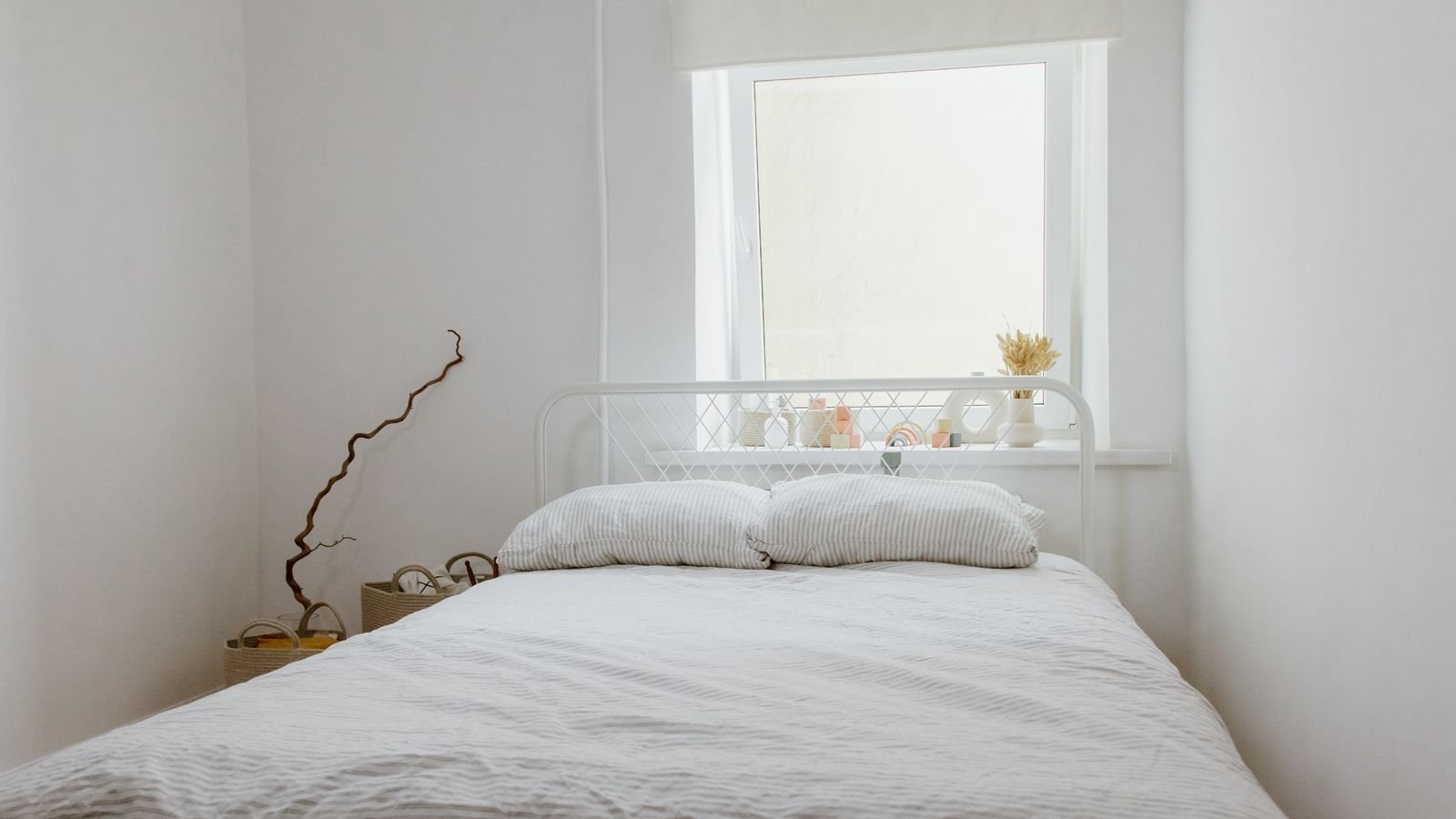
Small bedroom decorating ideas with low ceilings should start with actual headroom and furniture dimensions. Visual changes can make the room feel more composed, but they cannot increase its physical height.
Avoid filling the room with tall pieces simply to draw the eye upward. Choose a comfortable layout first, then decide where vertical lines and lighter surfaces help.
1Measure the lowest usable height
Include beams, sloping sections, and ceiling fittings. A wardrobe that fits at one wall may not fit safely or operate properly at another.
2Compare headboard height before buying
A tall headboard can dominate a low room. Try a lower or simpler outline if it competes with the ceiling.
3Keep the bed comfortable to use
A low bed may reduce visual height, but getting in and out still matters. Do not choose a height solely to imitate a photograph.
4Reduce competing horizontal bands
Strong wall stripes, a heavy headboard, and a dark curtain pelmet can divide the room into layers. Simplify one or two of those lines if the composition feels compressed.
5Test a quieter ceiling-to-wall transition
Related lighter colors may reduce contrast at the edge. Sample the actual paints; the effect depends on the room and light.
6Use curtains that suit the available height
Measure the rod, heading, and finished drop together. Avoid exaggerated mounting positions that interfere with the ceiling, window operation, or suitable fixing points.
7Choose a less bulky curtain heading
A large pelmet or heavy valance may add visual weight overhead. A simpler treatment can keep the window area calmer.
8Keep tall furniture to a deliberate area
One well-positioned wardrobe may work better than several tall pieces around the perimeter. Follow installation and anchoring instructions.
9Use the dresser top sparingly
Tall decorative objects can extend a substantial furniture piece upward. Keep useful items and check whether extra height improves or crowds the view.
10Avoid a low-hanging decorative fitting
Choose lighting appropriate to the room’s dimensions and installation requirements. A compact room does not need a pendant merely to feel finished.
11Put useful light near the bed
A suitable bedside lamp can support reading without a large overhead statement. Keep its switch reachable and cable out of routes.
12Try a limited vertical pattern
A narrow stripe can introduce an upward line, but it is not a guaranteed height illusion. Keep other strong patterns quieter.
13Let the floor area remain readable
Remove unnecessary stools or baskets that interrupt the room’s outline. Visible usable floor can help the overall composition feel less crowded.
14Use a mirror for a considered reflection
Check what it shows before mounting. It should reflect a useful or calm part of the room rather than duplicate the busiest storage wall.
15Keep bedding proportions controlled
A large piled-up cushion arrangement can make the bed appear more massive. Use the layers you need and a limited decorative accent.
16Compare artwork orientation in place
Use paper templates to test a vertical image or grouping. Choose what fits the actual wall rather than assuming a tall picture always improves height.
17Avoid filling every upper gap
A shelf directly below the ceiling may feel crowded and be difficult to use. Storage needs access and suitable mounting, not just an available strip.
18Check the room while standing and seated
Low ceilings affect different actions differently. Test dressing, reaching storage, and moving around the bed rather than judging only from one photograph.
19Keep the final palette coherent
A small number of related colors can reduce visual breaks. Use texture and meaningful objects to keep the room personal.
Choose a smaller set of changes
Try a quieter headboard area, a simpler window treatment, and useful bedside light. Our small bedroom guide and cozy small bedrooms offer related options.
Should I paint the ceiling white?
It is one option, not a requirement. Compare the ceiling with walls, light, and furniture before committing.
Can decorating solve inadequate headroom?
No. Structural headroom or compliance concerns need appropriate professional assessment. These ideas address appearance and furniture use, not building alterations.
Work with the room’s real dimensions
Keep furniture proportionate, routes clear, and overhead details restrained. Comfort matters more than trying to create an illusion at every surface.

Discussion