
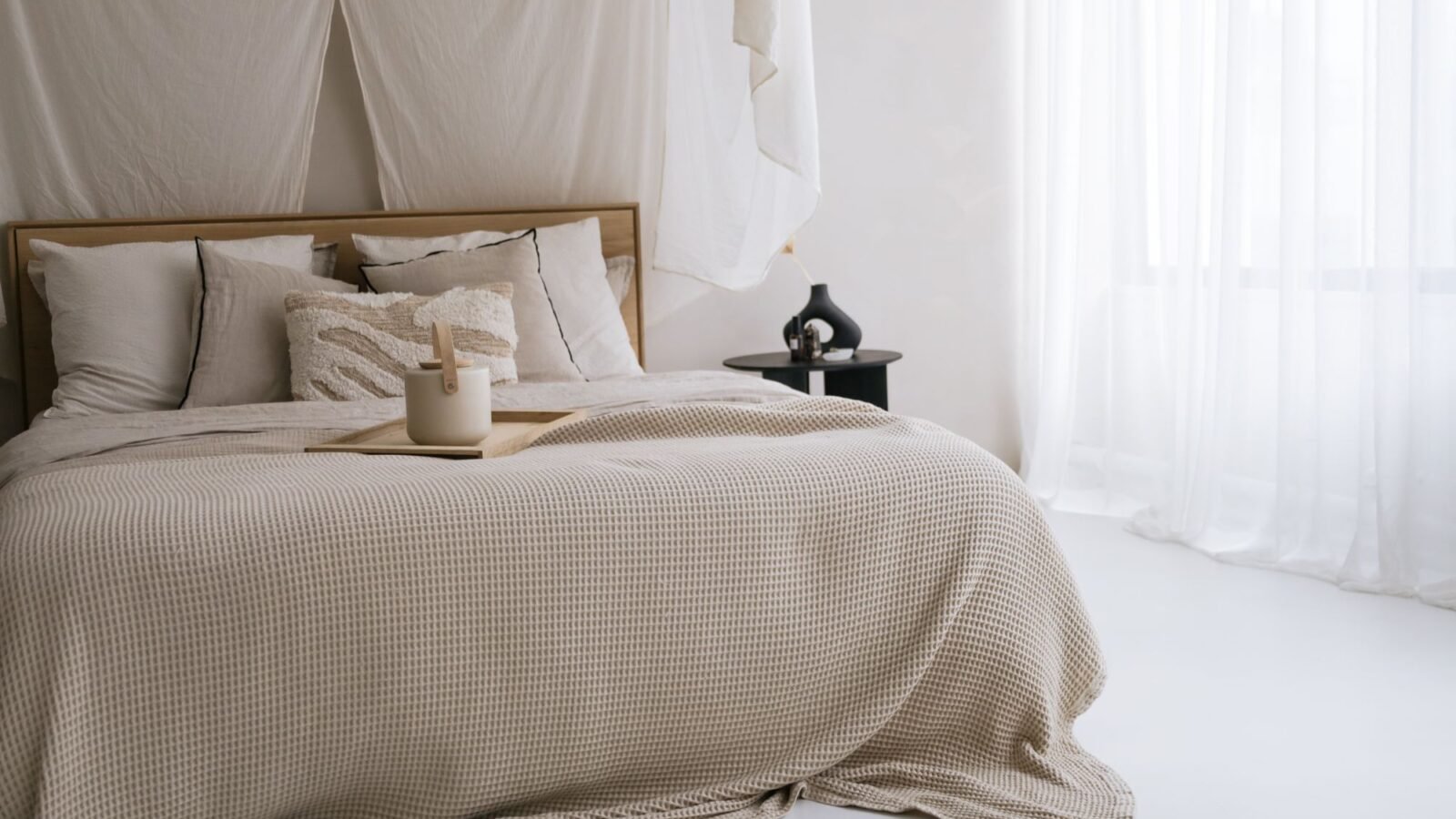
Romantic small bedroom ideas for couples are most successful when both people enjoy the room. Soft textures and flattering light can help the atmosphere, but so can having a clear bedside surface, a place for clothes, and enough room to move.
You do not need roses on every fabric. Start with a shared mood and make space for each person’s preferences.
1Choose a palette together
Compare a few bedding samples and identify what both people enjoy. A muted shared color is a better starting point than one person’s complete theme.
2Give each side usable light
Reading habits may differ, so consider separate accessible lamps. Choose stable placements and suitable fixtures rather than relying only on decorative glow.
3Use one softly textured coverlet
A quilt or woven layer can soften the view without introducing florals. Choose a fabric and weight that suit how you sleep and wash bedding.
4Keep bedside needs independent
One person may need drawers while the other needs an open table. Coordinate a finish or height without forcing identical furniture.
5Try a muted rose accent
A small dusty rose textile can add warmth alongside cream, brown, or wood. Test the actual shade so it does not fight existing paint.
6Leave the bed easy to use
A romantic arrangement should not require removing ten cushions every night. Keep a few useful layers and a clear place for any decorative pillow.
7Use a meaningful photograph
Display an image you both like on a suitable surface or securely mounted wall. Personal relevance can create atmosphere more naturally than generic romantic slogans.
8Add curtains with a gentle drape
Plain fabric can soften the room’s harder shapes. Preserve window access and required heater clearances when measuring the finished length.
9Keep daily laundry contained
Choose a hamper location that both people use easily. Removing a persistent pile can improve the bedroom more than adding another decorative element.
10Use flameless candles where appropriate
They offer a decorative glow without an open flame. Follow product and battery safety instructions, especially where children or pets may reach them.
11Give the room one dark anchor
A brown frame, charcoal lamp, or dark bed can add depth. Use lighter textiles around it if you want the room to remain visually soft.
12Agree on scent rather than assuming it
Some people prefer fragrance-free rooms. Choose comfort for both people instead of treating scented products as a requirement for atmosphere.
13Make the route around the bed usable
Test access on both occupied sides. A symmetrical photograph is not worth one person regularly climbing over furniture or the other sleeper.
14Keep the dresser display restrained
Use one tray and a few meaningful objects. Leave room for ordinary use so the surface does not become a fragile arrangement.
15Try a small-scale pattern
A subtle stripe or understated motif can add detail without taking over. Keep the larger surrounding fabrics quieter.
16Let wood provide warmth
A wooden frame, bedside table, or dresser can balance pale fabrics. Compare finishes together rather than requiring every piece to match exactly.
17Store spare bedding out of the room’s main view
Use a suitable drawer or wardrobe section. Keep the bed styled with what you need now rather than every blanket you own.
18Soften the floor at a useful point
Choose a stable rug or runner where feet land. Check edges and door clearance rather than placing a small loose rug simply for symmetry.
19Clear one shared evening surface
If you use a tray for tea or reading, keep it functional and stable. Avoid adding another table if the room cannot accommodate it.
20Review the light after sunset
A bedroom’s evening atmosphere may differ dramatically from its daylight photograph. Test the actual lamps while sitting and lying down.
21Keep a detail from each person
Two different books, artworks, or textiles can coexist within a restrained palette. A shared room does not need to erase either person’s taste.
Start with a shared routine
Choose comfortable bedding, practical light, and clear bedside access first. Explore cozy small bedroom ideas and warm neutral bedrooms for related palettes.
Does a romantic bedroom need pink?
No. Cream, brown, blue, green, and deeper palettes can all support the atmosphere you prefer.
Should both sides look identical?
No. Give both people useful space, then use a limited connecting detail for visual balance.
Discussion