
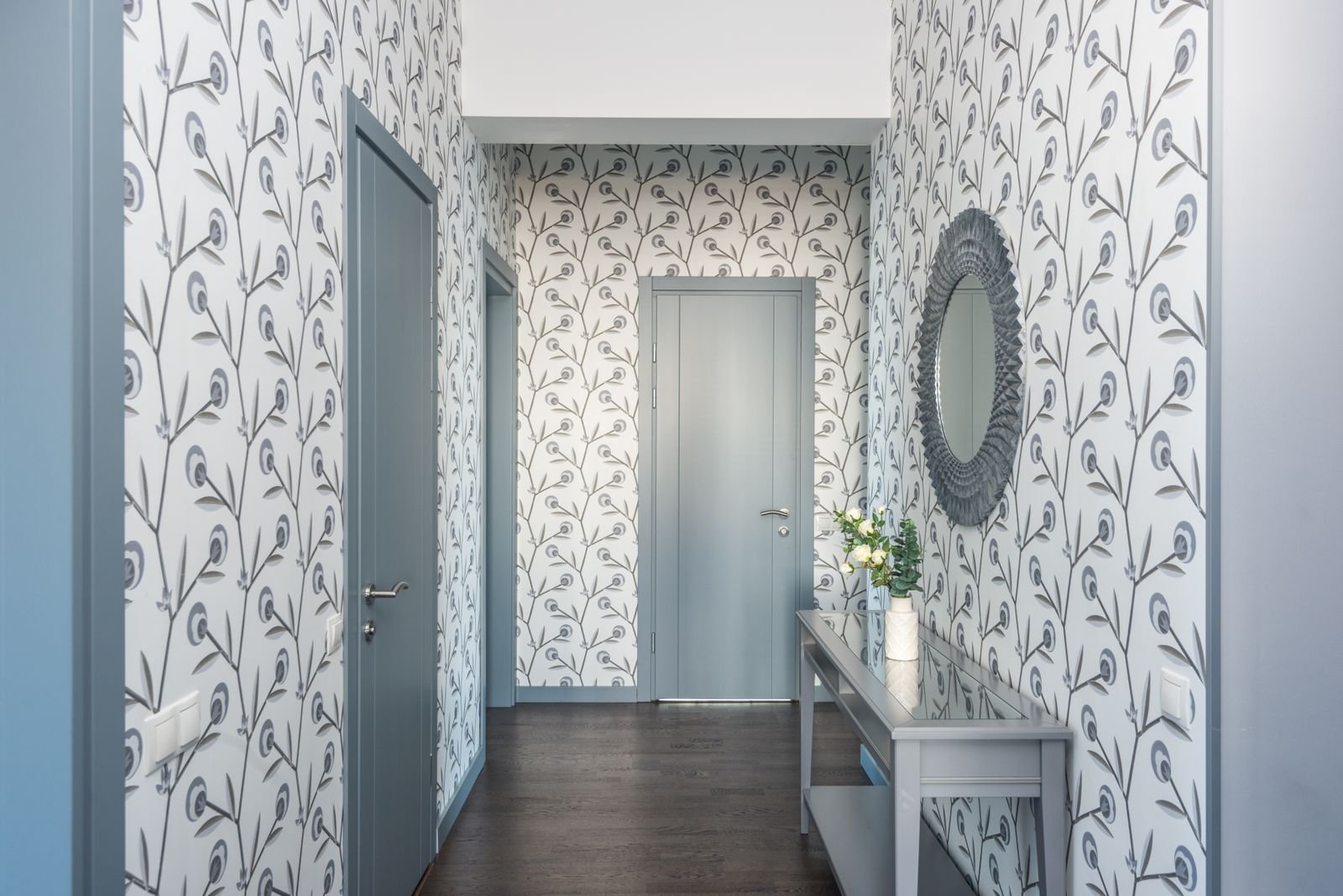
A no-entryway drop zone has one job: give incoming belongings a home before they spread through the living room. You do not need to imitate a hallway with a console, bench, mirror, and coat rack if the apartment has space for only one of them.
Build around the front door’s movement, the things you carry, and the route you take after entering.
Measure the door in motion
Open the door through its full usable range. Mark where the handle travels, then walk in carrying a shopping bag. A piece that clears the door panel may still be struck by the handle or make entry awkward.
Keep the exit route clear and preserve access to locks, switches, meters, and other fixed equipment. Do not put storage where it requires the front door to remain partly closed.
Measure the wall space outside that moving area. This is the real storage zone, even if it is much smaller than the empty wall looked with the door shut.
Count a normal day’s belongings
List the shoes, coats, keys, bags, and mail that arrive most days. Separate those from seasonal storage. A drop zone for two pairs of daily shoes is a different project from finding a home for every pair you own.
If eight pairs arrive at the door but the proposed rack holds three, the overflow will become the design. Either increase usable capacity elsewhere or establish a rotation into a wardrobe.
Choose one anchor piece
A shallow shoe cabinet can work where there is enough opening and standing space. Check its installed depth, wall-anchoring requirements, and any skirting-board allowance. Tilt-out fronts also need room in front of them.
An open shoe tray suits a smaller collection and makes damp footwear easier to see. Place it outside the walking line and clean it regularly. A bench is useful only when you can sit down and get up without blocking entry.
Where there is almost no floor space, use a permitted wall hook system for light daily items, subject to the wall and product load requirements. Avoid turning every available hook into permanent storage.
Give small items a reliable landing place
A narrow shelf, an existing bookcase end, or a tray on nearby furniture can hold keys. Test the location while entering one-handed. A surface that requires crossing the room may be ignored in favor of the nearest table.
Keep mail separate from keys so a stack of envelopes does not bury the objects you need every morning. Decide where mail goes after the first sorting.
Handle coats without creating a wall of clutter
Choose a realistic number of hooks for current use. Move bulky seasonal coats to a wardrobe instead of displaying the entire household collection at the entrance.
If a coat rack becomes top-heavy or extends into the route when loaded, it is not functioning as its small empty footprint suggested. Follow stability and anchoring guidance for the product.
A mirror is optional. If you use one, check the reflection and mount it securely. The entrance does not need a mirror to count as a finished space.
Test the arrangement for a week
Use the drop zone before buying decorative accessories. Notice where shoes miss the tray, which hook is ignored, and whether bags spill onto the floor. Adjust the location or capacity in response.
For example, a tray beside the door may work for shoes, while a hook farther along the wall works better for bags because their straps no longer catch the handle. Small separations can be more useful than one crowded station.
See our entryway ideas and small-space storage ideas for additional options.
Common questions
Can I put storage behind the front door?
Only if it clears the full door movement and does not obstruct access or escape. Measure the loaded furniture and its opening parts, not just the empty unit.
What if there is no nearby wall?
Use the end of existing living-room furniture or storage farther along your natural route. A useful drop zone can be close to the entrance without sitting directly beside it.
Keep the entrance easy to use
Start with shoe capacity, one dependable key location, and an unobstructed path. Add decoration only after those daily functions work.
Discussion