
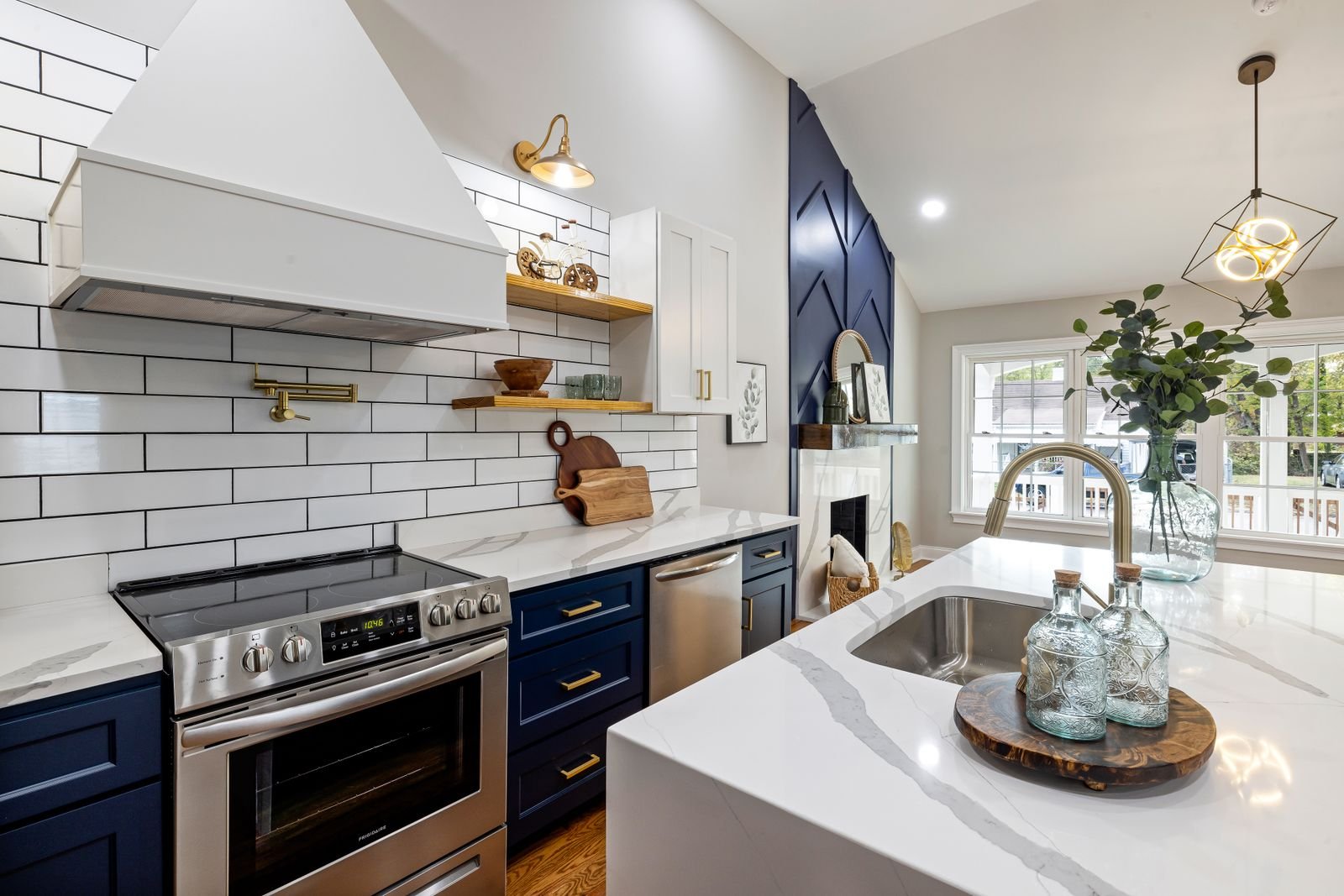
A farmhouse kitchen is warm, practical, and built to be lived in. It brings together natural materials, comfortable textures, and a few vintage touches to create a space that feels welcoming rather than showroom-perfect. The style is also endlessly flexible, working just as well in a modern build as in an old country home.
These ideas cover the elements that give a farmhouse kitchen its timeless character: warm neutral colors, natural wood, classic cabinetry and sinks, open shelving, and the small details that make the room feel collected. Choose the ones that suit your space and layer them over time.
What defines a farmhouse kitchen?
Farmhouse style is about warmth and function above all. It favors natural materials, comfortable and unfussy design, and pieces that feel like they have a story, brought together in a room that invites you to cook, gather, and linger.
- Warm, natural materials: wood, stone, ceramic, and woven fibers give the kitchen its comfortable, grounded feel.
- Classic fixtures: an apron-front sink, shaker cabinets, and simple hardware anchor the look.
- Open, practical storage: open shelves, plate racks, and a hutch keep everyday pieces on display and within reach.
- Collected character: vintage finds, crocks, and enamelware add the lived-in charm that defines the style.
1Start with a warm white or cream base
Warm whites and creams give a farmhouse kitchen its bright, timeless foundation. Unlike stark, cool whites, these softer shades pair naturally with wood and vintage pieces and keep the room feeling comfortable rather than clinical.
2Add a classic apron-front sink
A deep apron-front, or farmhouse, sink is one of the most recognizable features of the style. Beyond its charm, the large single basin is genuinely practical for washing big pots, pans, and trays.
3Bring in natural wood tones
Wood is essential to the farmhouse look, whether in flooring, open shelves, a butcher block counter, or exposed beams. The visible grain adds warmth and texture and softens painted cabinets and tile.
4Use open shelving for everyday dishes
Open wood shelves keep everyday plates, bowls, and glasses on display and easy to reach. They lighten a wall of cabinets and give you a spot to mix in crocks, cookbooks, and a plant or two.
5Choose shaker-style cabinets
Simple shaker cabinets, with their clean recessed panel, are the classic farmhouse choice. They suit almost any color and bridge traditional and modern kitchens without looking dated.
6Add a butcher block countertop
A butcher block counter, even on just the island, adds instant warmth and a practical prep surface. The natural wood is a hallmark of the farmhouse kitchen and ages beautifully with use.
7Install a subway tile or beadboard backsplash
Classic white subway tile or painted beadboard gives a farmhouse kitchen a clean, timeless backsplash. Both are affordable, easy to keep clean, and pair well with wood and warm neutrals.
8Mix in vintage and antique pieces
A vintage stool, an old cutting board, or an antique dresser adds the collected character that makes farmhouse style feel authentic. One or two aged pieces bring warmth that new furniture cannot.
9Add a large farmhouse dining table
A sturdy wood table is the heart of a farmhouse kitchen and the natural place to gather. Choose one with a well-worn or natural finish and pair it with simple chairs or a bench.
10Hang pendant or lantern lighting
Pendant lights or lantern-style fixtures over an island or table add character and warm, focused light. Aged metal, glass, and matte black finishes all suit the farmhouse look.
11Display ceramics, crocks, and enamelware
Stoneware crocks, ceramic pitchers, and vintage enamelware are classic farmhouse accents. Grouped on a shelf or counter, they add character and useful storage for utensils and flowers.
12Add an island with seating
A kitchen island adds prep space, storage, and a casual spot to sit. A contrasting wood or painted finish makes it a natural focal point in a farmhouse kitchen.
13Use black or bronze hardware
Matte black or oil-rubbed bronze knobs, pulls, and faucets give farmhouse cabinets a warm, classic contrast. Swapping hardware is also one of the easiest ways to shift a kitchen toward the style.
14Layer in baskets and woven texture
Woven baskets for produce, linens, or storage add natural texture and a practical, lived-in feel. Tuck them on open shelves, under the island, or on top of the cabinets.
15Add a plate rack or hutch
A plate rack or freestanding hutch is a traditional farmhouse storage piece that doubles as display. It keeps dishes on show and adds character that built-in cabinets cannot.
16Bring in greenery and fresh herbs
A jug of foraged greenery or a row of potted herbs on the windowsill adds life and softness. Fresh plants keep the natural, garden-to-table spirit of the farmhouse kitchen.
17Choose a statement range or hood
A classic range with a wood or plaster hood makes a strong farmhouse focal point. Even a simple hood wrapped in wood or painted to match adds a custom, characterful touch.
18Add checked or striped textiles
Gingham, ticking stripe, and simple checks are timeless farmhouse patterns. Bring them in through tea towels, seat cushions, or a runner for an easy, low-cost layer of warmth.
19Use reclaimed wood accents
Reclaimed wood on a shelf, beam, or accent wall adds instant age and character. Its weathered texture is a shortcut to the warm, established feel farmhouse kitchens are known for.
20Plan for practical, everyday storage
Farmhouse kitchens are working kitchens, so plan generous, accessible storage. Deep drawers, a pantry, and hooks or rails keep everyday tools handy and the counters clear.
21Finish with warm, layered lighting
Combine overhead fixtures, pendants, and under-cabinet lighting to keep the room warm and inviting at every hour. Warm-white bulbs on a dimmer let you soften the light for evenings.
Frequently Asked Questions
What defines a farmhouse kitchen?
A farmhouse kitchen combines practical, comfortable design with warm, natural materials. Common features include an apron-front sink, shaker cabinets, wood tones, open shelving, vintage touches, and a large table, all coming together in a look that feels welcoming and lived-in.
What colors work best in a farmhouse kitchen?
Warm whites, creams, and soft neutrals form the classic base, often paired with natural wood and black or bronze hardware. Muted sage green, warm grey, and soft blue are popular cabinet colors that keep the look timeless rather than trendy.
How do I get a farmhouse look on a budget?
Focus on a few high-impact changes: swap hardware for black or bronze, add open shelving, paint cabinets a warm neutral, and bring in wood, baskets, and vintage finds. Thrifted crocks, enamelware, and a simple runner add character for very little money.
Do farmhouse kitchens have to be white?
No. While warm white is the most common base, farmhouse kitchens work beautifully in sage green, soft blue, warm grey, and natural wood. The key is warm, natural materials and a comfortable, unfussy feel rather than one specific color.
How do I make a modern kitchen feel more farmhouse?
Layer in farmhouse elements without a full remodel: add open shelving, an apron sink, wood accents, vintage pieces, and warm lighting. Swapping hardware and adding textiles, baskets, and greenery softens a modern kitchen toward the farmhouse look.
Final Thoughts
A farmhouse kitchen is less about a strict formula and more about warmth, practicality, and natural materials. Start with a warm neutral base, layer in wood, vintage character, and comfortable textures, and let the room feel gathered rather than perfect. The result is a timeless kitchen that stays inviting year after year.
Discussion