
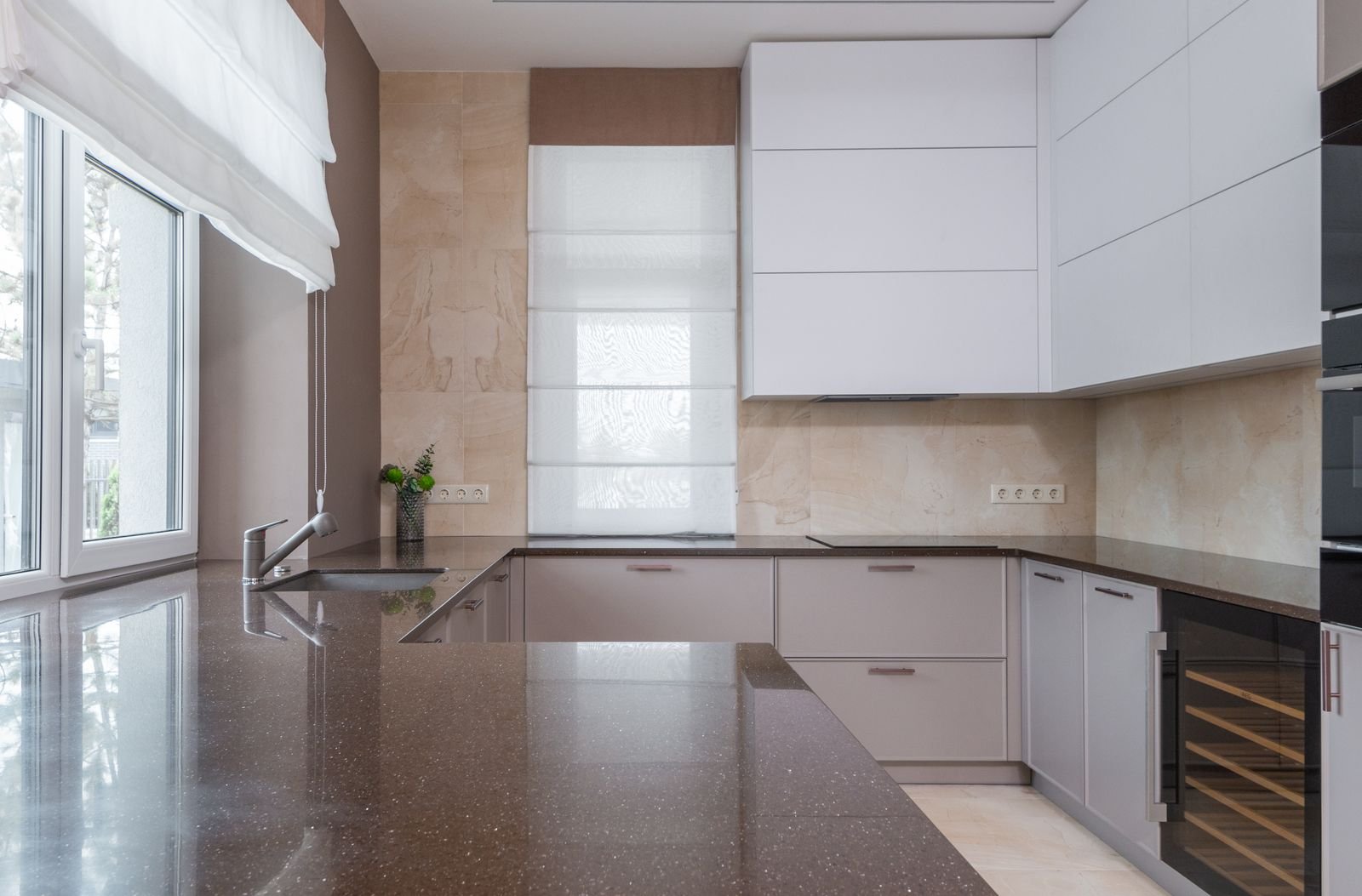
A small kitchen can be just as functional and stylish as a large one; it simply asks for smarter choices. When space is limited, every inch of counter, cabinet, and wall has to work a little harder, and the right layout, storage, and finishes can make a compact kitchen feel open, bright, and easy to cook in.
These ideas cover the essentials of a small kitchen: freeing up counter space, using vertical storage, choosing light and reflective finishes, and adding the small style details that give the room personality. Mix and match the ones that fit your space and budget.
How do you make a small kitchen feel bigger?
The goal is to reduce visual clutter and draw the eye upward and outward. Light colors, reflective surfaces, open sightlines, and vertical storage all make a compact kitchen read as larger and calmer than it is.
- Light, cohesive color: pale cabinets, walls, and counters bounce light and blur the room boundaries so the space feels open.
- Vertical storage: tall cabinets, shelves, and rails use the full height of the walls and keep the counters clear.
- Clear counters: storing appliances and everyday clutter out of sight is the fastest way to make a small kitchen feel bigger.
- Reflective finishes: glossy tile, glass, and metal surfaces spread light and add a sense of depth.
1Keep the counters as clear as possible
Clear counters are the single biggest thing that makes a small kitchen feel larger. Store small appliances, utensil crocks, and everyday clutter in cabinets, and leave only one or two items out so the surfaces read as open and calm.
2Choose light, cohesive cabinet colors
Pale cabinets in white, cream, soft grey, or light wood reflect more light and blur the edges of the room. Keeping the uppers and lowers in the same tone avoids visual breaks that can make a compact kitchen feel choppy.
3Take the cabinets all the way to the ceiling
Full-height cabinets draw the eye upward and use the otherwise wasted space above standard uppers. They add valuable storage for items you rarely reach for and give the kitchen a taller, more finished look.
4Add open shelving to break up bulk
A run of open shelves feels lighter than a wall of closed cabinets and keeps sightlines open. Use them for everyday dishes and a few well-chosen pieces so the display stays tidy rather than cluttered.
5Hang utensils on a rail or pegboard
A slim rail or pegboard on the backsplash frees up drawer space and keeps your most-used tools within reach. It also turns everyday items into a functional, organized wall display.
6Install under-cabinet lighting
Under-cabinet lights brighten the counters where you actually work and remove the shadows that make a small kitchen feel cramped. Warm LED strips are inexpensive and make the whole space feel more open at night.
7Add a reflective or glossy backsplash
Glossy tile, glass, or a polished metal backsplash bounces light around the room and adds a sense of depth. Even a small area behind the stove or sink makes a noticeable difference.
8Choose compact or slimline appliances
Narrow refrigerators, slim dishwashers, and smaller ranges are made for tight kitchens and free up room without sacrificing function. Look for counter-depth and eighteen-inch options where a full-size unit would crowd the space.
9Hang pots and pans on a wall rack
A wall-mounted or ceiling rack keeps bulky cookware out of your cabinets and close to the stove. It clears valuable cabinet space and adds a practical, lived-in look to the kitchen.
10Use the inside of cabinet doors
The back of a cabinet door is prime unused storage. Add slim racks or hooks for lids, measuring cups, foil, and cleaning supplies to reclaim space and keep clutter off the shelves.
11Add pull-out drawers and organizers
Pull-out shelves and drawer dividers make deep cabinets fully usable, so nothing gets lost at the back. They turn awkward lower cabinets into efficient, easy-to-reach storage.
12Make the most of corner cabinets
Corners are often wasted space. A lazy Susan, carousel, or pull-out corner unit puts those hard-to-reach spots to work and adds a surprising amount of usable storage.
13Fit a narrow rolling cart
A slim cart on wheels slips into a gap beside the fridge or counter and rolls out when you need extra prep space or storage. It is one of the most flexible additions for a small kitchen.
14Add a magnetic strip for knives
A magnetic knife strip frees up a drawer and keeps blades visible and within reach. Mounted on a wall or the side of a cabinet, it saves counter and drawer space at once.
15Pick a small-scale or drop-leaf table
A round bistro table, a drop-leaf table, or a narrow console gives you a spot to eat without dominating the room. Drop-leaf and folding options expand only when you need them.
16Add a slim island or butcher block
Even a narrow island or a butcher block on casters adds prep surface and storage underneath. Choose one sized to leave comfortable clearance so the kitchen still feels easy to move through.
17Store dry goods in matching canisters
Clear or matching canisters keep pantry staples organized and visually calm, and they stack neatly to save space. A consistent set instantly makes open shelves and counters look tidier.
18Use the wall above the window
The space around and above a window is often overlooked. A small shelf or rail there adds storage or display room without interrupting the main work zones.
19Choose a single deep sink
A single large-bowl sink handles big pots more easily than a divided one and takes up less overall width. Pair it with an over-the-sink board or rack to add temporary prep space.
20Add vertical dividers for trays and boards
Storing baking sheets, cutting boards, and trays upright in vertical slots keeps them easy to grab and stops them from cluttering a cabinet. It uses a narrow cabinet far more efficiently.
21Soften the space with greenery
A small potted herb or a trailing plant on a shelf adds life and color without taking up work space. Herbs by the window are both decorative and useful for cooking.
22Choose a space-saving faucet
A tall single-lever or pull-down faucet gives you room to work around the sink and makes filling and washing large pots easier. A wall-mounted option frees up even more counter space.
23Use the top of the cabinets
The space above the uppers is ideal for storing or displaying items you use less often. Baskets keep it tidy for storage, while a few pieces styled simply add height and warmth.
24Add a mirror or metallic accent
A small mirror or metallic surface reflects light and adds a sense of depth, making the kitchen feel larger. Brass or steel hardware and fixtures echo the effect on a smaller scale.
25Keep the palette minimal and consistent
A tight, cohesive color palette across cabinets, walls, and accessories makes a small kitchen feel calm and intentional. Limiting the number of competing colors and finishes helps the space feel bigger and more polished.
Frequently Asked Questions
How do I add more storage to a small kitchen?
Use vertical space with tall cabinets, wall shelves, and hanging rails, and add organizers inside cabinets and drawers. Hooks on the inside of cabinet doors, a magnetic knife strip, and a slim rolling cart all create extra storage without taking up floor space.
What color is best for a small kitchen?
Light, warm neutrals such as white, cream, soft grey, and pale wood make a small kitchen feel open and bright because they reflect light. Keeping cabinets, walls, and counters in a similar tone reduces visual breaks and makes the room feel larger.
Can a small kitchen have an island?
Yes, as long as you keep the clearances comfortable. A slim island, a narrow rolling cart, or a compact butcher block on wheels adds prep space and storage while staying flexible, which works well when floor space is tight.
How do I keep a small kitchen from feeling cluttered?
Keep the counters as clear as you can by storing appliances and everyday items in cabinets, and give every item a dedicated home. Matching canisters, closed storage, and a minimal, consistent color palette all help the room feel calm and tidy.
How can I make a small kitchen look more expensive?
Focus on a few finishes that read as premium: a reflective backsplash, good under-cabinet lighting, updated hardware, and a cohesive color palette. Adding a plant, some simply styled open shelving, and a quality faucet lifts the whole space.
Final Thoughts
A small kitchen rewards smart planning more than square footage. Clear the counters, use the walls and the full height of the room, keep the palette light and cohesive, and add a few style details that make the space feel like yours. With the right choices, a compact kitchen can be one of the most efficient and welcoming rooms in the home.
Discussion