
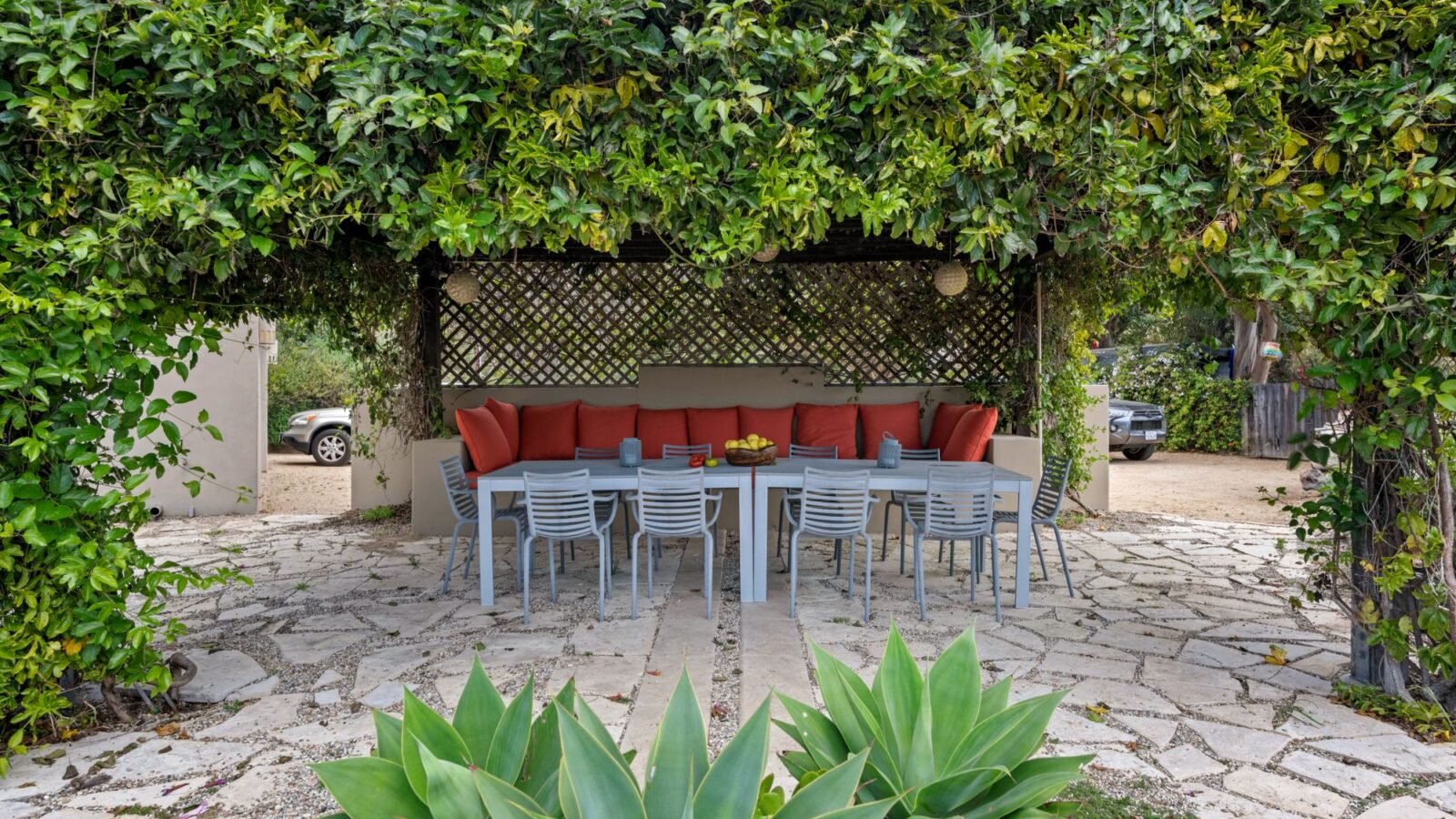
Patio privacy from upstairs neighbors is different from privacy across a fence. A vertical screen may hide you from a nearby path while leaving the seating completely visible from above. Start by identifying the direction of the view you want to soften.
The aim is a more comfortable sitting area, not necessarily hiding every part of the garden. A small targeted change may be enough.
Find the specific sightline
Sit where you normally relax and look toward the overlooking windows. Note which direction feels exposed and which parts of the patio already feel comfortable.
Do not trespass or inspect a neighbor’s private space. Work from your own patio and ordinary visible building positions. A simple sketch with the seating, boundary, and upper window can help explain the problem.
Identify whether the concern occurs while seated, standing, or both. A solution for a seated reading spot may be smaller and less intrusive than one intended to screen the entire patio.
Try moving the seat first
Test another position before buying screening. Moving a chair closer to an existing suitable wall or farther from a direct view can change the experience.
Keep the usable route, drainage, access, and any required clearances. A more private seat is not useful if it blocks the back door or sits in a persistently wet corner.
Temporary furniture experiments help you discover the smallest area that needs screening. Live with the revised arrangement for a few days before making permanent changes.
Distinguish overhead cover from side screening
A side screen addresses mostly lateral views. An overhead element may affect views from above, depending on its position, openness, and the overlooking angle. Neither can be assessed from height alone.
Structures, shade systems, and attached screens introduce wind loads, installation requirements, and sometimes approval or permit questions. Check local requirements and use the appropriate manufacturer or qualified installer rather than improvising structural supports.
Do not attach fabric or screening to a railing, fence, or wall unless that use and installation are suitable and permitted. A product described as decorative can still catch wind.
Consider planting as a gradual layer
Plants can soften views while adding visual interest, but their mature size, growing conditions, and care requirements matter. Seasonal leaf loss can change privacy through the year.
Containers need suitable drainage, regular watering, and a stable placement. The Royal Horticultural Society notes that container plants depend on attentive watering because their roots occupy a restricted volume.
Choose plants for the local climate, light, and available root space. A photograph of a lush screen in a different climate is not a planting plan.
Preserve the qualities you enjoy
Ask what you might lose with more enclosure: daylight, breeze, a view, or space for furniture. It may be better to screen one side of a chair than surround the whole patio.
Evaluate the view from indoors too. A screen placed immediately outside a window can change the room’s daylight and outlook.
Privacy and security visibility are also different considerations. Avoid arrangements that obstruct access or create problems you have not assessed.
Our backyard privacy ideas and small patio guide offer related starting points.
Test the proposal before committing
Use a sketch or a safe, non-structural positioning exercise to compare the intended screened area. Discuss permanent or load-bearing installations with the relevant property owner and qualified professional.
Be clear about the target: less direct exposure from one upper window may be realistic, while complete seclusion from several tall buildings may not be.
Common questions
Will a taller fence solve overhead privacy?
Not necessarily. The overlooking angle and distance matter, and fence height may be restricted. Map the sightline before choosing any structure.
Are plants a maintenance-free privacy solution?
No. They need suitable conditions and ongoing care, and their size and seasonal appearance change.
Screen the view that matters
Identify the exposed seat, try a different arrangement, and compare targeted options. Better privacy begins with the sightline rather than the largest screen.
Source: RHS container maintenance guidance.
Discussion