
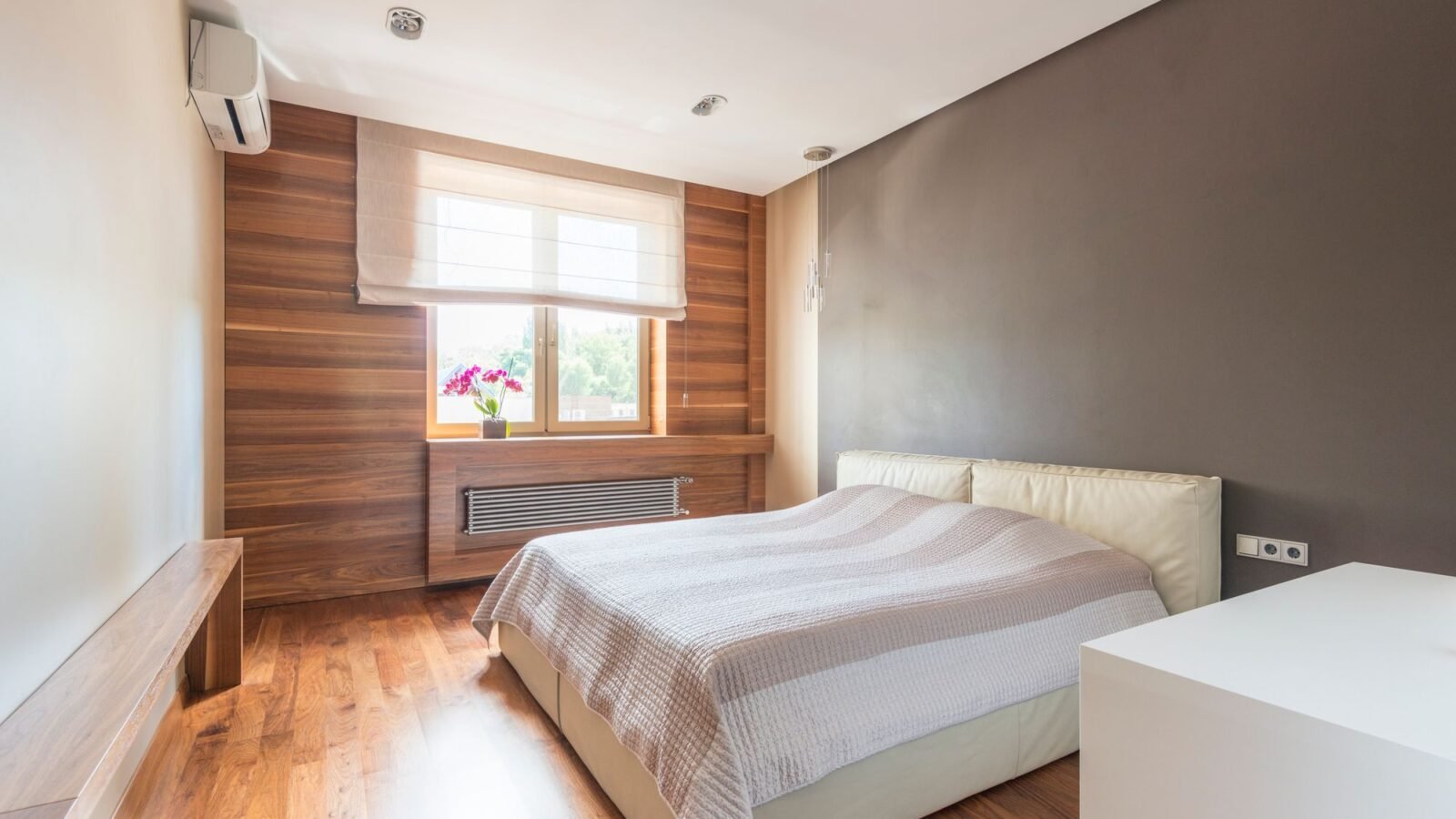
Floating vs traditional nightstands is a decision about mounting, storage, and the way you use the bedside. A wall-mounted drawer can expose more floor, but it does not create extra room at mattress height. A narrow standing table can sometimes fit better than a wide floating cabinet.
Start with the available width, the objects you need, and whether you are permitted to fix furniture to the wall.
| Factor | Floating | Standing |
|---|---|---|
| Support | Suitable wall and rated fixings | Floor support; anchoring may still apply |
| Flexibility | Mounting determines location | Usually easier to reposition |
| Storage | Varies from shelf to drawers | Varies from open table to cabinet |
Quick verdict
Choose a floating nightstand when a suitable wall can safely support it, you want an open floor underneath, and the room’s arrangement is unlikely to change. Choose a standing nightstand when you need flexible placement, easier installation, or more enclosed storage.
Neither type is automatically better for a small bedroom. Compare their actual dimensions rather than their labels.
Measure the usable space
Measure from the bed frame, including any projecting rail, to the next obstruction. Then measure the mattress-top height with the bedding you normally use. Test your ideal reaching height with a stable temporary surface.
A floating top that is difficult to reach from bed is not a useful upgrade. Leave room for bedding to hang naturally and for cleaning around the frame. If a drawer opens toward the bed, check that its handle and contents can clear the bedding.
For example, if the available gap is 18 inches wide, a 20-inch floating unit still fails even though the floor beneath it remains visible. A 14-inch standing unit may be the practical choice.
Compare storage honestly
Put your bedside objects on a tray before choosing furniture. Separate daily essentials from things that have accumulated there. A phone, water glass, book, and medication may need a different arrangement from a lamp, multiple chargers, and a tissue box.
An open floating shelf offers easy access but no concealed storage. A floating drawer hides smaller items but introduces a mounting load. A standing cabinet may hold more, although a deep body can obstruct the route beside the bed.
Make sure a charger can reach without being pinched behind the unit. Do not drill a cable opening through furniture without checking its construction and manufacturer guidance.
Installation changes the decision
Wall material, concealed wiring or pipes, bracket design, and the manufacturer’s specified fixings all matter. Drywall alone is not interchangeable with masonry or a timber stud. Use the installation instructions for the exact unit and obtain suitable help when needed.
Renters should get permission for the proposed fixings. Calling furniture removable does not mean its holes will be acceptable under a lease.
Standing furniture avoids wall mounting for support, but some units still require anchoring for stability. Follow the product instructions rather than assuming that every small cabinet is exempt.
Cleaning and rearranging
A floating unit makes the exposed floor easier to access, provided the space underneath is actually large enough for your cleaning tools. It may still collect dust on an open shelf.
A standing table can move with a new bed or a changed layout. Test the weight and cable arrangement before deciding it will be easy to shift. Tall, narrow units should not wobble when you reach for a glass.
If you often rotate the bed to a different wall, the flexibility of a standing piece may outweigh the cleaner visual line of a floating one.
Match the room rather than the furniture set
A dark bed does not require a matching dark nightstand. A contrasting small surface can make the bedside easier to distinguish. For examples, browse our small bedroom ideas and modern bedroom ideas.
Matching sides are optional, too. One partner may need a drawer while the other needs only a book surface. Coordinate the height or finish if you want the pair to feel related.
Common questions
Can a floating nightstand support a lamp?
Only if the total load, including the lamp and other objects, stays within the correctly installed unit’s rating. Do not estimate capacity from photographs.
Which option looks less bulky?
That depends on width, depth, color, and construction. An exposed floor can lighten the view, but a shallow standing table may occupy less actual space.
Before you buy
Check width, depth, height, opening space, mounting requirements, and cable reach. Choose the piece that supports your nightly routine with the fewest compromises.


Discussion