
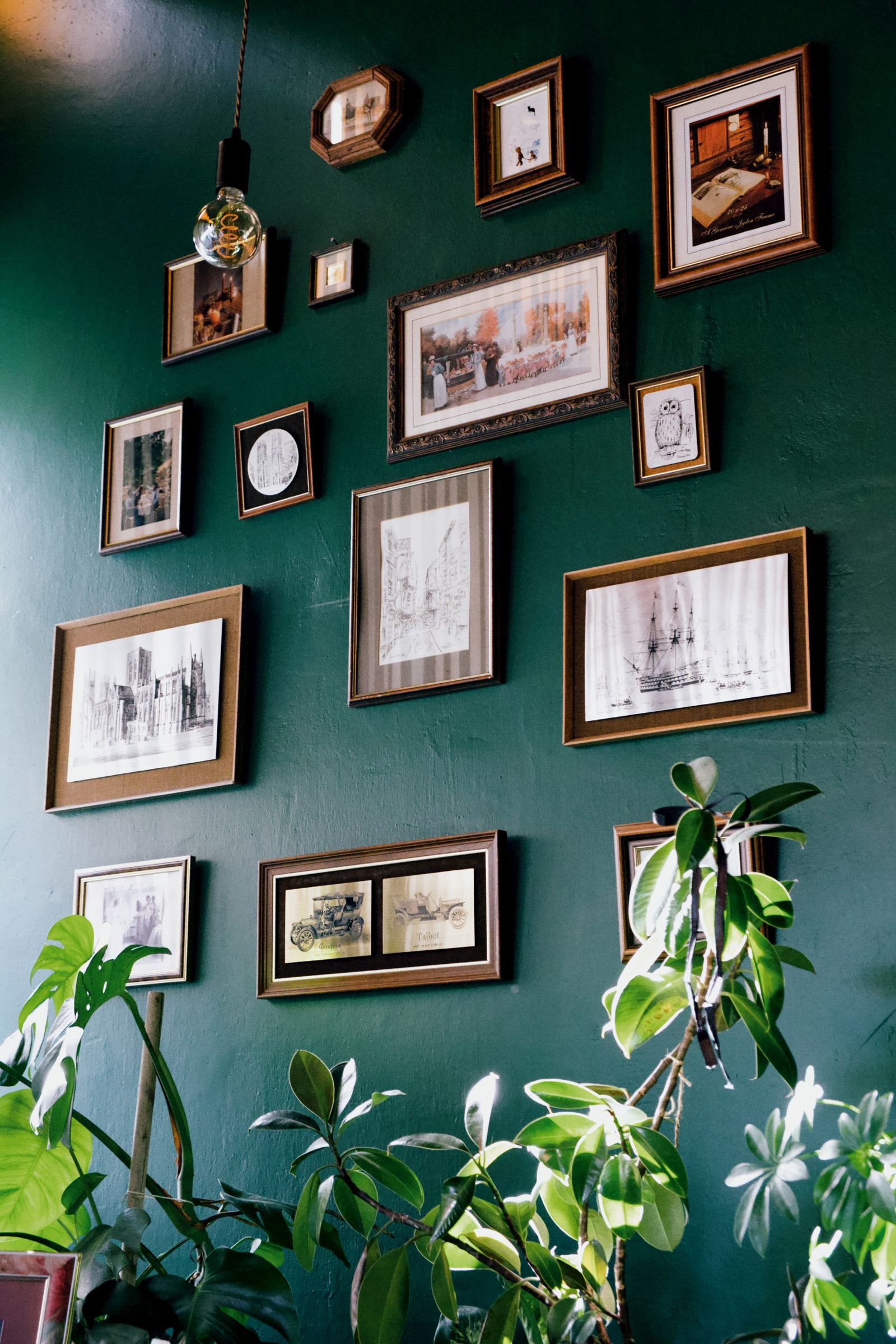
A gallery wall is one of the most personal and impactful ways to decorate a room. Done well, it turns a blank wall into a focal point full of character, telling your story through art, photographs, and meaningful pieces. And unlike a single large artwork, a gallery wall can grow and change with you over time.
These ideas cover everything you need to create a gallery wall you love, from planning the layout and choosing frames to arrangement styles, spacing, and the finishing touches. Whether you want a crisp grid or a relaxed, collected look, there is an approach here to suit your space.
How do you create a gallery wall?
A great gallery wall starts with planning. Gather your pieces, decide on a loose theme, and lay out the arrangement before you put a single nail in the wall. From there, consistent spacing and a clear anchor keep even an eclectic mix feeling intentional.
- A loose theme: a shared color, subject, or frame style ties a varied collection together.
- A planned layout: arranging on the floor or with paper templates avoids extra holes and second-guessing.
- Consistent spacing: even gaps between frames keep the display looking deliberate.
- An anchor piece: starting from a central or largest piece gives the arrangement structure.
1Plan the layout before hanging
Resist the urge to start hammering. Planning your arrangement first saves you from a wall full of extra holes and lets you experiment with placement until the composition feels right.
2Choose a cohesive theme
A loose theme, whether a color palette, a subject like landscapes or portraits, or a single frame style, ties everything together. It is what makes a varied collection feel intentional rather than random.
3Mix frame sizes for interest
Combining large, medium, and small frames adds visual rhythm and keeps the eye moving. Varied sizes feel more dynamic and collected than a set of identical frames.
4Keep spacing consistent
Even gaps between frames, usually two to three inches, make an arrangement look deliberate and polished. Consistent spacing holds a mix of sizes and styles together.
5Start with an anchor piece
Begin with your largest or most striking piece, roughly at the center or slightly off-center, and build outward from there. The anchor gives the whole arrangement structure and balance.
6Mix different types of art
Combine photographs, prints, paintings, and typography for a layered, personal look. A mix of media adds depth and makes the wall feel collected over time rather than bought as a set.
7Unify with matching frames
For a calm, cohesive look, use frames in a single color or finish, such as all black, all wood, or all white. This lets varied artwork shine while keeping the display tidy.
8Or mix frames for an eclectic feel
If you prefer a relaxed, collected style, mix frame colors, materials, and finishes. The key is repeating each finish a few times across the wall so the mix feels intentional.
9Try a clean grid layout
A grid of same-size frames with equal spacing creates a crisp, modern, and orderly look. It works beautifully for a series of related prints or photographs.
10Go salon-style for drama
A dense, salon-style arrangement that fills the wall with layered art makes a bold, maximalist statement. Vary the sizes and let the pieces sit close together for a rich, collected effect.
11Lay it out on the floor first
Arrange your pieces on the floor to test different compositions before committing. It is far easier to rearrange frames on the ground than on the wall.
12Use paper templates
Trace each frame onto paper, cut it out, and tape the templates to the wall to preview the layout. This lets you fine-tune placement and mark nail positions without guesswork.
13Include personal photographs
Family photos, travel snapshots, and personal moments make a gallery wall truly yours. Mixing them with art adds warmth and meaning that store-bought prints cannot.
14Add dimension with objects
Break up flat art with three-dimensional pieces like small mirrors, woven baskets, or decorative plates. These add texture and interest and keep the wall from feeling one-note.
15Anchor it over furniture
Center a gallery wall over a sofa, bed, or console to ground it and create a cohesive vignette. Keep the arrangement within the width of the furniture for a balanced look.
16Extend it up a staircase
A staircase wall is a perfect spot for a gallery, with the frames following the angle of the stairs. It turns an often-overlooked space into a personal, eye-catching feature.
17Use negative space
You do not have to fill every inch. Leaving some breathing room around the arrangement can make it feel more modern and lets each piece stand out.
18Mix in typography or text art
A quote, a word, or a piece of typographic art adds personality and a point of focus. It breaks up imagery and gives the eye a place to pause.
19Try a picture ledge
A picture shelf or ledge lets you lean and layer art without committing to nail holes. It makes swapping pieces effortless, so the display can evolve whenever you like.
20Light your gallery wall
Picture lights, wall sconces, or well-placed spotlights highlight the art and add ambiance. Good lighting turns a gallery wall into a genuine feature after dark.
21Leave room to grow
Treat your gallery wall as an evolving collection rather than a finished project. Leaving a little space lets you add new pieces over time as you find art and photos you love.
Frequently Asked Questions
How do I arrange a gallery wall?
Start by gathering your pieces and choosing a loose theme, then lay the arrangement out on the floor or use paper templates on the wall. Begin from an anchor piece near the center and build outward, keeping the spacing between frames consistent for a polished look.
How far apart should gallery wall frames be?
A gap of about two to three inches between frames usually looks best, keeping the display cohesive without feeling crowded. The most important thing is to keep the spacing consistent across the whole arrangement.
Do gallery wall frames need to match?
No. Matching frames create a calm, cohesive look, while mixed frames feel relaxed and collected. If you mix finishes, repeat each one a few times across the wall so the variety looks intentional rather than accidental.
Where should I put a gallery wall?
Popular spots include above a sofa, bed, or console, along a hallway, or up a staircase. Choose a wall that gets noticed and, when hanging above furniture, keep the arrangement roughly within the width of the piece below.
How high should I hang a gallery wall?
Aim to center the overall arrangement around eye level, roughly 57 to 60 inches from the floor to the middle of the display. Above furniture, leave about eight to ten inches between the top of the piece and the bottom of the frames.
Final Thoughts
A gallery wall is a chance to fill your home with the art, photos, and pieces that mean the most to you. Plan the layout, choose a loose theme, keep your spacing consistent, and start from a strong anchor piece. Whether you go for a neat grid or a rich salon-style display, the result is a wall full of personality that you can add to for years to come.
Discussion